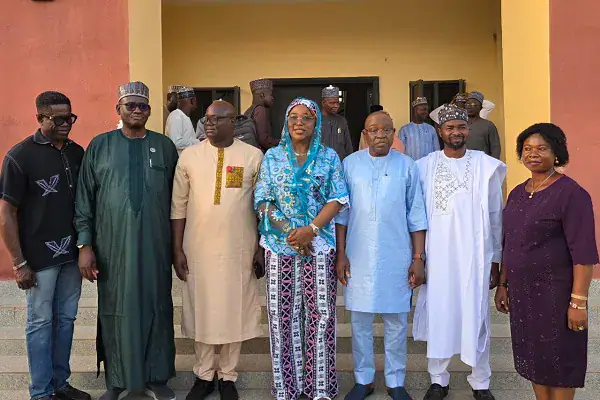
The Federal Government's efforts to strengthen autism care have received fresh momentum as a ministerial committee, led by Dr. Victoria Amu, Chairperson of the National Committee for the Advancement of Occupational Therapy, Audiology and Speech Therapy Education, has called for increased investment in specialised healthcare education and infrastructure in universities across Nigeria. The committee aims to assess existing infrastructure, evaluate institutional capacity, and recommend measures for advancing specialised professional education in Nigerian universities.
Dr. Amu identified occupational therapy, audiology, and speech therapy as critical disciplines in the assessment, management, and rehabilitation of individuals with autism and related developmental conditions. She stressed the need to expand professional training and improve access to specialised services, particularly in underserved communities. The committee was inaugurated by the Minister of Education, Dr. Tunji Alausa, to address the shortage of qualified professionals and improve access to autism assessment and intervention services.
The committee's visit to the Federal University of Kashere (FUK) in Gombe State recorded a significant development, with the Vice-Chancellor, Prof. Muhammad Inuwa Ja'afaru, pledging the institution's support for the establishment of the North-East Regional Office of the Autism Assessment and Intervention Centre. Ja'afaru disclosed that the university had approached the Tertiary Education Trust Fund (TETFund) for special intervention funding to construct a complex that would accommodate the proposed programmes and other shared facilities.
Prof. Ja'afaru assured the committee that the university management would provide the necessary institutional support for the successful take-off of the centre. He commended the Minister of Education for inaugurating the committee, describing the initiative as a welcome development in the advancement of specialised medical and allied health education. Ja'afaru also expressed concern over the continued migration of Nigerian healthcare professionals abroad, popularly known as the "japa syndrome," and called for urgent measures to strengthen the country's capacity to train and retain skilled personnel.
The Deputy Vice-Chancellor (Academic), Prof. Santaya Kela, equally assured the committee of the university's cooperation and commended members of staff for their contributions to the success of the visit. Earlier, the Provost of the Jibril Aminu College of Medical Sciences (JACOMS), Prof. Abubakar Muhammad Bakari, presented an overview of the college's development and readiness to accommodate the proposed regional autism centre. Bakari disclosed that the college had already commenced an Occupational Therapy programme as part of its commitment to expanding specialised healthcare education.
Strengthening these programmes would help address the shortage of qualified professionals while improving access to autism assessment and intervention services, particularly in underserved communities. Dr. Amu emphasised the importance of collaboration among government agencies, universities, and relevant professional bodies in developing the facilities and expertise required for effective service delivery. The committee's initiative is a welcome development in the advancement of specialised medical and allied health education in Nigeria.
The Federal Government's efforts to improve autism care in Nigerian universities are part of a broader initiative to strengthen the country's healthcare system. The government has unveiled a N70 billion five-year transformation plan for healthcare and secured $200 million to bridge the fish supply gap. The government is also targeting 2,000 new CNG stations and reviving abandoned State House facilities. The ministerial committee's push for improved autism care in universities is a step towards addressing the country's healthcare challenges.
Key points
- The Federal Government's ministerial committee is calling for increased investment in specialised healthcare education and infrastructure in universities to improve autism care.
- The committee aims to assess existing infrastructure, evaluate institutional capacity, and recommend measures for advancing specialised professional education in Nigerian universities.
- Strengthening specialised healthcare education and infrastructure in universities will help address the shortage of qualified professionals and improve access to autism assessment and intervention services.