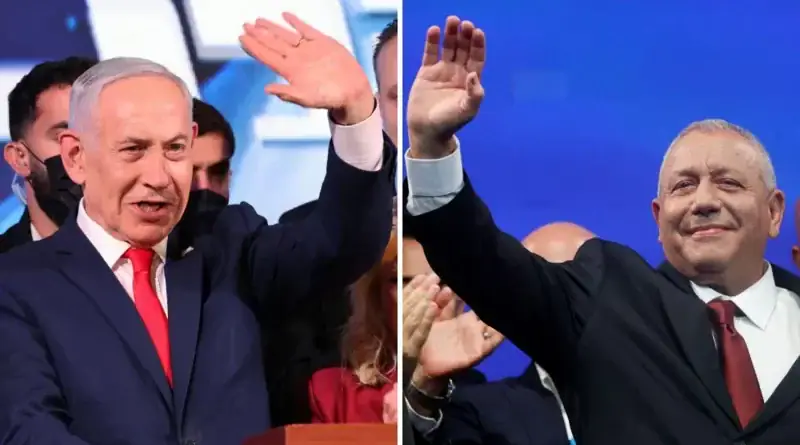
The Israeli political landscape was left reeling on October 27, 2026, as the country struggled to form a new government. According to exit polls, Benjamin Netanyahu's party and a coalition led by Gadi Eisenkot were neck and neck, with neither side able to secure the 61 seats needed to achieve a majority in the 120-seat Knesset. This development has plunged Israel into a period of political uncertainty.
In the aftermath of the elections, Netanyahu expressed his desire to continue leading the country, calling for a strong right-wing government. He emphasized his commitment to Israel's security and his willingness to work with other parties to achieve a stable government. Meanwhile, Eisenkot, a former IDF chief of staff, urged Netanyahu to step down, citing the need for change in Israel's leadership.
Eisenkot's call for Netanyahu's resignation was accompanied by a warning that the Prime Minister should not use national security issues for political gain. This sentiment was echoed by many Israelis who feel that Netanyahu's leadership has been marked by controversy and division. With Israel facing ongoing security challenges, including the threat posed by Hamas, the country is in dire need of a stable and effective government.
Despite his ambitions, Eisenkot faces significant challenges in his quest to form a new government. He has expressed skepticism about seeking support from Arab parties, which could potentially hold the key to securing a majority. However, this approach may prove difficult, given the complex dynamics at play in Israeli politics.
These elections were the first to take place since the Hamas attacks on Israel on October 7, 2023, which resulted in a significant escalation of violence in the Gaza Strip and beyond. The conflict has had far-reaching consequences, including a deepening of divisions within Israeli society and a growing sense of insecurity among citizens.
The elections also saw a significant turnout, with 77.7% of eligible voters casting their ballots. This represents a significant increase compared to previous elections and underscores the high stakes involved in this particular contest. As Israel navigates this period of political uncertainty, the international community will be watching closely for signs of stability and progress.
As the country moves forward, it remains to be seen whether Netanyahu or Eisenkot will be able to secure the support needed to form a government. One thing is certain, however: the next Israeli government will face significant challenges, including the ongoing security threat posed by Hamas and the need to address the country's deepening divisions.
Key points
- Netanyahu and Eisenkot are vying for power in Israel following the October 27, 2026 elections.
- The elections have left Israel in a state of political limbo, with neither side able to secure a majority.
- The next Israeli government will face significant challenges, including the ongoing security threat posed by Hamas.