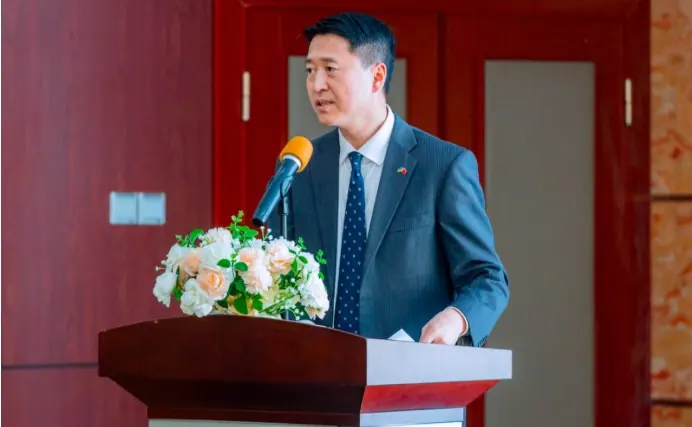
China has expressed its vision for Rwanda to move beyond using artificial intelligence (AI) developed by others and instead build its own AI technology based on local data, experts, and infrastructure. This idea was presented in Kigali on September 17, 2026, during the launch of the first cohort of AI students at the Luban Workshop. The initiative aims to empower Rwanda to develop its own AI solutions tailored to its specific needs.
Dr. Bello Moussa, Director of Technology Solutions for Government and Enterprise at Huawei Southern Africa, highlighted various examples of AI applications in China, including education, healthcare, urban management, and business. He emphasized that a country seeking to build its own "reliable and independent" AI must first develop its foundational model, built on local data and created by local experts. This foundational model can then be adapted for use in various sectors.
Moussa explained that a local foundational model would enable Rwanda to create specialized models for sectors such as healthcare and education, which can be used to develop citizen-facing applications and services. For instance, in China, some schools use cameras and sensors to track student attendance and engagement, providing teachers with valuable insights to improve learning outcomes.
In the healthcare sector, AI is used in China to analyze medical images and assist doctors in diagnosing diseases. Additionally, AI is used in urban management, such as in Shenzhen, where a center uses technology to monitor traffic flow and infrastructure. Moussa also highlighted the potential for AI to be applied in agriculture and small and medium-sized enterprises.
Callixte Kanamugire, CEO of the Private Sector Foundation (PSF), emphasized that the development of AI in Rwanda must be accompanied by efforts to increase the skills and knowledge of the country's youth, enabling them to compete in a rapidly changing job market. Gao Wenqi, Chinese Ambassador to Rwanda, stressed the importance of Chinese companies operating in Rwanda to collaborate with local stakeholders, adhere to local laws, and promote sustainable development.
The discussions on AI development between Rwanda and China take place as the two countries celebrate 55 years of diplomatic relations, with their partnership elevated to a comprehensive strategic level in 2024. For Rwanda, the goal is to move beyond simply adopting AI solutions developed elsewhere and instead build local capacity to develop and adapt AI to meet the needs of its citizens.
The launch of the Luban Workshop's AI program marks a significant step towards achieving this goal, with the first cohort of students set to begin their studies. As Rwanda and China continue to strengthen their ties, the development of AI solutions tailored to local needs is expected to play a key role in driving economic growth, improving public services, and enhancing the overall quality of life for Rwandans.
Key points
- China is sharing its expertise with Rwanda to develop its own AI capabilities.
- Rwanda aims to move beyond using AI solutions developed elsewhere and build its own local capacity.
- The development of AI in Rwanda is expected to drive economic growth and improve public services.