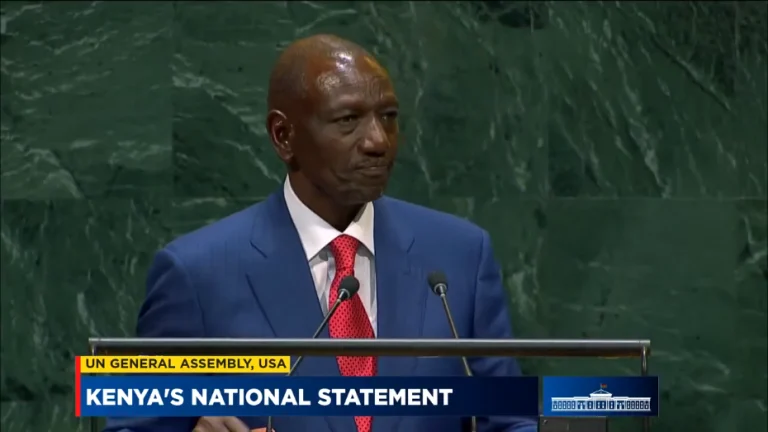
On September 23, 2026, Kenyan President William Ruto addressed the 81st United Nations General Assembly in New York, pressing for reforms to the UN Security Council. He emphasized that Africa cannot continue to be excluded from permanent decision-making, despite accounting for more than a quarter of the UN General Assembly. The current structure, shaped by circumstances in 1945, no longer reflects the current global order.
President Ruto highlighted the imbalance in the system, where five countries have permanent powers, while the other 188 UN member states do not enjoy the same status. He noted that Africa has 54 UN member states, representing more than a quarter of the General Assembly, but none hold a permanent seat on the Security Council. This exclusion is difficult to reconcile with the continent's presence within the wider UN system.
The President pointed out that Africa is regularly affected by matters considered by the Security Council, despite not having a permanent position in its membership. He emphasized that the continent is frequently the subject of the council's decisions, yet is permanently excluded from its permanent membership. This situation is unjust and must be addressed through reforms.
The UN Security Council has 15 members, with five holding permanent seats and veto powers: China, France, Russia, the United Kingdom, and the United States. The other 10 members are elected by the General Assembly and serve two-year terms. President Ruto's demand for reform adds Kenya's voice to the broader African push for changes to the council's composition.
Under the Common African Position on Security Council reform, African countries have sought at least two permanent seats with full rights, including veto powers, together with additional non-permanent seats. A permanent African presence would give the continent continuous representation in discussions and decisions concerning major international conflicts and security matters.
Beyond the composition of the Security Council, President Ruto raised concerns about the wider international system, particularly the application of international law during conflicts and crises. He emphasized that the international community does not lack laws but is facing a growing problem of confidence in whether those laws are applied consistently.
President Ruto called for the same standards to be applied when international law is used to respond to different crises, stating that trust cannot be restored by declaration alone but must be earned through consistent action. His remarks brought together two central issues to the credibility of the international system: greater representation in the Security Council and equal application of international law.
Key points
- President Ruto urges the UN to reform the Security Council to include African representation.
- Africa has 54 UN member states, representing over a quarter of the General Assembly, but none hold a permanent seat on the Security Council.
- President Ruto calls for consistent application of international law during conflicts and crises.