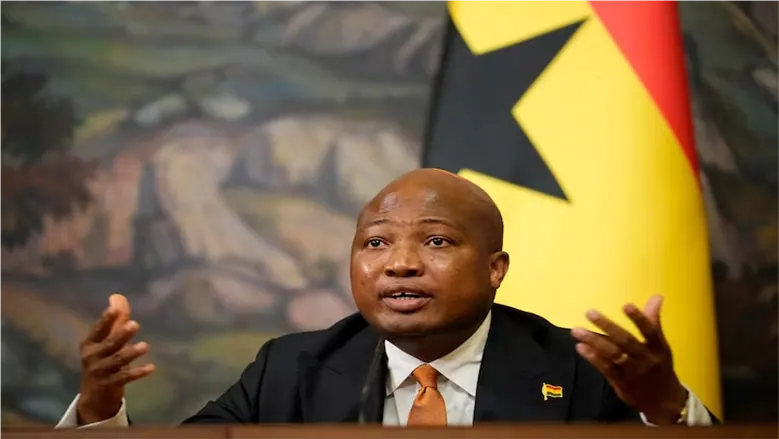
Ghana is spearheading an international campaign demanding reparations for the transatlantic slave trade, which lasted nearly four centuries and affected 12.5 million Africans. The country's foreign minister, Samuel Okudzeto Abalakwa, stated that Western support for these efforts is increasing, with several European nations expressing willingness to cooperate in recovering looted artifacts. This development comes as Ghana, along with Germany and France, hosted an event on reparative justice on the sidelines of the United Nations General Assembly.
The initial focus of the campaign is on retrieving artifacts stolen during the colonial era. Minister Abalakwa revealed that subsequent stages may involve formal apologies, debt relief, and financial compensation, as outlined in a 19-point plan adopted by the African Union and the reparative justice committee of the Caribbean Community during a conference in Ghana in June. This comprehensive plan aims to address the historical injustices inflicted upon Africans during the transatlantic slave trade.
In March, the United Nations passed a resolution acknowledging the transatlantic slave trade as a grave crime against humanity, with 123 countries in favor, 3 opposed, and 52 abstaining. The resolution garnered significant international attention, with many nations pledging support for reparative measures. Minister Abalakwa disclosed that numerous European countries that abstained from voting have since reached out to Ghana, expressing their willingness to collaborate on this issue.
The transatlantic slave trade, which lasted from the 15th to the 19th century, forcibly enslaved and transported millions of Africans to the Americas, resulting in immense human suffering and economic exploitation. Ghana's efforts to seek reparations have gained momentum, with the country's government engaging in diplomatic efforts to rally international support. The campaign has sparked renewed discussions about historical accountability and the need for reparations.
Minister Abalakwa emphasized that the campaign for reparations is not solely focused on financial compensation but also on acknowledging the historical injustices and promoting healing and reconciliation. The Ghanaian government's initiatives have sparked a global conversation about the legacy of the transatlantic slave trade and the need for collective action to address its ongoing impacts.
The international community has taken notice of Ghana's efforts, with several European nations expressing their willingness to engage in dialogue and cooperation. This development marks a significant shift in the global conversation about reparations, with many countries acknowledging the need for accountability and redress. As Ghana continues to push for reparations, the international community will be watching closely.
The campaign for reparations has far-reaching implications, extending beyond Ghana and the African continent. It highlights the need for historical accountability, restorative justice, and collective action to address the ongoing legacies of colonialism and slavery. As the international community grapples with these complex issues, Ghana's efforts will likely continue to play a significant role in shaping the global conversation.
Key points
- Ghana is leading an international campaign for reparations for the transatlantic slave trade, which affected 12.5 million Africans.
- Several European nations have expressed willingness to cooperate with Ghana's efforts, including recovering looted artifacts and providing financial compensation.
- The campaign for reparations aims to address historical injustices and promote healing and reconciliation, with a comprehensive plan outlining 19 points for implementation.