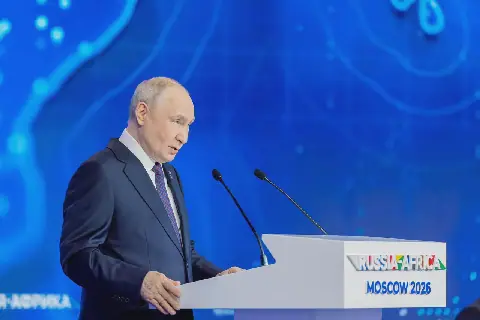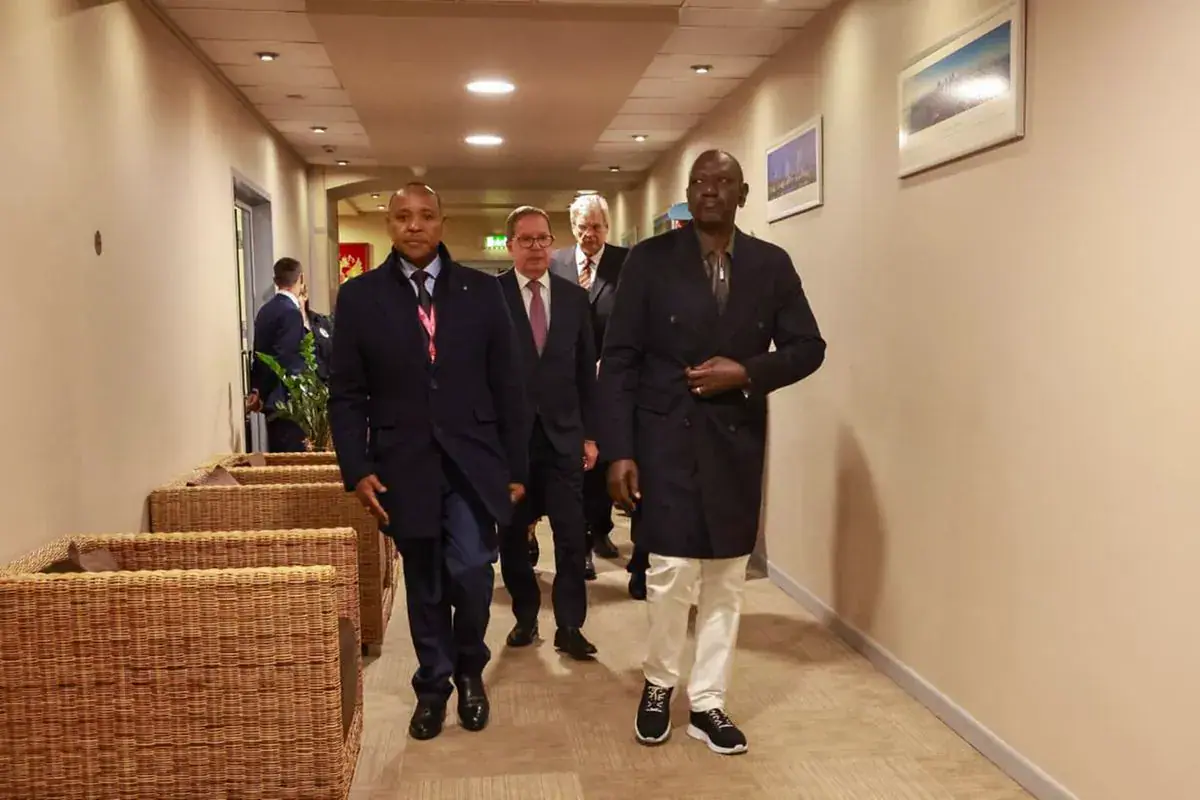
President William Ruto has proposed a $40.02 billion infrastructure investment plan to Russian investors, aiming to boost Kenya's underwhelming business ties with Russia. Ruto arrived in Moscow for the third Russia-Africa Summit, carrying a packed agenda and a bag full of ideas for his pet projects, including housing, infrastructure, and energy sufficiency. The plan seeks to improve Kenya's business environment, which Ruto claims is getting better.
Speaking at the Russia-Kenya Business Roundtable in Moscow, Ruto said Kenya was mobilising $40 billion over the next decade for infrastructure development, and that Russian capital and technology could help boost industrialisation in Kenya. He presented Kenya as a destination for investment and a gateway to East and Central Africa, citing its population of 55 million, gross domestic product of $136 billion, and economic growth of 5.3 per cent in 2025.
Business dealings between Russia and Kenya have been below par, dominated by Kenya's imports and exports of raw materials to Russia. However, Ruto said such business meetings should translate the goodwill between the two sides into tangible commercial outcomes. He identified energy, fertiliser production, agricultural machinery, mineral processing, transport, heavy engineering, and manufacturing as priority sectors for Russian investment.
Ruto called for partnerships that transfer technology, develop skills, and establish industries locally, rather than simply extracting resources. He said the government wanted Russian investors to establish industries that would process agricultural produce, manufacture goods, and develop mineral resources locally. This approach would create jobs and expand incomes at home, generating new investment opportunities and stronger supply chains.
The current trade relationship between Russia and Kenya is heavily tilted in Russia's favour, with bilateral trade amounting to approximately $380 million in 2025. Kenya exports goods worth $52 million, mainly tea, coffee, flowers, fruits, and vegetables. Ruto argued that this model has constrained Africa's industrial development and denied its people the full economic benefits of their resources.
Kenya is seeking Russian participation in its energy transition, with 93 per cent of the country's electricity coming from renewable sources. Ruto identified geothermal development, green hydrogen, electric mobility, and energy infrastructure as areas offering investment opportunities. Agriculture is another priority, with the government seeking investment in irrigation, mechanisation, affordable farm inputs, and agro-processing to boost productivity and food production.
Ruto also pitched Kenya as a regional manufacturing and export hub, citing its access to the African Continental Free Trade Area, which connects businesses to a continental market of 1.5 billion people. The proposed partnership would combine Russian capital, technology, and industrial expertise with Kenya's resources, workforce, and access to African markets.
Key points
- Kenya seeks $40.02 billion investment for infrastructure development
- Ruto calls for partnerships that transfer technology and develop skills locally
- Kenya aims to boost industrialisation and economic growth through Russian investment