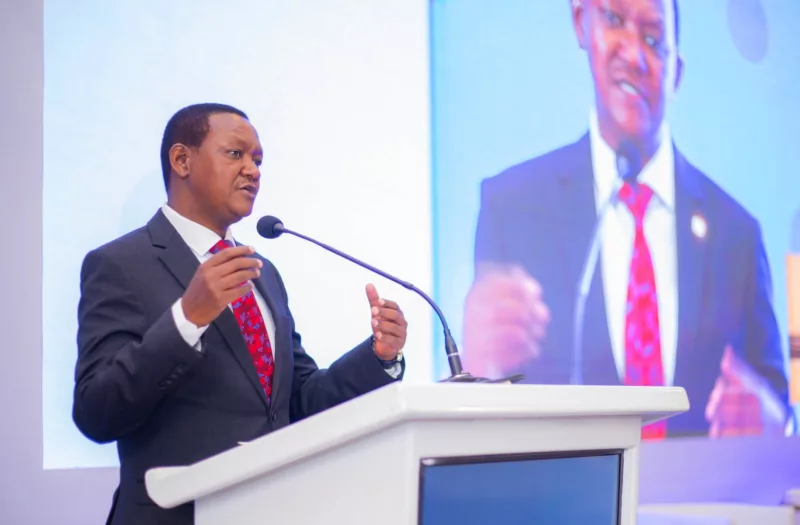
President William Ruto has announced plans to launch a national school meals programme in Kenya, starting from the first term of 2027. The programme aims to provide meals to learners in lower primary, upper primary, and junior secondary schools across the country's 47 counties. This initiative is part of a broader effort to strengthen social protection and support poor and vulnerable families. Ruto made the commitment in a speech read on his behalf by Labour and Social Protection Cabinet Secretary Alfred Mutua.
The national school meals programme targets 10 million learners by 2030, a goal that was first committed to in 2024. Currently, the government provides meals to about 2.6 million learners, focusing on vulnerable children in arid and semi-arid areas and other food-insecure communities. An analysis by the Institute of Public Finance estimates that feeding 10 million learners could require about Sh40 billion a year, assuming an indicative cost of Sh20 per child per school day for 200 school days.
Kenya has been promoting a home-grown school meals model that links schools with local farmers, allowing public money spent on school food to support local agriculture. This approach aims to boost the local economy while providing nutritious meals to students. The government believes that this model can have a positive impact on the lives of learners and their communities.
In addition to the school meals programme, Ruto announced plans to establish and capitalise a Social Protection Fund. This fund aims to make government support for vulnerable Kenyans more predictable and sustainable. The President emphasised the need for a system that can protect families from poverty, disability, old age, and climate-related shocks.
The government also defended its record on payments under the Inua Jamii programme, which provides financial support to vulnerable Kenyans. Principal Secretary for Social Protection Joseph Motari said the government had expanded the programme and changed how beneficiaries receive their money. The programme now provides Sh3.5 billion every month to vulnerable Kenyans, with payments made through mobile money platforms like M-Pesa.
The Inua Jamii programme has seen an increase in beneficiaries from 1.2 million to 1.7 million, bringing an additional 500,000 vulnerable Kenyans into the programme. The government has a target of reaching 2.5 million Kenyans under this programme. Cabinet Secretary Alfred Mutua defended Ruto over delays in paying beneficiaries, citing the President's commitment to prioritising payments to programme recipients.
The Kenya Social Protection Conference, which ran from September 29 to October 1, brought together about 500 local and international delegates to discuss social protection issues. The conference focused on re-imagining social protection in the context of an evolving socio-economic landscape and climate change. Key points include:
Key points
- The national school meals programme will start in 2027 and target 10 million learners by 2030.
- The programme will focus on learners in lower primary, upper primary, and junior secondary schools across Kenya's 47 counties.
- The government aims to establish a Social Protection Fund to make support for vulnerable Kenyans more predictable and sustainable.