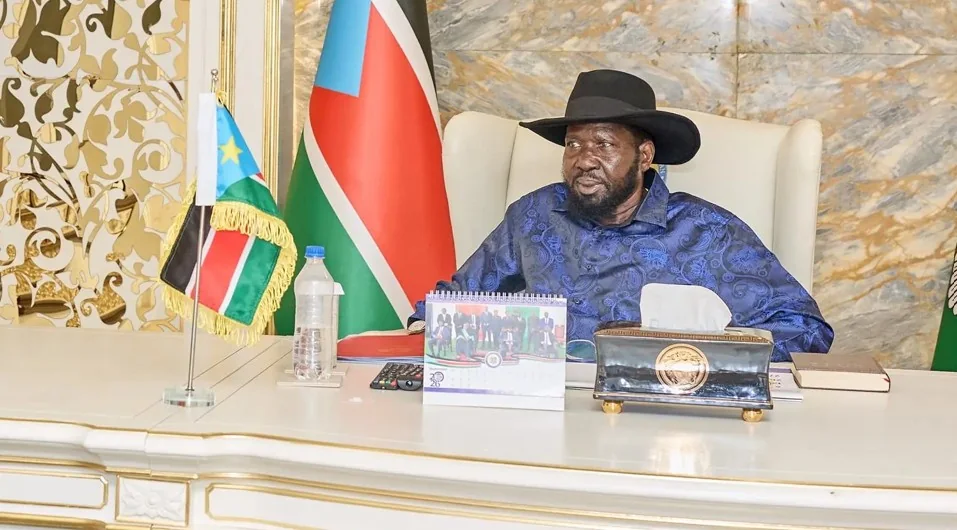
South Africa recently hosted a virtual conference that brought together the African Union's High-Level Ad Hoc Committee on South Sudan (C5) and the Intergovernmental Authority on Development (IGAD) to examine the upcoming December 2026 election in Juba. The C5 committee, comprising South Africa, Algeria, Chad, Nigeria, and Rwanda, was established by the AU to support South Sudan's peace process and guide the transitional authorities toward credible elections.
The virtual meeting was convened shortly after President Salva Kiir dissolved the power-sharing unity government, removed First Vice-President Riek Machar and the four vice-presidents, and installed a caretaker cabinet to manage affairs ahead of the vote. Kiir's actions also included the dissolution of the transitional parliament, state administrations, and the three major administrative zones, along with a reshuffle of the electoral commission's leadership.
The AU Peace and Security Council, in its 1365th communiqué dated 26 August 2026, flagged several shortcomings in South Sudan's election preparations and called for an even playing field for all contenders. The C5 meeting aimed to examine the identified gaps and evaluate whether the conditions required for a credible, inclusive, and peaceful poll are in place, as repeatedly urged by the AU.
Analysts have raised concerns about the feasibility of meeting the AU's standards for a free and fair election, given Kiir's recent consolidation of power, which involved removing rivals and appointing loyalists. The move has sparked concerns about the potential for a stable democratic transition in South Sudan.
IGAD, the regional bloc that has mediated South Sudan's peace talks since the 2013 civil war, participated in the C5 dialogue, highlighting a joint continental-regional interest in a peaceful political transition. Although IGAD has not issued a formal statement on the dissolution of the unity government, its continued participation suggests close monitoring of the situation and a possible diplomatic response if stability deteriorates.
South Sudan's stability remains a regional priority, given its history of conflict, cross-border refugee flows, and oil exports that travel through Sudan to international markets. The country's December vote could determine whether it moves toward a stable democratic transition or slides back into violence, a scenario that would deepen its legitimacy crisis and threaten regional peace.
The outcome of the virtual meeting and the December election will be closely watched by regional and international stakeholders, who are keenly interested in ensuring a peaceful and stable transition in South Sudan. The country's progress toward credible elections will be crucial in determining its future and that of the region.
Key points
- The virtual meeting was led by South Africa and included the AU's C5 committee and IGAD members.
- President Salva Kiir's recent actions have raised concerns about the feasibility of a free and fair election.
- The December election outcome will determine whether South Sudan moves toward a stable democratic transition or slides back into violence.