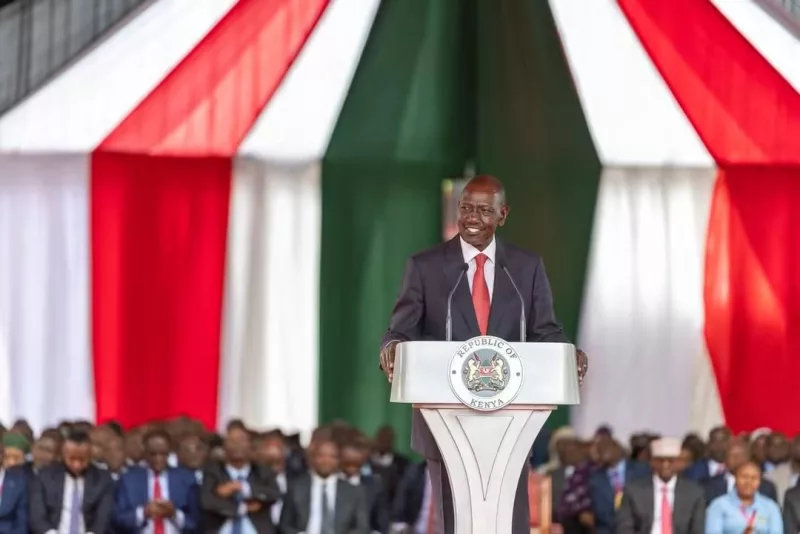
President William Ruto has stated that the government's digital farmer registration platform has successfully eliminated brokers and cartels that previously disrupted the distribution of subsidised fertiliser. The platform, which initially had 400,000 farmers registered, now boasts 8.9 million farmers. This development was announced during a presidential dialogue at the Agriculture and Food Summit at Jamhuri Park.
The digital platform has provided the government with reliable data on the number of farmers in the country, enabling better targeting of agricultural inputs. Ruto expressed appreciation for the participation and collaboration of chiefs, assistant chiefs, and county governments in populating the platform. The registration process has helped the government achieve several goals, including determining the exact number of farmers in the country.
The system has transformed the way subsidised fertiliser is distributed, closing loopholes that allowed middlemen and people without farms to buy the commodity and resell it to farmers. Previously, fertiliser could be purchased by anyone with money, creating room for brokers to enter the supply chain and make profits at the expense of farmers. This led to inefficiencies and unfair practices in the distribution of subsidised fertiliser.
With the new system, farmers must now be registered on the government platform before accessing subsidised fertiliser. The platform issues a voucher that identifies the farmer, the size of their farm, and the amount of fertiliser they qualify to purchase. This voucher is required to purchase fertiliser from the National Cereals and Produce Board, eliminating the possibility of cartels and brokers interfering with the distribution process.
According to Ruto, the farmer database is also helping the government assess agricultural financing needs. A significant proportion of loans disbursed through the Hustler Fund is being used by farmers to purchase fertiliser. In fact, almost 35 per cent of the funds lent through the programme goes towards buying fertiliser, which Ruto views as a positive development.
The data from the platform is also helping the government establish the number of farmers engaged in different agricultural value chains. The government now knows how many tea farmers, maize farmers, and farmers in other sectors there are, allowing for better planning and intervention at the production level. This information will enable the government to improve agricultural planning and make more informed decisions.
The digitalisation of fertiliser distribution has brought about significant benefits to farmers in Kenya. With the elimination of cartels and brokers, farmers can now access subsidised fertiliser more efficiently and fairly. The government's efforts to improve agricultural planning and financing will likely have a positive impact on the agricultural sector and the economy as a whole.
Key points
- The digital farmer registration platform has helped eliminate brokers and cartels in fertiliser distribution.
- The platform has 8.9 million registered farmers, up from 400,000 initially.
- The system ensures that only registered farmers with a voucher can purchase subsidised fertiliser.