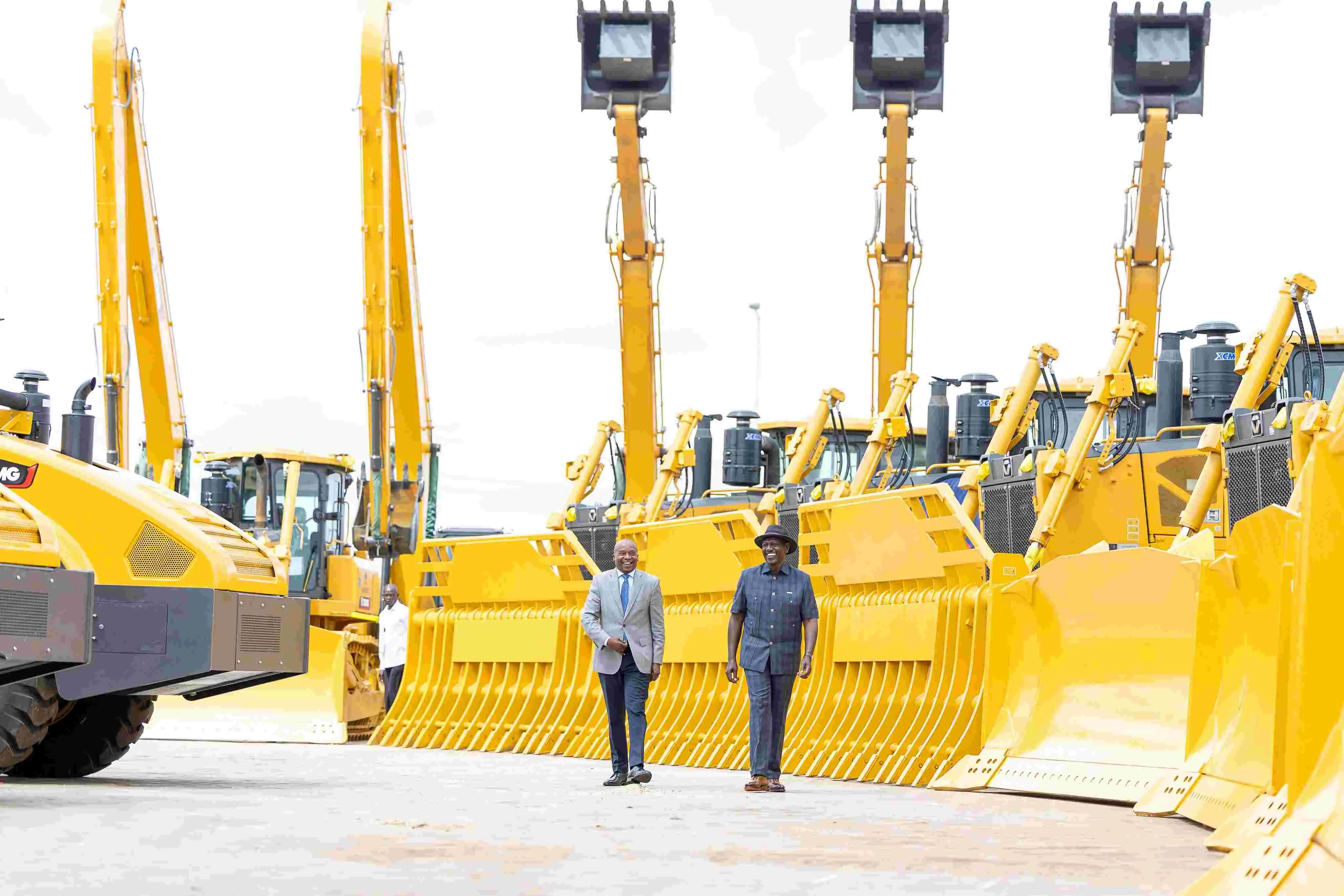
President William Ruto has defended the decision to locate the Sh2.2 trillion Dangote oil refinery in Lamu, Kenya. He cited the town's historic trade role and its links to the Lamu Port-South Sudan-Ethiopia Transport (LAPSSET) corridor. The refinery, the largest single investment in Kenya's history, is expected to turn Lamu into a major industrial hub. Ruto made these remarks during the groundbreaking ceremony for the project.
The Dangote refinery is designed to process up to 700,000 barrels of crude oil daily and is projected to generate about 60,000 direct and indirect jobs. During peak construction, wages are expected to reach Sh2 billion a month. Ruto argued that a town's size does not determine its economic potential, likening Lamu to Bethlehem. He stated that the refinery will make Lamu the "epicentre of the development of our country".
Ruto highlighted ongoing infrastructure upgrades in Lamu, noting that 100 km of the planned 153-km road linking Lamu to Ijara, Isiolo, and Moyale has already been tarmacked. The government is also advancing affordable housing, markets, and hostels in the county. These developments are expected to support the growth of the local economy and provide opportunities for residents.
The president said the refinery will act as a catalyst for broader development in the region. This includes a water pipeline from the Tana River, a new mainland town, and expanded opportunities for local businesses in transport, food, accommodation, and professional services. Ruto urged Kenyan universities and training institutes to prepare welders, technicians, engineers, and managers for the refinery's jobs.
Ruto promised that land disputes would be handled lawfully and that environmental and social impact assessments would be enforced. He also pledged a communication channel for residents, businesses, and community groups to raise concerns. A group of 133 Chandavai residents has challenged the project in court over ancestral land claims, with the court ordering a status quo pending further hearings.
The president encouraged Kenyans to invest in the refinery through the Nairobi Securities Exchange. Aliko Dangote plans to make shares available to the public, with small investors to be educated on participation. Construction of the refinery is slated to take several years, with completion targeted for around 2030. The facility will serve Kenya and the wider East African market.
The Dangote refinery is expected to have a significant impact on Kenya's economy. With its completion, the facility will provide a major boost to the country's industrial sector and create new opportunities for economic growth. The project is a key component of Kenya's efforts to develop its infrastructure and increase its economic competitiveness.
Key points
- The Dangote refinery is expected to generate about 60,000 direct and indirect jobs and create new opportunities for local businesses.
- The project is linked to the Lamu Port-South Sudan-Ethiopia Transport (LAPSSET) corridor, which will gain commercial purpose from the refinery.
- Construction of the refinery is targeted for completion around 2030, after which it will serve Kenya and the wider East African market.