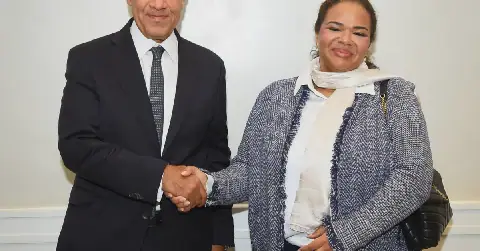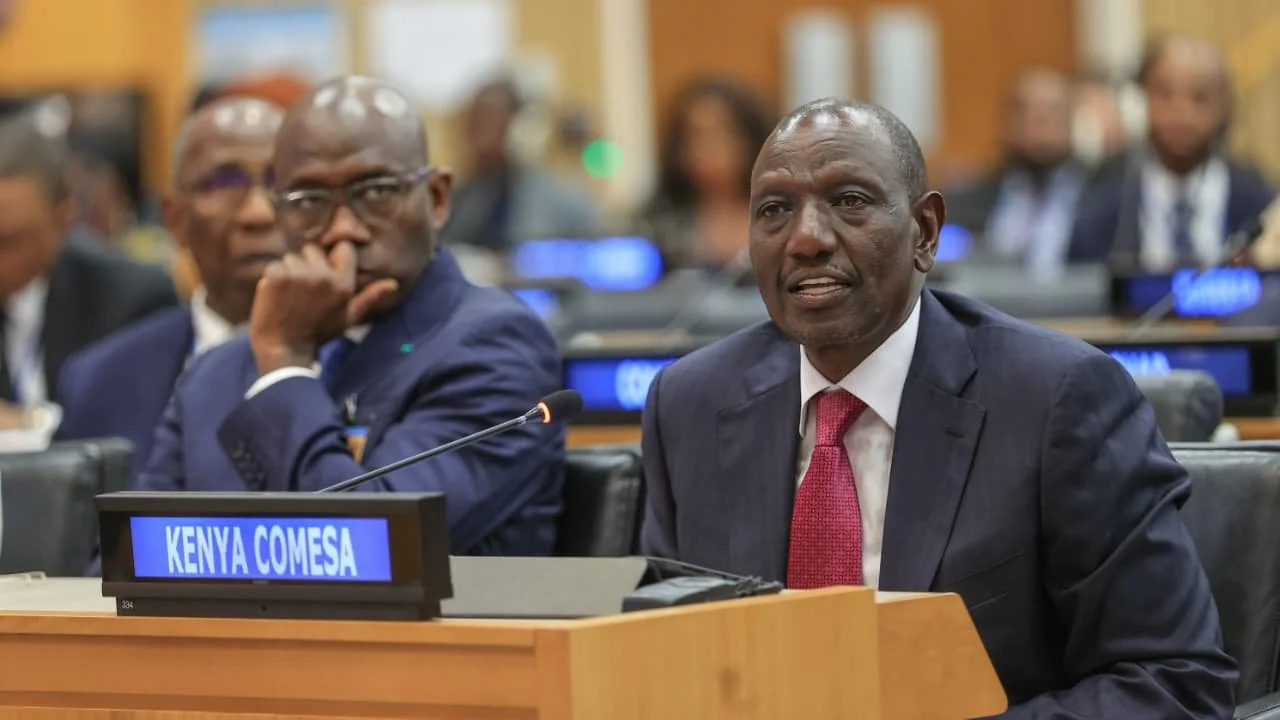
On September 22, 2026, in New York, President William Ruto of Kenya emphasized the need for Africa to take a proactive role in climate action. He stated that the continent must leverage the climate crisis to attract investment, create jobs, and strengthen economic resilience. Ruto highlighted Africa's potential for green industrialization while protecting communities and the environment. He stressed that Africa must pursue practical pathways to strengthen economies while advancing climate action.
President Ruto chaired a meeting of the Committee of African Heads of State and Government on Climate Change in New York. The meeting aimed to forge a common African position ahead of the 31st Conference of the Parties (COP31) in Antalya, Türkiye, and lay the groundwork for COP32 in Addis Ababa, Ethiopia. Ruto insisted that Africa must remain active in global climate negotiations and demand the implementation of commitments made by developed countries. He emphasized that the continent's task is to help close the gap between climate pledges and their fulfillment.
One of the significant challenges to effective climate action, according to President Ruto, is climate finance. He called for stronger delivery of financial commitments made under international climate agreements. Ruto stressed that climate finance is not charity but an obligation under the Convention and the Paris Agreement. He also highlighted the adaptation finance gap, estimated to be between $200 billion and $400 billion annually, as a major concern.
President Ruto questioned whether existing commitments were translating into adequate funding, citing the Adaptation Fund's financing shortfall. Last year, in Belém, Brazil, the world agreed to triple adaptation finance, but the Adaptation Fund secured only about $138 million against a $300 million target. Ruto argued that Africa's transition towards climate resilience and low-carbon development would remain difficult unless the international financing system was reformed.
The President emphasized that climate risks are increasingly becoming a central issue in economic policymaking. He stated that climate finance should support resilience, investment, and economic transformation. Ruto warned that the urgency of climate action is increasing as global temperatures continue to rise. He cited recent data showing that last month tied with July 2023 as the hottest 30-day period on record, with a global average surface air temperature 1.65 degrees Celsius above the pre-industrial average.
President Ruto cited warnings from the United Nations Environment Programme that exceeding the 1.5-degree Celsius threshold is becoming unavoidable. He also mentioned the possibility of a super El Niño, which could expose Africa and other vulnerable regions to severe climate impacts. Ruto urged African countries to maintain the vision contained in the Nairobi and Addis Ababa declarations by treating climate action as an investment opportunity capable of driving economic growth, competitiveness, and resilience.
President Ruto's call for stronger climate financing and a common African position ahead of COP31 reflects the continent's determination to address the climate crisis. Africa's active engagement in global climate negotiations and demand for the implementation of commitments made by developed countries will be crucial in the lead-up to COP31 and beyond. The President's emphasis on climate finance as an obligation under international agreements and the need for reform of the international financing system highlights the complexities of climate action in Africa.
Key points
- President Ruto calls for stronger climate financing for Africa ahead of COP31.
- Africa must remain active in global climate negotiations and demand implementation of commitments made by developed countries.
- The adaptation finance gap remains a major concern, estimated at between $200 billion and $400 billion annually.