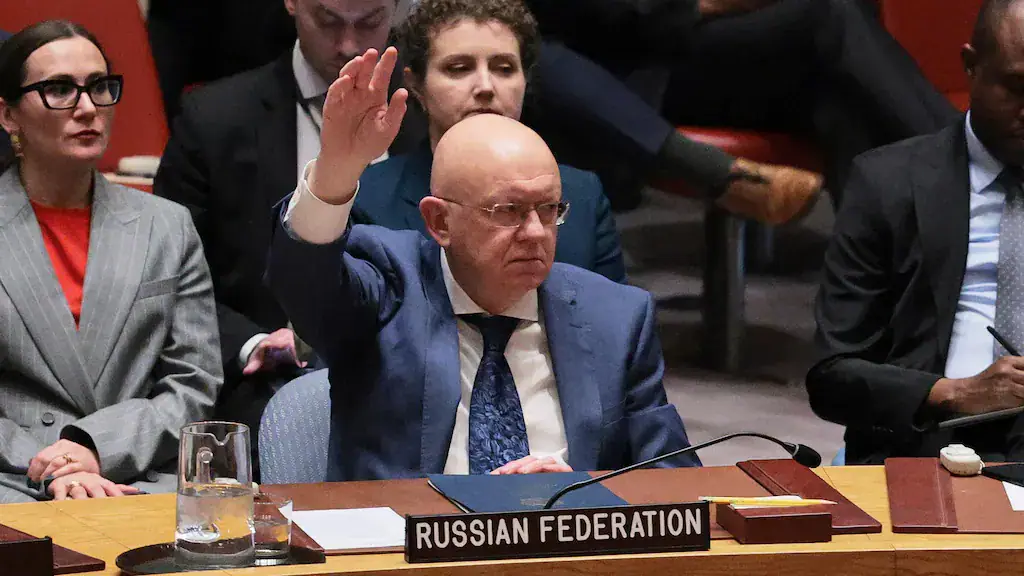
In a recent development, Russia exercised its veto power against a US-proposed resolution on the Sahara, citing the need to uphold the right to self-determination and maintain the UN framework for resolving the dispute. This move has raised eyebrows, given Russia's own actions in Ukraine, where it has organized referendums under military occupation to justify the annexation of Ukrainian territories.
The Russian stance on international law appears to be geographically variable, with some questioning the consistency of its principles. Meanwhile, Moroccan officials have seized on the opportunity to advance their own interests. According to Omar Hilale, Morocco's ambassador to the UN, the country has never asked its partners to choose between Rabat and Algiers, suggesting a desire to maintain diplomatic relationships with both.
The Sahara issue has been in a state of limbo for 35 years, with little progress made towards a resolution. However, recent developments suggest that the situation may be shifting. The US decision not to renew the mandate of the UN's MINURSO mission, which has been tasked with monitoring the ceasefire, has been justified as a response to a "project doomed to fail."
In the wake of the MINURSO mission's impending liquidation, Morocco has taken steps to open a new diplomatic chapter and accelerate progress towards a definitive solution. This move is seen as an effort to capitalize on the changed circumstances and assert Morocco's claims over the region.
The UN has initiated the process of winding down the MINURSO mission, which has been a cornerstone of international efforts to resolve the Sahara conflict. Morocco's Foreign Minister, Nasser Bourita, has assured that the country's authorities will ensure an orderly departure of the mission, excluding the possibility of expulsion.
As the situation continues to evolve, Morocco appears to be positioning itself for a more significant role in shaping the future of the Sahara. With Russia's veto having potentially created an opening for Morocco, the North African country may be poised to make further diplomatic gains in the region.
The ongoing developments in the Sahara have significant implications for regional stability and international relations. As Morocco navigates this complex landscape, it will be closely watched by its partners and adversaries alike. The outcome of these diplomatic efforts will likely have far-reaching consequences for the future of the Sahara and beyond.
Key points
- Morocco may benefit from Russia's veto on a US resolution regarding the Sahara.
- The Russian stance on international law has been questioned due to its inconsistent application.
- Morocco is seeking to accelerate progress towards a definitive solution in the Sahara.