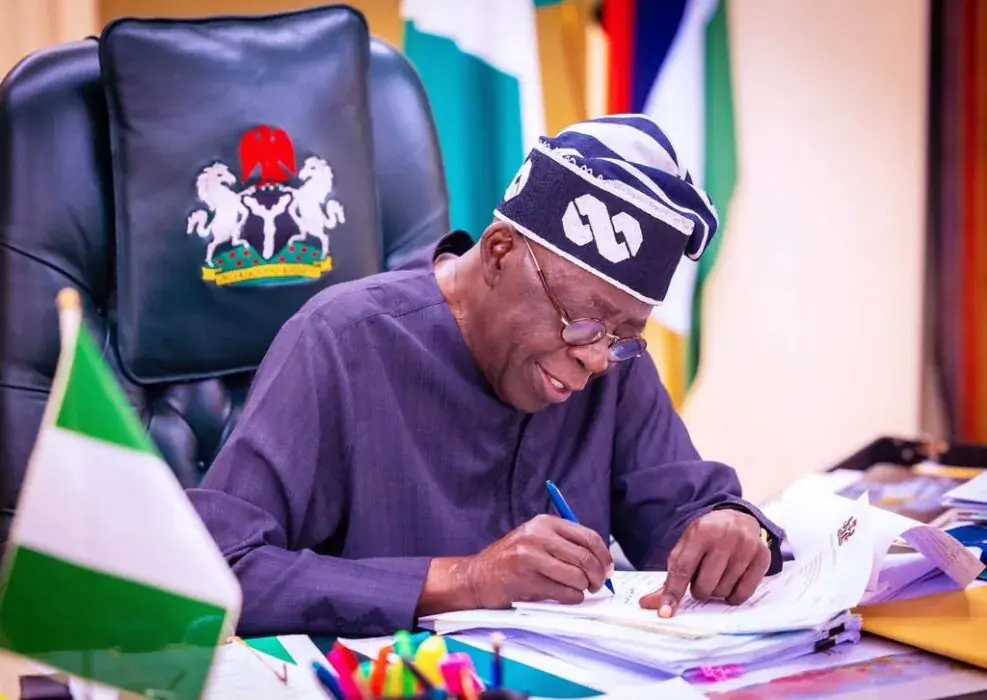
President Bola Tinubu's proposed $21.7 billion external borrowing plan has raised concerns over Nigeria's debt sustainability and accountability for previous loans. The plan, comprising $20.52 billion and €1.045 billion, aims to finance projects under the Federal Government's 2026–2027 Supplementary External Borrowing Plan. These projects will support investments in critical sectors such as power, transportation, healthcare, education, agriculture, water supply, security, and employment generation.
The proposed borrowing has sparked questions about Nigeria's ability to service additional debt amid rising public liabilities and pressure on government revenue. According to a report published on October 28, 2026, Nigeria's public debt stood at N166.79 trillion at the end of June 2026, compared with N87.37 trillion in June 2023. This significant increase has intensified concerns about the country's debt sustainability.
Economists have expressed concerns about the government's increasing reliance on borrowing to finance an expanding budget. Ibrahim Bakare, a professor of economics at Lagos State University, noted that the budget had expanded to N68.3 trillion, with revenue expected to fund most of it coming from borrowings. This implies that debt levels will rise, raising concerns about the relationship between government expenditure, revenue generation, and debt accumulation.
The Centre for Social Justice's lead director, Eze Onyekpere, emphasized that the key issue was how borrowed money was spent. He argued that borrowing should be directed towards capital expenditure, projects capable of generating economic returns, and human capital development. Onyekpere stressed the need for the Federal Government to publish detailed information on projects financed through previous loans.
A report published on October 28, 2026, raised concerns about the Federal Government's provisions for repaying maturing loans. The government remitted N374.63 billion into the sinking fund in 2023, but this amount may not be sufficient to meet future repayment obligations. The report's findings have sparked calls for the government to demonstrate that previous loans have delivered measurable economic benefits.
The proposed borrowing could push Nigeria's debt towards N200 trillion if fully approved and disbursed, depending on exchange rates and other debt movements. This has intensified calls for the government to ensure that borrowed funds are used effectively and efficiently. The government must prioritize transparency and accountability in its borrowing and spending plans.
The development has sparked a national conversation about Nigeria's debt sustainability and the need for effective management of public finances. The government's ability to manage its debt and ensure that borrowed funds are used productively will be crucial in determining the country's economic trajectory.
Key points
- The proposed $21.7bn loan could push Nigeria's debt towards N200 trillion.
- Economists have expressed concerns about the government's increasing reliance on borrowing.
- The government has been urged to demonstrate that previous loans have delivered measurable economic benefits.