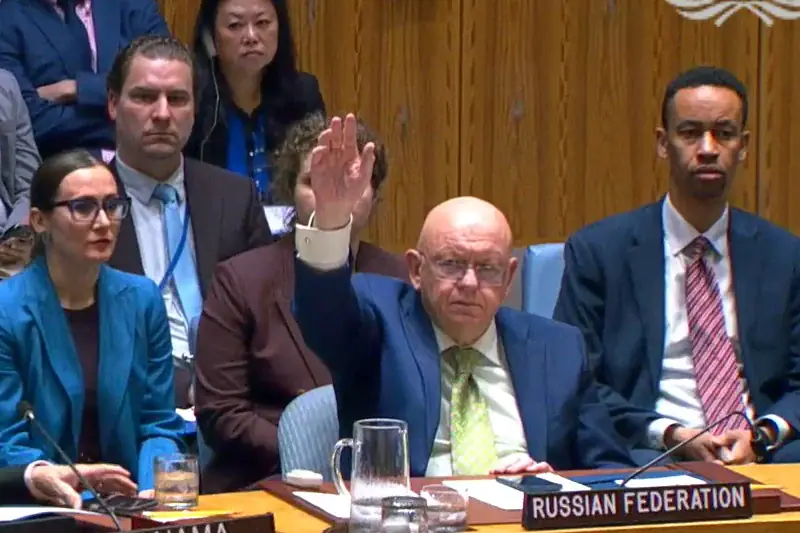
In a significant move, Russia has vetoed a UN resolution on Western Sahara, a decision that has far-reaching implications for the region. The resolution, backed by the United States, aimed to legitimize Morocco's claim to the territory. However, Russia's veto has put a halt to this plan, supporting the right of the Sahrawi people to self-determination. This development has changed the dynamics of the conflict, which has been ongoing for decades.
The Western Sahara conflict dates back to 1975 when Morocco occupied the territory. The international community, including the United Nations, has been involved in efforts to resolve the issue. The UN had planned to hold a referendum in 1991 to determine the fate of the territory, but it was never realized. Since then, the US has taken the lead in shaping the UN's approach to the conflict. Russia's veto has marked a significant shift in the country's stance on the issue.
Russia's decision to veto the resolution is seen as a strategic move to counterbalance US influence in the region. Moscow has been strengthening its ties with countries in North Africa, including Algeria, which has been a key player in the Western Sahara conflict. Russia's actions are also driven by a desire to uphold international law and prevent the legitimization of Morocco's occupation of Western Sahara.
The veto has significant implications for the region, particularly for the Sahrawi people. The Polisario Front, which represents the Sahrawi people, has been fighting for their rights and self-determination. The veto has given them a renewed sense of hope and support. The development has also raised questions about the future of the UN's involvement in the conflict and the potential for a new approach to resolving the issue.
The reaction to Russia's veto has been mixed. Morocco had been banking on the UN resolution to legitimize its claim to Western Sahara. The country's strategy has been dealt a significant blow, and it is unclear how it will respond to the new developments. The international community is also watching closely, as the implications of Russia's veto go beyond Western Sahara.
The veto has also sparked concerns about the potential for escalating tensions in the region. If Morocco decides to withdraw from the peace process, it could lead to a return to the conflict-ridden era of the 1970s. The withdrawal of the UN's MINURSO mission could also have significant consequences, including the potential for increased violence and instability in the region.
As the situation unfolds, the international community will be watching closely to see how the various players respond. The US, in particular, will need to reassess its strategy on Western Sahara. The country had been working to broker a deal between Morocco and the Polisario Front, but Russia's veto has changed the dynamics of the conflict. The coming days and weeks will be crucial in determining the future of Western Sahara and the region.
Key points
- Russia's veto of the UN resolution on Western Sahara has significant implications for the region and the international community.
- The veto has marked a shift in Russia's stance on the conflict, with Moscow now actively supporting the right of the Sahrawi people to self-determination.
- The development has raised questions about the future of the UN's involvement in the conflict and the potential for a new approach to resolving the issue.