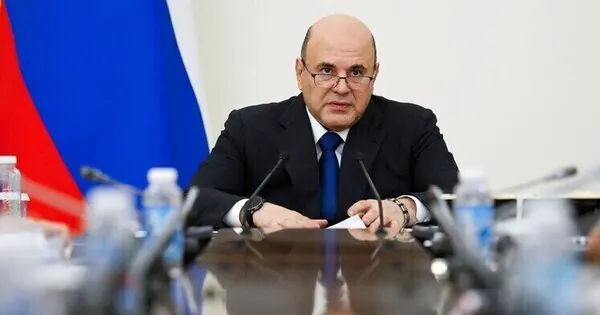
Russia is reorienting its trade away from Europe and the United States towards countries in the Global South, including India and China. According to Russian Prime Minister Mikhail Mishustin, friendly countries now account for 85% of Russia's foreign trade. This shift is part of Russia's strategy to diversify its trade partnerships and reduce dependence on Western markets.
In the first half of 2026, Russia's trade with India and other Global South countries reached $299 billion. Russian exports rose 15% year-on-year during this period, driven by increased shipments to friendly countries. Mishustin noted that the reorientation of trade extends beyond commodities and energy, with non-resource and non-energy exports to friendly countries increasing 11% in the first half of the year.
India has emerged as a crucial partner in Russia's trade expansion efforts. Bilateral trade between the two countries currently stands at around $60 billion annually, with a target of $100 billion in annual trade and $50 billion in two-way investments by 2030. Indian Commerce and Industry Minister Piyush Goyal emphasized the need to increase Indian exports of pharmaceuticals, engineering goods, and other products to rebalance bilateral trade.
The push to strengthen trade ties between India and Russia received fresh impetus during a meeting between Russian President Vladimir Putin and Indian Prime Minister Narendra Modi on the sidelines of the BRICS Summit. The leaders reviewed economic cooperation and discussed closer trade ties, highlighting the role of initiatives like the International North-South Transport Corridor and the Chennai-Vladivostok maritime corridor.
Russia's non-resource and non-energy exports reached $58.8 billion in January-June, up 3% from a year earlier. Chemicals, fertilizers, metals, and pharmaceuticals were among the sectors that recorded growth, according to Russian Industry and Trade Minister Anton Alikhanov. The growth in non-commodity exports is a positive sign for Russia's economy, which has faced challenges due to international sanctions.
India and Russia are also working to strengthen national and local currency settlement mechanisms to facilitate trade. The two countries have launched formal negotiations on a free trade agreement, which is expected to boost economic cooperation. Additionally, India and the Eurasian Economic Union have also initiated talks on a free trade agreement.
The shift in Russia's trade focus towards the Global South is likely to have significant implications for the global economy. As Russia continues to diversify its trade partnerships, countries like India are likely to play a more important role in its economic strategy. The growth in trade between Russia and India is expected to have a positive impact on economic cooperation and investment between the two countries.
Key points
- Russia's trade with India and Global South countries reached $299 billion in the first half of 2026.
- Friendly countries now account for 85% of Russia's foreign trade.
- India and Russia aim to increase bilateral trade to $100 billion annually by 2030.