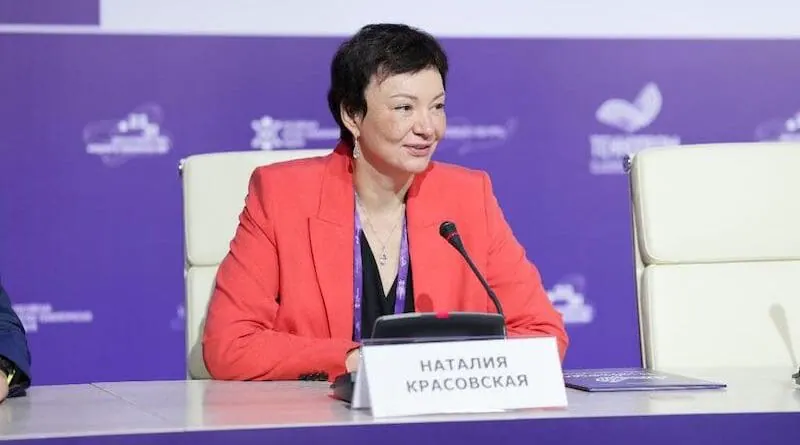
Russia is increasing its soft power footprint in West Africa through cultural, educational, and agricultural cooperation, with Ghana being a key partner. The Center for Public Diplomacy (CPD) of the Russian Federation has established a presence in Accra, with a Russian House that serves as a hub for cultural and educational activities. The CPD's approach focuses on building relationships through people's everyday experiences, rather than just government-to-government interactions. This approach is led by Executive Director Dr. Nataliia Krasovskaia, who emphasizes the importance of culture in understanding between nations.
The Russian House in Accra offers various cultural activities, including film screenings, poetry recitals, and language lessons, which provide opportunities for Ghanaians to engage with Russian culture. The center also celebrates traditional Russian festivals, such as Maslenitsa and Victory Day, and offers art masterclasses and educational exchanges. These activities aim to create opportunities for direct engagement between young people in Ghana and Russia. Additionally, Ghanaian stories are being shared with Russian audiences, including the Russian translation of Ghana's President John Dramani Mahama's memoir, My First Coup d'État and Other Stories from the Lost Decades of Africa.
Education is a key pillar of the CPD's work in Ghana, with partnerships established with 12 Ghanaian educational institutions, including universities and technical institutions. The CPD has also established preparatory faculties in the Bono-East Region, in partnership with Novosibirsk State Technical University, and an engineering class in the Volta Region, which introduces secondary-school students to physics, mathematics, programming, and introductory energy studies, alongside Russian language instruction. The goal is to prepare students locally before they pursue further education in Russia.
The CPD's education program also invests in training Ghanaian teachers and lecturers in Russian language instruction, through cooperation with Yaroslavl State Pedagogical University. Over 270 students are enrolled in local Russian-language programs, and 28 Ghanaian students secured direct university admission in Russia for 2026. The approach seeks to establish lasting connections between Ghanaian educators, students, and Russian institutions.
Agriculture is another important area of cooperation, with the Russian House exploring partnerships between Ghanaian agricultural communities and Russian universities and research institutions. Potential areas of cooperation include technical training, scientific research, technology transfer, and modern farming methods. The emphasis is on connecting education and research to the needs of local communities, with the goal of providing knowledge that can be applied locally.
The CPD's work in Ghana is part of a wider continental presence, with operations in 12 African countries, and plans to expand to 14 countries by the end of 2026. The organization is developing a network that combines cultural engagement with educational and humanitarian cooperation, under the leadership of General Director Dmitrii Savelyev in Moscow.
The growing Russian presence in West Africa raises questions about the implications for international partnerships and development cooperation on the continent. For African countries, the central consideration is how these relationships serve their own priorities, including economic development, education, and agriculture. The CPD's approach highlights the importance of cultural exchange, educational cooperation, and practical development in building lasting relationships between nations.
Key points
- Russia's soft power footprint is expanding in West Africa through cultural, educational, and agricultural cooperation.
- The Center for Public Diplomacy has established a presence in Accra, with a Russian House that serves as a hub for cultural and educational activities.
- The CPD's approach focuses on building relationships through people's everyday experiences, rather than just government-to-government interactions.