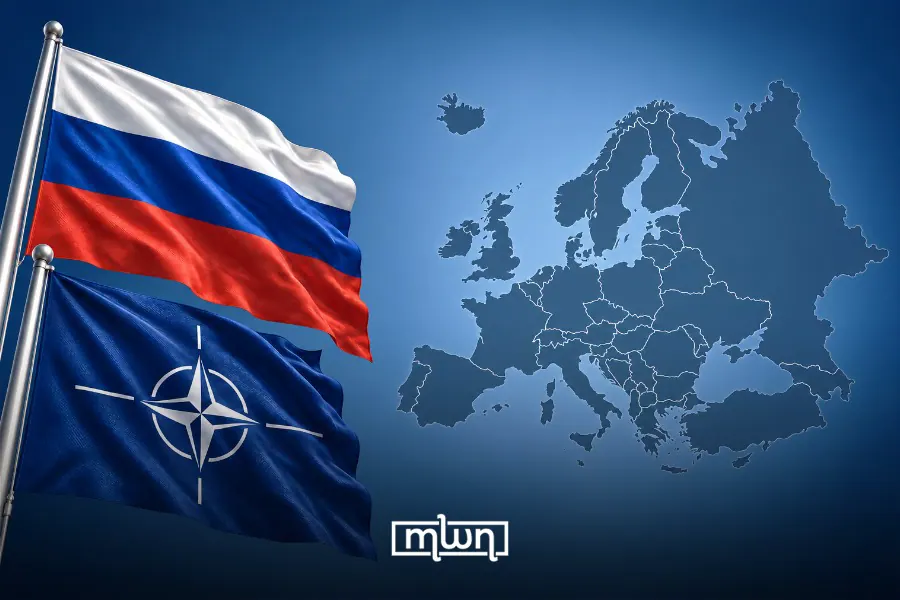
Europe is experiencing increased confrontation with Russia, extending beyond Ukraine's borders. Although no NATO member has declared war on Moscow, a series of incidents has heightened concerns about potential escalation. These events include a drone attack at a German airport, strikes near NATO borders, and a drone interception over Lithuania. This rising tension has sparked fears that Russia is probing the limits of disruption it can cause without triggering a unified military response from NATO.
The recent escalation gained attention following an incident at Germany's Leipzig/Halle Airport on August 4. Investigators discovered an explosive-laden drone near a Ukrainian Antonov cargo aircraft, which was transporting military supplies. German authorities attributed the operation to Russia's GRU military intelligence service, claiming Russian operatives provided technical expertise and equipment. German Foreign Minister Johann Wadephul stated that they are not at war but are daily targets of hybrid warfare. In response, Berlin summoned Russia's ambassador and announced measures targeting suspected intelligence activity.
On September 13, a Russian drone struck a train near Yahodyn, a major Ukrainian crossing point on the Polish border. A diplomatic train carrying former British Prime Minister Boris Johnson and other European security advisers had departed shortly before. Ukraine's railway operator suggested that the diplomats may have been the intended target, although this has not been independently confirmed. The incident raised concerns due to its proximity to Poland, turning an attack inside Ukraine into an immediate NATO security concern.
Other strikes have targeted border infrastructure connecting Ukraine with Moldova and Romania. Two people were killed at the Starokozache crossing with Moldova, while Romanian authorities recorded nearly three times as many drone incursions in 2026 as in all of 2025. These attacks appear aimed partly at disrupting Ukraine's economy and war effort, but every drone approaching NATO territory also carries the risk of escalation.
The danger of escalation became more apparent over Lithuania on September 14. An Italian Eurofighter, assigned to NATO's Baltic air-policing mission, shot down a drone that had entered from Belarus and remained in Lithuanian airspace for about 30 minutes. The drone was identified as a Russian-made Gerbera, capable of carrying explosives. Lithuanian President Gitanas Nausėda assessed that the drone was probably intended for Ukraine but may have been diverted by electronic warfare.
Hours after the drone incident, a Russian frigate fired two emergency flares toward a Danish military helicopter conducting a photographic patrol over international waters. Denmark reported that one flare passed within meters of the aircraft and that Russia had issued no radio warning. Danish Foreign Minister Lars Løkke Rasmussen accused Russia of "gradually shifting the boundary" of acceptable conduct. Denmark summoned the Russian ambassador in response.
Polish Prime Minister Donald Tusk warned that converging intelligence from the US, Ukraine, and NATO indicated that Russia may be preparing limited drone or missile strikes against NATO countries. These potential attacks could be portrayed as accidents, even if they cause deaths or significant damage. Tusk also warned that Russia is preparing a more intense campaign against Ukrainian cities, railways, and border crossings during late autumn and winter. In response, Poland has reinforced air-defense arrangements and placed engineering units on standby.
Key points
- Russia's actions test NATO's collective defense and may aim to confuse decision-making and divide allies.
- Europe treats attacks beyond Ukraine as a domestic security problem, with France preparing to protect critical infrastructure.
- Poland and other NATO members are taking measures to enhance security and prepare for potential escalation.