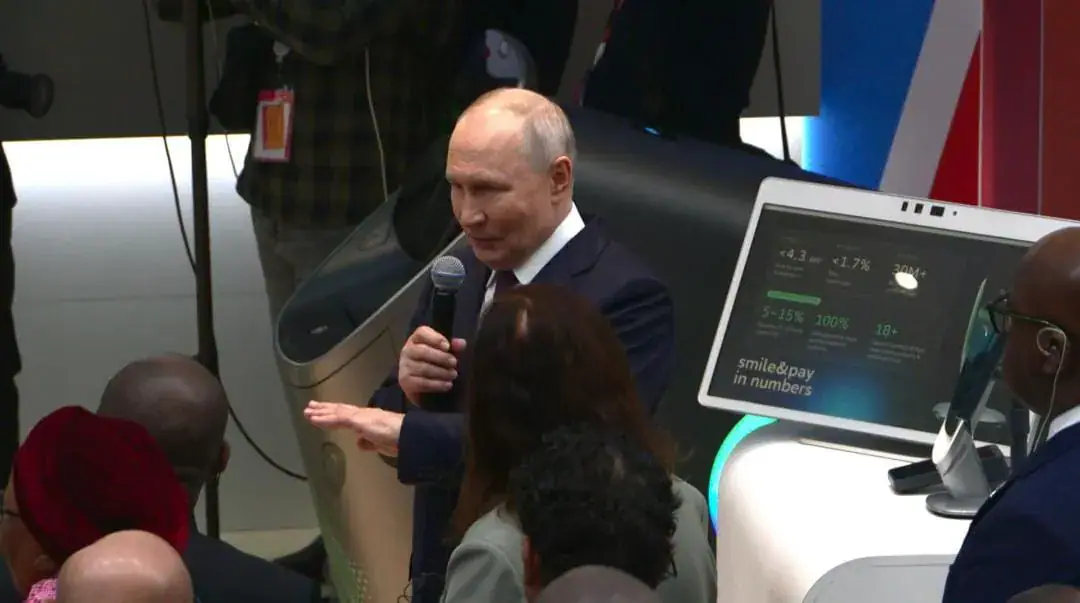
Russian President Vladimir Poutine has introduced the A7 payment system, a trans-border payment platform aimed at reducing Africa's reliance on Western financial circuits. The system was presented during the 3rd Russia-Africa Summit in Moscow, which concluded on October 29, 2026. Poutine showcased A7 as a means to promote technological emancipation and ensure transaction sovereignty. The platform allows for instant international transfers with a commission of 0.3%, significantly lower than traditional banking systems.
The A7 payment system is seen as a strategic move by Russia to strengthen its economic ties with Africa. In 2025, Russia's trade with Africa reached $27 billion, but secondary American and European sanctions have hindered many transactions. A7 is expected to provide a secure channel for Russia to settle its exports without breaching US Treasury regulations. The system has already been implemented in Nigeria and Zimbabwe, and its expansion to other African countries is anticipated.
The A7 payment system has the potential to benefit countries seeking financial autonomy, such as those in the Alliance of Sahel States (AES). The platform offers an alternative channel for exporting raw materials and acquiring strategic goods outside the extraterritorial jurisdiction of the US dollar. This could enable African countries to reduce their dependence on Western financial systems and mitigate the risks associated with sanctions and asset freezes.
The introduction of A7 has sparked interest among African nations, particularly those that have experienced difficulties with international transactions due to Western sanctions. The platform's low transaction fees and instant transfer capabilities make it an attractive option for countries seeking to facilitate trade and investment. However, the long-term implications of adopting A7 remain uncertain, and African countries will need to carefully consider the potential risks and benefits.
Despite the potential benefits of A7, some experts argue that replacing dependence on SWIFT with a system under Russian control may not magically resolve the monetary challenges facing African economies. The underlying structural issues, such as limited economic diversification and infrastructure deficits, will still need to be addressed. Moreover, African countries will need to ensure that they are not simply substituting one form of dependence for another.
The A7 payment system is part of a broader Russian strategy to increase its economic influence in Africa. By providing an alternative financial platform, Russia is seeking to strengthen its ties with African countries and challenge Western dominance in the region. The success of A7 will depend on its adoption by African countries and its ability to deliver on its promises of faster, cheaper, and more secure transactions.
As African countries consider the A7 payment system, they will need to weigh the potential benefits against the potential risks. The platform's impact on regional and global trade patterns, as well as its implications for financial stability and security, will also need to be carefully assessed. Ultimately, the adoption of A7 will depend on its ability to meet the needs of African countries and support their economic development goals.
Key points
- Russia's A7 payment system offers a low-cost alternative for international transactions, with fees of 0.3% compared to 3-7% for traditional banking systems.