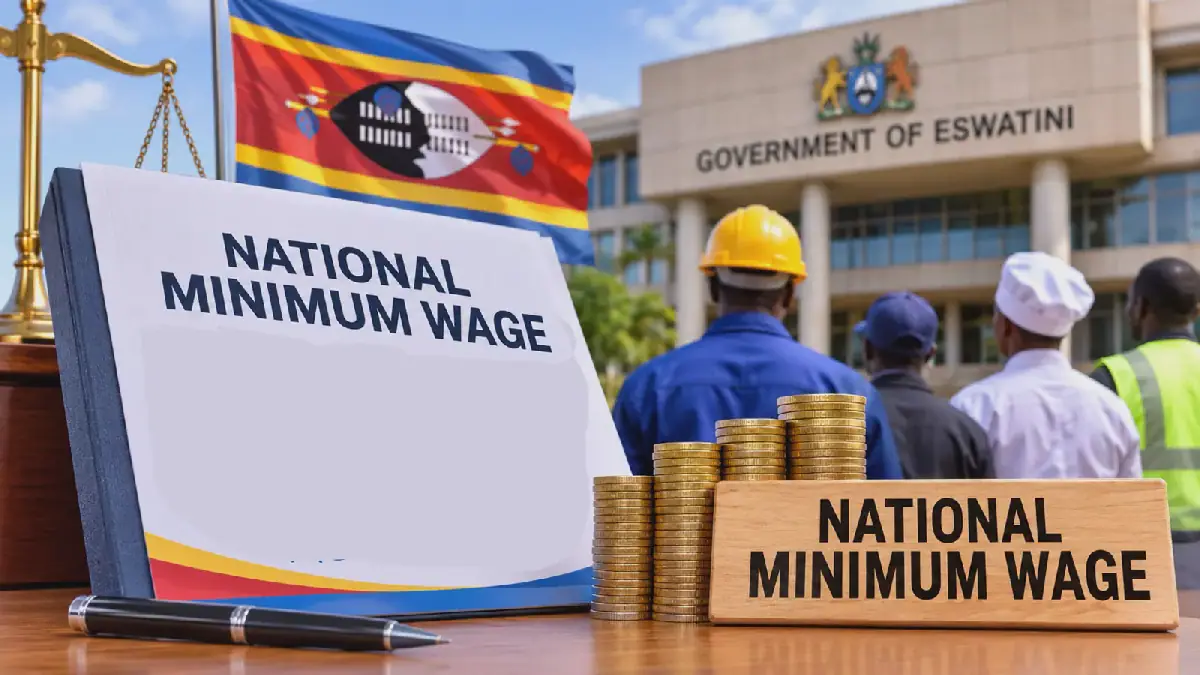
The government of Eswatini is examining the possibility of introducing a national minimum wage to change how workers' minimum pay is determined across the economy. This development follows a feasibility study commissioned in 2024 with technical support from the International Labour Organisation (ILO). The study aimed to assess the viability of implementing a national minimum wage in the country.
Currently, Eswatini regulates minimum wages through the Wages Act of 1964, which provides for minimum wages across 18 sectors. These wages undergo periodic reviews to account for changes in the cost of living. However, the government is considering whether the country should introduce a national minimum wage that could change the minimum amount employers are required to pay, depending on the model adopted.
A consultant was engaged in 2024 to assess the feasibility of the proposed arrangement, and consultations were conducted through structures representing government, employers, and workers. The consultations aimed to balance the interests of the different parties. Stakeholders adopted a roadmap following the development of an inception report outlining proposed options for the national minimum wage.
The proposed national minimum wage is part of broader reforms intended to strengthen protections governing wage payments. The draft Employment Bill of 2024 includes measures to strengthen wage security, such as provisions requiring wages to be paid in legal tender and prohibiting agreements restricting how employees spend their earnings.
During the UN Committee on Economic, Social and Cultural Rights' review on November 3, the government confirmed that establishing a national minimum wage board remained under consideration. The committee's review is part of the country's efforts to comply with international human rights obligations.
The introduction of a national minimum wage could have significant implications for workers and employers in Eswatini. If implemented, it could provide a safety net for low-income workers and help reduce poverty and inequality in the country. However, some argue that it could also lead to increased costs for employers and potentially negatively impact employment levels.
The government is expected to continue consultations with stakeholders and consider the findings of the feasibility study before making a decision on the introduction of a national minimum wage. The outcome will likely have far-reaching consequences for the country's economy and workforce.
Key points
- The government of Eswatini is considering introducing a national minimum wage, following a feasibility study conducted in 2024.
- The proposed national minimum wage is part of broader reforms to strengthen protections governing wage payments.
- The introduction of a national minimum wage could have significant implications for workers and employers in Eswatini.
Reporting sources
- National minimum wage under consideration · Times of Swaziland