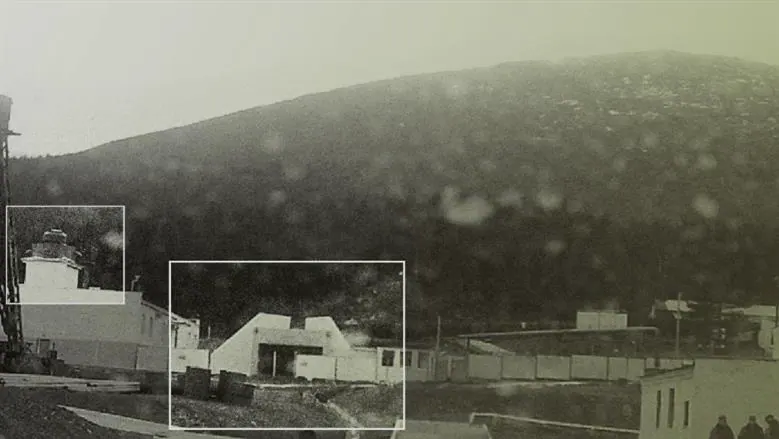
In a remote area of the Russian Ural Mountains, a highly classified military facility dating back to the Soviet era is undergoing significant reconstruction and expansion. The facility, located near the village of Kitlym, is part of Russia's efforts to revive its 'Dead Hand' nuclear system, designed to ensure the country's ability to launch a retaliatory nuclear strike even if its leadership is destroyed in a nuclear attack. The facility, known as 'Object 1335,' is situated at an altitude of approximately 1,300 feet above sea level.
The 'Dead Hand' system, also known as 'Perimeter,' was developed during the Cold War to guarantee Russia's capacity to issue nuclear retaliation orders in the event of a nuclear attack that severs communication with its leadership. The system relies on backup communication channels that can transmit signals to mobile missile launch platforms, which can then relay encrypted orders to other platforms to execute a retaliatory strike. This system is designed to ensure that Russia can respond to a nuclear attack even if its command structure is severely damaged.
An investigation by The Sunday Times, Danwatch, and the Dossier Center has uncovered extensive construction work at the facility, including the creation of new complexes, tunnels, and underground installations. The investigation, based on nearly 2.5 million Russian documents and records, reveals that the construction project has cost hundreds of millions of pounds. Since 2018, Russia has purchased substantial equipment, including tunnel-boring machines, ventilation systems, and large quantities of steel, cables, and concrete.
The construction work at the facility has been extensive, with records showing the use of nearly 3 million liters of fuel, 823,000 liters of gas, and 20,000 tons of steel. The documents also indicate that at least 24 underground rooms have been equipped with a compressed air system, and the distance between the main exit and emergency exit is approximately 2.5 kilometers. The period between 2020 and 2021 saw the most intense construction activity, with contractors using 361 kilometers of cables, 5,429 lamps, and 160 ventilation units in 2020 alone.
Satellite images have revealed significant activity at the site, including large amounts of excavated soil on the mountain slope. Images published on Russian social media appear to show parts of the new military base, including a large entrance to the facility inside the mountain and a tower with a machine gun guarding the site. Former soldiers who served at the facility describe the complex as vast, with a network of tunnels allowing buses to move inside the mountain and transport personnel between sectors.
The development of the facility coincides with a focus on Russia's nuclear infrastructure resilience in the face of a potential attack. Russian President Vladimir Putin has emphasized the importance of maintaining a strong nuclear deterrent, and the 'Dead Hand' system is seen as a key component of this strategy. The system is designed to ensure that Russia can respond to a nuclear attack even if its leadership is destroyed, providing a second-strike capability that deters adversaries from launching a nuclear attack.
The revival of the 'Dead Hand' system has significant implications for global security, particularly in the context of the ongoing conflict in Ukraine. The system's development is seen as a response to the perceived threat from the United States and its allies, and it is likely to further escalate tensions between Russia and the West. As the global nuclear landscape continues to evolve, the 'Dead Hand' system's role in Russia's nuclear strategy is likely to remain a subject of intense scrutiny and concern.
Key points
- Russia is rebuilding and expanding a secret military facility in the Ural Mountains as part of its efforts to revive the 'Dead Hand' nuclear system.
- The 'Dead Hand' system is designed to ensure Russia's ability to launch a retaliatory nuclear strike even if its leadership is destroyed in a nuclear attack.
- The facility's development has significant implications for global security, particularly in the context of the ongoing conflict in Ukraine.