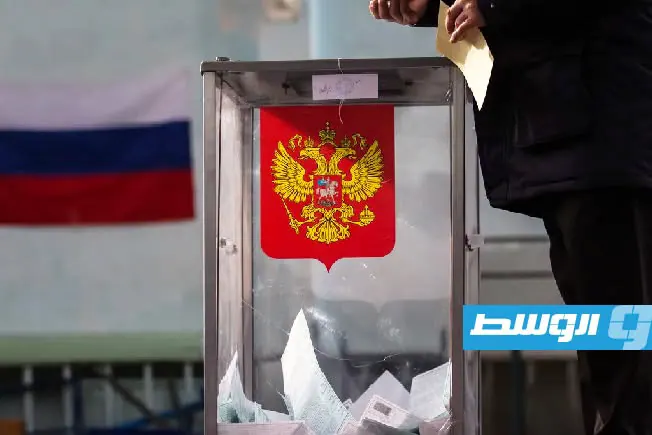
Russia's Central Election Commission reported that the country's election infrastructure has been targeted by over 1,000 cyberattacks in recent days. The attacks, which were described as Distributed Denial-of-Service (DDoS) attacks, aimed to disrupt the electoral process. DDoS attacks involve directing a large number of electronic requests to a system or website, causing it to become overwhelmed and unresponsive.
The attacks were reported by Ella Pamfilova, head of the Central Election Commission, who stated that the attacks had been ongoing and had not stopped. The commission did not specify the source of the attacks, but they occurred as Russia was holding its legislative elections. The elections, which began on September 17, 2026, will conclude on September 20, 2026.
The Russian legislative elections are being closely watched, as they are the first to take place since Russia's invasion of Ukraine in February 2022. The elections are expected to be won by the ruling party, United Russia, which has supported President Vladimir Putin's policies. Other parties, including the Communist Party of the Russian Federation, the Liberal Democratic Party of Russia, and A Just Russia, are also participating in the elections.
The elections have been marked by increased security measures, including the deployment of air defense systems to protect against drone attacks. Moscow's mayor, Sergei Sobyanin, reported that over 1,600 drones had been shot down, including 450 that were heading towards Moscow. The increased security measures were implemented due to concerns about potential disruptions to the electoral process.
The Russian government has accused Ukraine of attempting to disrupt the elections through cyberattacks and drone strikes. The situation has raised concerns about the potential for further escalation and the impact on the electoral process. The international community has been monitoring the situation closely, with the European Union expressing concerns about the conduct of the elections.
The cyberattacks on Russia's election infrastructure have raised concerns about the vulnerability of electoral systems to cyber threats. The incident highlights the need for countries to invest in robust cybersecurity measures to protect their electoral processes. The Russian government has not specified the extent of the damage caused by the cyberattacks, but it has emphasized its commitment to ensuring the integrity of the electoral process.
The legislative elections in Russia will elect all 450 members of the State Duma, the lower house of the Russian parliament. The elections are seen as a test of public support for the government's policies, including its actions in Ukraine. The outcome of the elections is expected to have significant implications for Russia's domestic and foreign policy.
Key points
- Russia's election infrastructure was targeted by over 1,000 cyberattacks in recent days.
- The cyberattacks were described as Distributed Denial-of-Service (DDoS) attacks.
- The elections are expected to be won by the ruling party, United Russia.