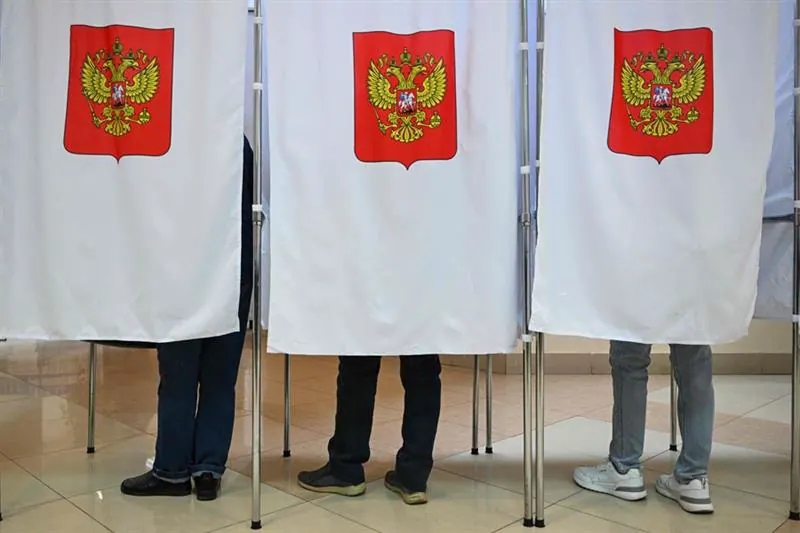
Russia's electoral chief, Ella Pamfilova, announced on Sunday, 20 September 2026, that the country's election infrastructure has been targeted by over 1,000 waves of distributed denial-of-service (DDoS) attacks in recent days. The attacks, which involve overwhelming a system with internet traffic to prevent normal functioning, appear to have been carried out by highly professional and well-coordinated groups using artificial intelligence tools.
The DDoS attacks are targeting infrastructure specifically involved in the electoral process, Pamfilova said, as voting is currently underway in Russia to determine all 450 seats in the lower house State Duma. The ruling United Russia party, which backs President Vladimir Putin and has won every parliamentary election in Russia since 2003, is widely expected to secure another victory.
All other parties cleared to run in the election back Putin and the Ukraine offensive, while Russia's Supreme Court struck the anti-war Yabloko party off the ballot weeks before the vote. The Yabloko party's exclusion from the ballot has been seen as a significant blow to the opposition.
The Russian government has not attributed the DDoS attacks to any specific entity or country. However, the sophistication and coordination of the attacks suggest that they may be the work of a highly organized group. The Russian government has been known to accuse Western countries of launching cyberattacks against its infrastructure in the past.
The election is being closely watched by international observers, who are concerned about the potential for interference and manipulation. The Russian government has taken steps to improve the security of its election infrastructure, but the DDoS attacks highlight the ongoing challenges of protecting against cyber threats.
The United Russia party's dominance of Russian politics has been a subject of controversy in recent years. Critics have accused the party of using its control of the media and other institutions to suppress opposition and manipulate the electoral process. The party's expected victory in the election is likely to be seen as a consolidation of Putin's power.
The Russian government has faced criticism for its handling of the election, including the exclusion of opposition parties and concerns about voting irregularities. The international community will be watching closely to see if the election is conducted fairly and transparently.
Key points
- Over 1,000 waves of DDoS attacks have targeted Russian election infrastructure
- The ruling United Russia party is widely expected to secure another victory in the election
- The election has been marked by controversy and concerns about interference and manipulation