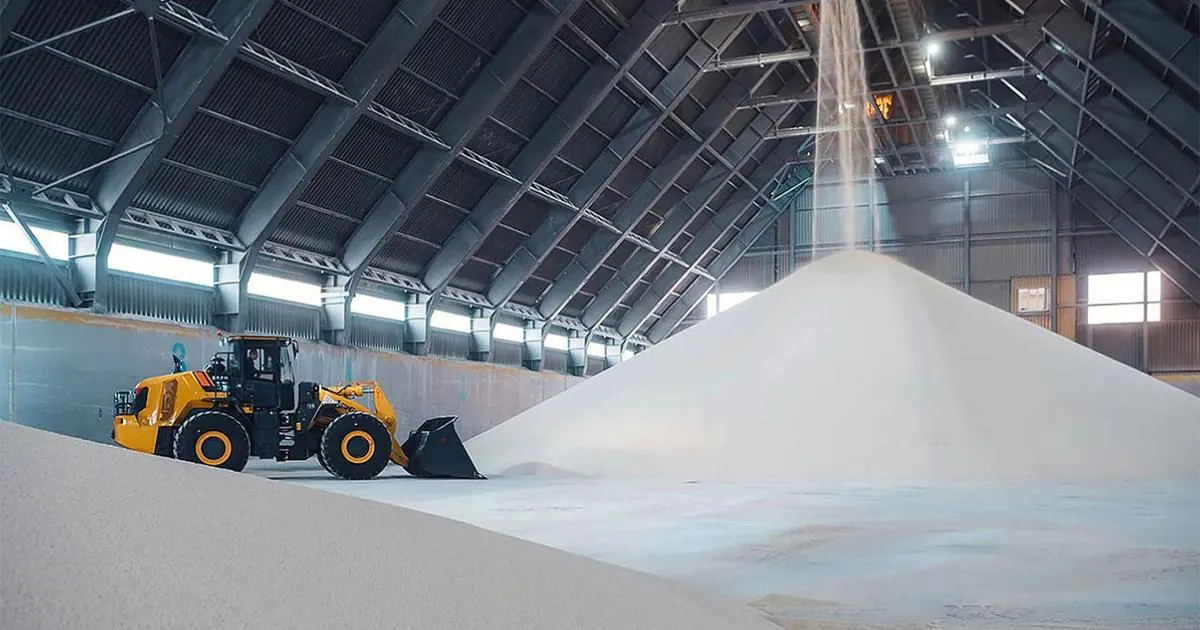
Russia has recently exported 500,000 tonnes of complex fertilizers to Ethiopia, equivalent to roughly ten million standard 50-kilogram sacks. This shipment marks a significant milestone in the country's efforts to increase its agricultural input supplies. Ethiopia requires approximately 2.5 million tonnes of mineral fertilizers annually to sustain its crop cycles. The Russian government is actively negotiating to increase fertilizer supplies to capture a larger share of Ethiopia's agricultural input requirement.
Russian Agriculture Minister Oksana Lut confirmed that Moscow is actively negotiating to scale up deliveries of fertilizers to Ethiopia. The strategy aims to deepen agricultural dependencies as Ethiopia relies heavily on imported fertilizers to support its massive lowland wheat and highland teff harvests. PhosAgro, a Russian chemical giant, is currently evaluating logistics pipelines to scale its direct deliveries into the Horn of Africa.
The financial scale of this bilateral trade is rapidly expanding, with Russian compound fertilizer shipments to Ethiopia surging 2.7-fold to $186 million in the first quarter of the year. This represents a 29.2 billion Birr outflow, converted at the current exchange rate of 157 Birr to the dollar. Ethiopia has become the third-largest importer of Russian compound fertilizers worldwide, trailing only Brazil and India.
The shipments, which transit entirely through the Port of Djibouti, signal a structural shift in how Addis Ababa sources essential nutrients needed to support its agricultural sector. For Moscow, the fertilizer trade operates as a geoeconomic lever, allowing firms like PhosAgro to capture hard currency revenues in Africa. Agricultural inputs generally remain exempt from international sanctions, complicating financial settlements for Russian exports in Western markets.
By offering competitive pricing and negotiating long-term supply timelines, Russian producers can undercut traditional Middle Eastern and North African suppliers. The ongoing negotiations remain market-driven, hinging entirely on the financial terms and delivery schedules Moscow can guarantee to the Ethiopian state purchasing enterprises. This development has significant implications for Ethiopia's agricultural sector and its relationships with international partners.
Ethiopia's agricultural sector is a significant contributor to the country's economy, with the 2026 wheat harvest expected to be substantial. The country's reliance on imported fertilizers highlights the need for sustainable solutions to support its agricultural sector. The Russian fertilizer exports are expected to play a significant role in supporting Ethiopia's agricultural sector in the coming years.
The expansion of Russian fertilizer exports to Ethiopia is part of a broader effort to strengthen ties between the two countries. The fertilizer trade is expected to continue growing, with Russia seeking to capture a larger share of Ethiopia's agricultural input requirement. The two countries are likely to continue negotiating the terms of their fertilizer trade agreements in the coming months.
Key points
- Russia ships 500,000 tonnes of fertilizer to Ethiopia, plans to increase exports.
- Ethiopia requires approximately 2.5 million tonnes of mineral fertilizers annually.
- Russian fertilizer exports to Ethiopia surged 2.7-fold to $186 million in the first quarter of the year.