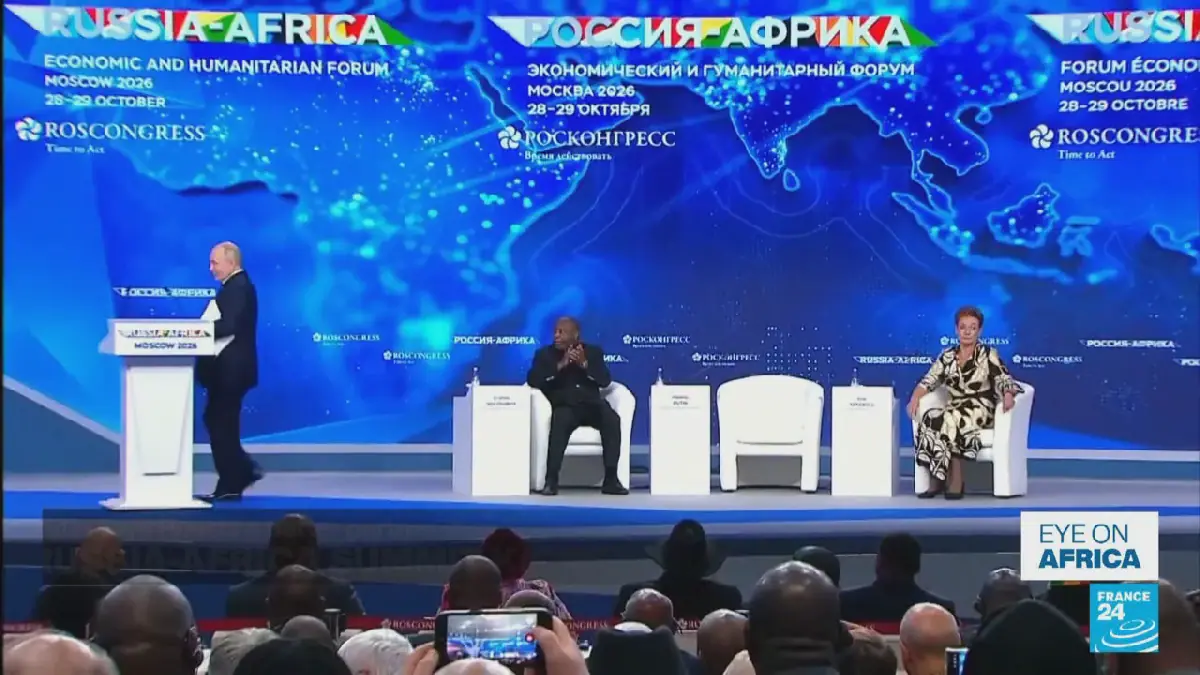
A high-profile summit kicked off in Moscow, bringing together nearly two dozen African leaders. The Kremlin views these nations as natural allies in its standoff with the West. Russian officials have been keen to strengthen ties with African countries, seeking to expand its influence on the continent. The summit is expected to focus on enhancing cooperation in areas such as trade, investment, and security. African leaders attending the summit represent a significant portion of the continent's population and economies. The meeting is seen as a crucial platform for Russia to bolster its presence in Africa.
The Moscow summit is part of Russia's broader strategy to increase its engagement with Africa. In recent years, Russia has made significant inroads on the continent, signing key deals in areas such as energy, infrastructure, and defense. The Kremlin has also been actively courting African leaders, with President Vladimir Putin hosting several high-profile visits from African leaders. Russia's outreach efforts have been driven by a desire to expand its global influence and challenge Western dominance. African countries, in turn, have been attracted to Russia's non-interference approach and willingness to engage in mutually beneficial partnerships.
The summit has sparked interest among African leaders, who see Russia as a valuable partner in their quest for economic development and security. Many African countries have been grappling with significant challenges, including poverty, inequality, and terrorism. Russia's offer of cooperation in areas such as security and defense has resonated with some African leaders, who are seeking to diversify their partnerships and reduce dependence on traditional Western allies. The summit is expected to yield several key agreements and memoranda of understanding, aimed at deepening Russia-Africa ties.
Despite the optimism surrounding the summit, some analysts have expressed skepticism about the potential outcomes. They argue that Russia's engagement with Africa may be driven more by self-interest than a genuine desire to support the continent's development. Critics also point to Russia's human rights record and its involvement in conflicts in several African countries. Nevertheless, many African leaders remain hopeful that the summit will deliver tangible benefits for their countries. They are keen to explore new opportunities for cooperation and investment.
The Moscow summit has also been seen as a challenge to Western influence in Africa. The United States, Europe, and other traditional partners have long been dominant players on the continent. However, Russia's growing presence has raised questions about the future of Africa's international relationships. Some analysts argue that Africa's increasing multipolarity could create new opportunities for the continent, allowing it to play a more significant role in global affairs. Others, however, warn that the growing rivalry between global powers could lead to increased competition and instability.
As the summit continues, African leaders are expected to engage in detailed discussions with their Russian counterparts. The talks will focus on a range of issues, including trade, investment, infrastructure, and security. Russia has already pledged significant investments in several African countries, and the summit is likely to yield further commitments. African leaders will also be keen to discuss regional and global issues, such as terrorism, climate change, and United Nations reform. The summit's outcomes will be closely watched by observers around the world.
In conclusion, the Moscow summit represents a significant moment in Russia's engagement with Africa. The meeting has brought together nearly two dozen African leaders, providing a platform for discussions on cooperation and partnership. While the summit's outcomes are uncertain, many African leaders remain hopeful that it will deliver tangible benefits for their countries. As the continent continues to navigate its complex international relationships, the Moscow summit has highlighted the growing importance of Russia as a player in African affairs.
Key points
- Russia is seeking to strengthen ties with African countries, viewing them as natural allies in its standoff with the West.