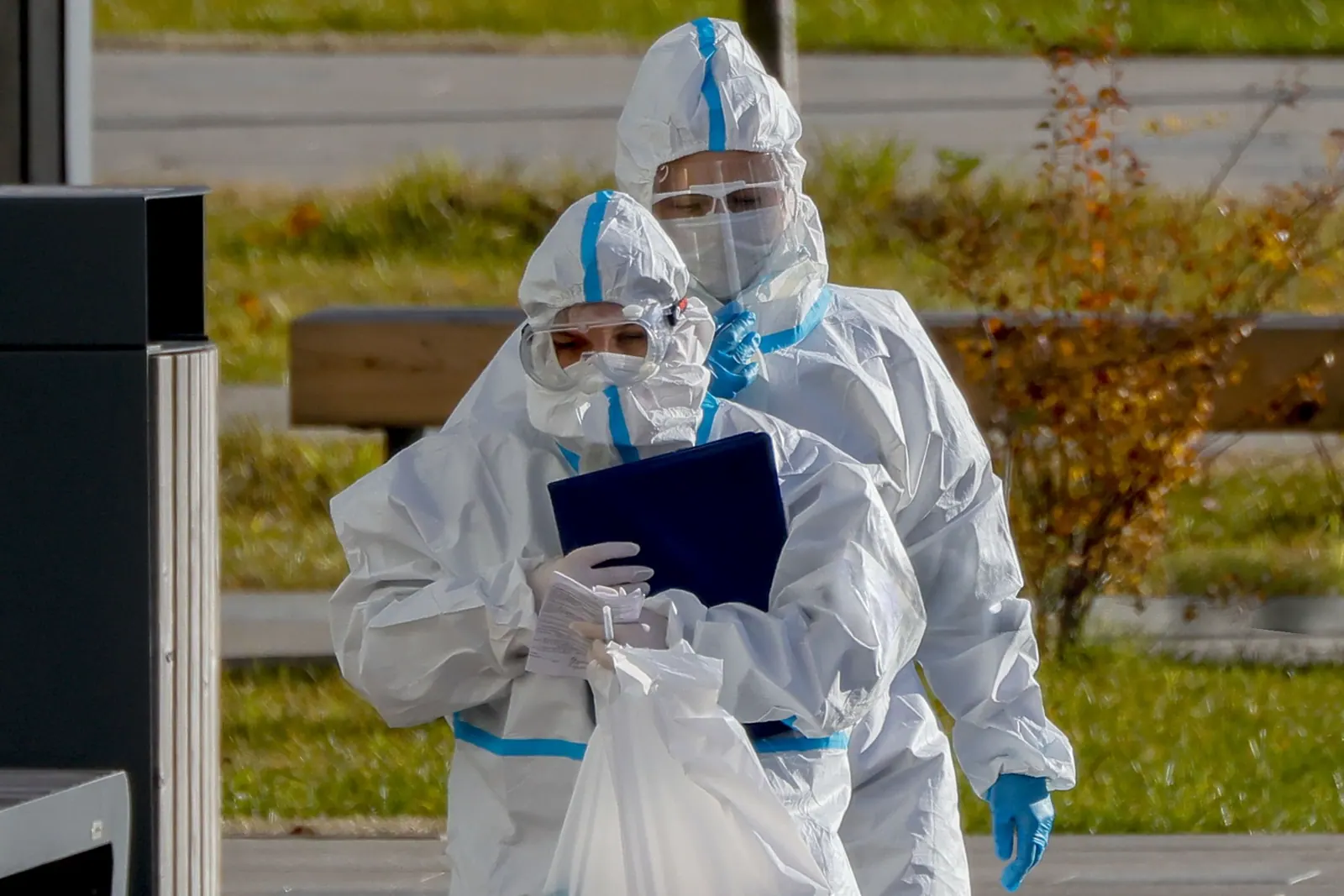
Russian health authorities have confirmed the death of a researcher at a plague research institute in Siberia, but have denied any risk of a health outbreak. The researcher, whose name has not been released, died from an unknown cause at the Institute for Plague Research in Irkutsk. According to the Russian health agency, preliminary medical tests showed that the researcher died from pneumonia of unknown origin, with no evidence of infection linked to her work.
The Russian health agency stated that the deceased researcher had been vaccinated and that over 90% of those who had come into contact with her had completed medical monitoring without any signs of infection. The agency also denied reports that the researcher had contracted pneumonic plague after an test tube broke, saying that no pathogens related to her job had been detected.
The Kremlin has dismissed media reports about the incident as "lies" and stated that it had informed the World Health Organization (WHO) of the situation. According to Kremlin spokesperson Dmitry Peskov, there are currently no concrete plans for a phone call between Russian President Vladimir Putin and US President Donald Trump to discuss the matter.
The European Commission has called on Russia to provide swift and transparent information about the incident. WHO Director-General Tedros Adhanom Ghebreyesus also urged clarification on reports that a second staff member had shown respiratory symptoms. However, the WHO has assessed the risk of an outbreak as "low" within Russia and "very low" for Europe.
The incident has raised concerns about the safety and transparency of research at the Institute for Plague Research in Irkutsk. The institute is one of the main centers for plague research in Russia, and the death of the researcher has sparked questions about the risks and precautions taken by researchers working with potentially deadly pathogens.
The Russian health agency has stated that it is continuing to monitor the situation and conducting further tests to determine the cause of the researcher's death. The agency has also emphasized that it is working closely with international health authorities to ensure that all necessary precautions are taken to prevent any potential health risks.
The death of the researcher at the Institute for Plague Research in Irkutsk has highlighted the importance of transparency and cooperation in responding to potential health risks. The incident has also underscored the need for clear communication and coordination between researchers, health authorities, and international organizations to prevent and respond to public health emergencies.
Key points
- Russian authorities deny any health risk after researcher dies at Siberia plague institute
- European Commission calls for swift and transparent information from Russia about the incident
- WHO assesses risk of outbreak as "low" within Russia and "very low" for Europe