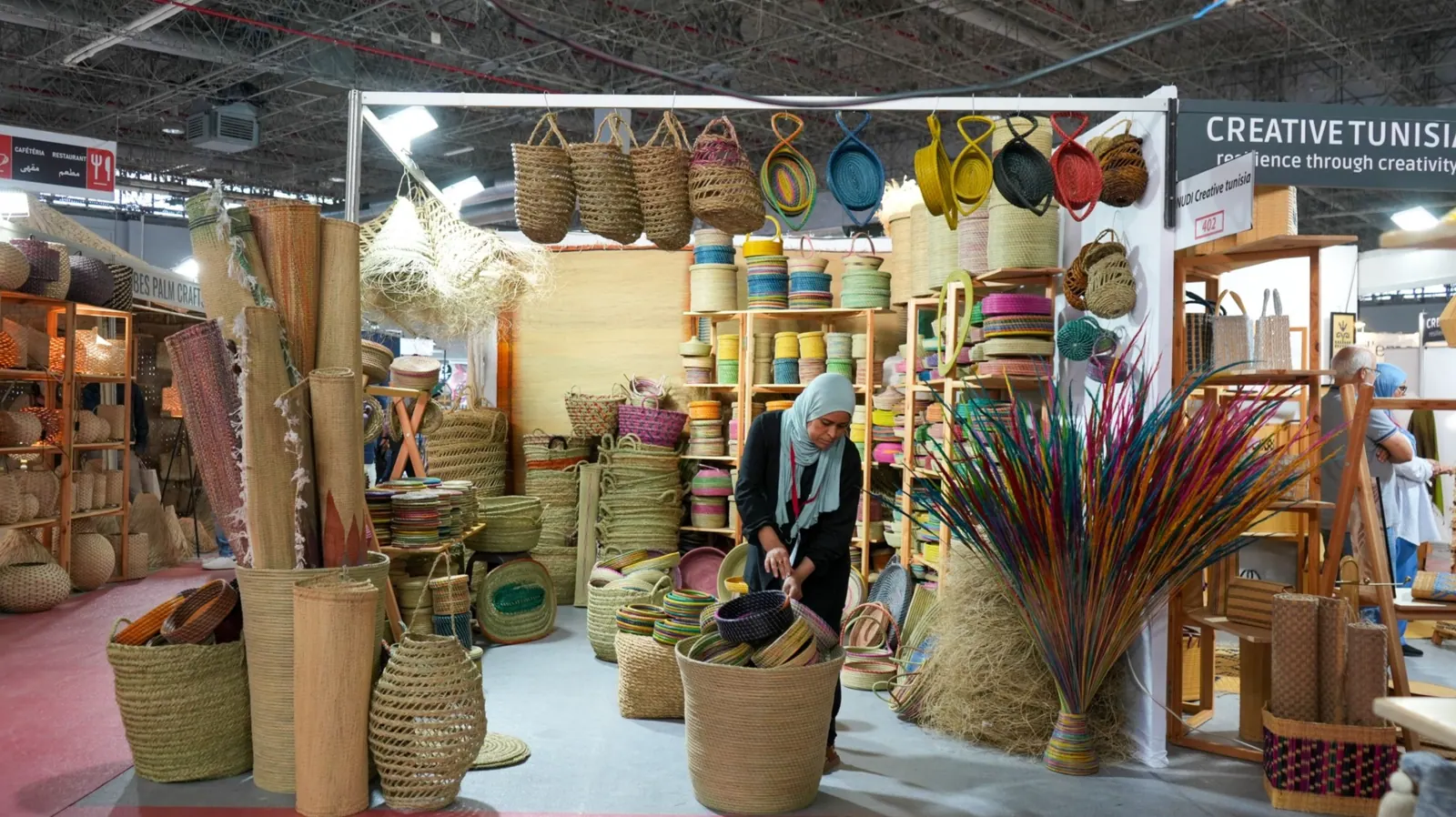
Tunisia's traditional industries have shown significant growth in exports, reaching 85 million dinars as of August 2026. This represents a 3% increase compared to the same period last year. The growth is attributed to the country's rich cultural heritage and its skilled artisans who produce a wide range of traditional products. These products include wood extracted from olive trees, traditional ceramics, textiles, and plant fibers, among others.
The third edition of the ARTICREA professional salon for traditional industries, held at the Kram Exhibition Center, has brought together international buyers, foreign delegations, and representatives of diplomatic missions accredited in Tunisia. The event aims to promote Tunisian handicrafts, develop partnership opportunities, and open up new markets. The salon features 228 participating institutions, 40% of which are managed by graduates of higher education.
The Director-General of the National Office for Traditional Industries, Leila Maslati, stated that hosting international buyers allows them to closely experience the diversity of Tunisian handicrafts and establish professional relationships that can lead to continuous orders throughout the year. This, in turn, supports the sustainability of businesses and artisans. Maslati also emphasized that the sector has greater potential for exporting to European, American, and Arab markets.
The products that have shown significant growth in exports include wood extracted from olive trees, traditional ceramics, textiles, and plant fibers. Additionally, products such as herb and flower distillation have gained popularity, particularly among young people and graduates of higher education. These products have attracted the attention of international buyers, who see their potential for growth in various markets.
The ARTICREA salon has also attracted foreign participants who are interested in exploring opportunities for cooperation with Tunisian institutions. Claudio Duta, the General Manager of a Romanian company that specializes in construction equipment, expressed his interest in the cultural richness and traditional industries of Tunisia. He noted that the country's traditional ceramics, in particular, have great potential for export.
Other participants, such as Eton Micallef, the CEO of the Maltese Traditional Industries Foundation, have highlighted the similarities between traditional industries in Tunisia and Malta. They see potential for cooperation in areas such as promotion, export, and exchange of expertise. Micallef noted that Tunisian traditional industries combine the preservation of traditional methods with innovation and renewal, making them an attractive partner for collaboration.
The ARTICREA salon will continue until October 11, and it is open to visitors from 10 am to 7 pm. The event has already attracted a significant number of visitors, including tourists who have expressed their admiration for the colors and diversity of Tunisian handicrafts. The salon provides a platform for Tunisian artisans and businesses to showcase their products and connect with international buyers and partners.
Key points
- Tunisia's traditional industries export sector reaches 85 million dinars as of August 2026.
- The sector shows a 3% growth rate compared to the same period last year.
- The ARTICREA salon aims to promote Tunisian handicrafts and develop partnership opportunities with international buyers and foreign delegations.