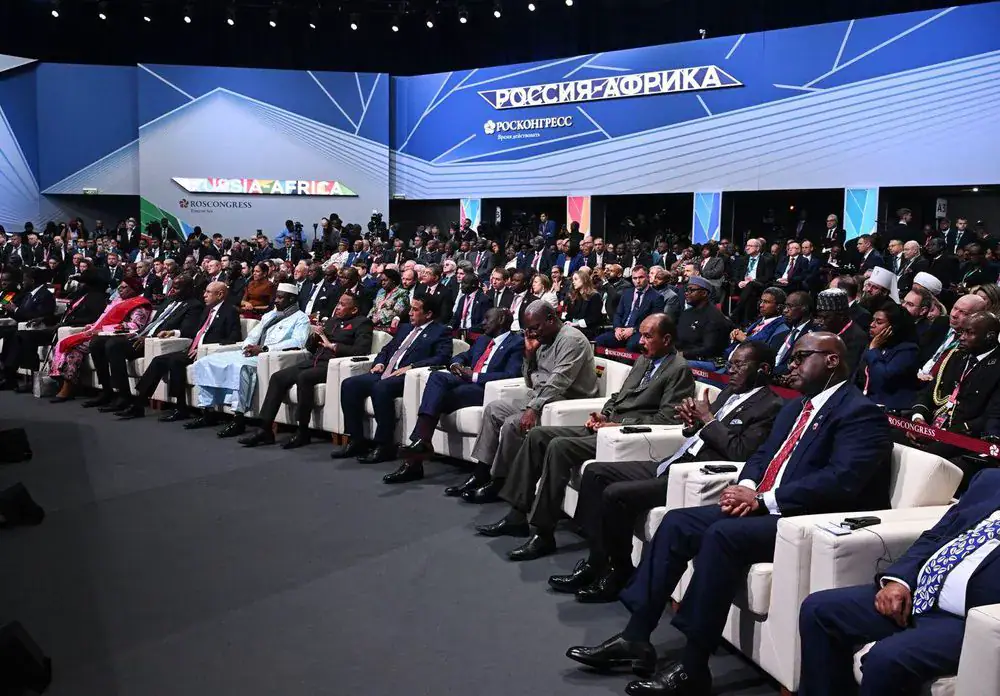
The Russian capital Moscow is hosting the third Russia-Africa summit, a two-day event that began on October 28. African heads of state, led by the chair of the African Union (AU), Evariste Ndayishimiye, have gathered to attend the summit. The significant attendance is seen as a rejection of Western pressure on African states to shun the invitation. More than 15 leaders are attending, including heads of state from Kenya, Namibia, Democratic Republic of Congo, Mali, Egypt, Zimbabwe, Ethiopia, and the Comoros.
A total of 48 countries are participating in the summit, which aims to strengthen economic and humanitarian ties between Russia and Africa. The event features discussions on mutual issues of interest, such as economic partnerships, AI, agriculture, healthcare, and education. There are also sessions on energy, mining, and strategic cooperation through BRICS, which has an alternative lending financial vehicle in the New Development Bank, also known as the BRICS Bank.
Despite the ongoing conflict between Russia and neighbouring Ukraine, life in Moscow appears normal, with public transport and nightlife operating as usual. The summit belies the fact of the conflict, which has been raging on for four years. However, a truce in the war appears imminent, with Kremlin spokesperson Dmitry Peskov announcing that leaders of Russia, Ukraine, and the US are scheduled to hold trilateral negotiations about “mutual security guarantees” in Abu Dhabi.
Russian President Vladimir Putin was a busy host on the first day, hosting an evening reception at the Kremlin for summit participants. He also held separate bilateral meetings with Egyptian President Abdel Fattah el-Sisi, Ethiopian Prime Minister Abiy Ahmed, and Republic of Congo President Denis Sassou. The meetings aimed to strengthen ties and discuss cooperation in various fields.
One of the envisaged outcomes of the summit is to produce a cooperation plan for 2027-2029, as well as agreements including trade, investment, and technological development. African governments are increasingly seeking a greater role in international affairs, such as the reform of the UN Security Council and the UN system overall. The summit provides a platform for Africa to align with strategic allies like Russia.
The Russia-Africa summit is also seen as a pushback against unilateralism, with Africa and the Global South seeking a return to the principles of the UN founding charter of multilateralism. The continent needs to speak as one as it aligns with strategic allies like Russia. The summit provides an opportunity for African leaders to discuss their priorities and interests.
The summit will conclude on October 29, with participants expected to adopt a cooperation plan and agreements. The event has showcased the growing ties between Russia and Africa, with African leaders seeking to strengthen economic and humanitarian partnerships. The summit's outcomes are expected to have a significant impact on international relations and global governance.
Key points
- African leaders attend Russia-Africa Economic and Humanitarian Forum in Moscow
- Summit aims to strengthen economic and humanitarian ties between Russia and Africa
- Event features discussions on mutual issues of interest, such as economic partnerships and strategic cooperation