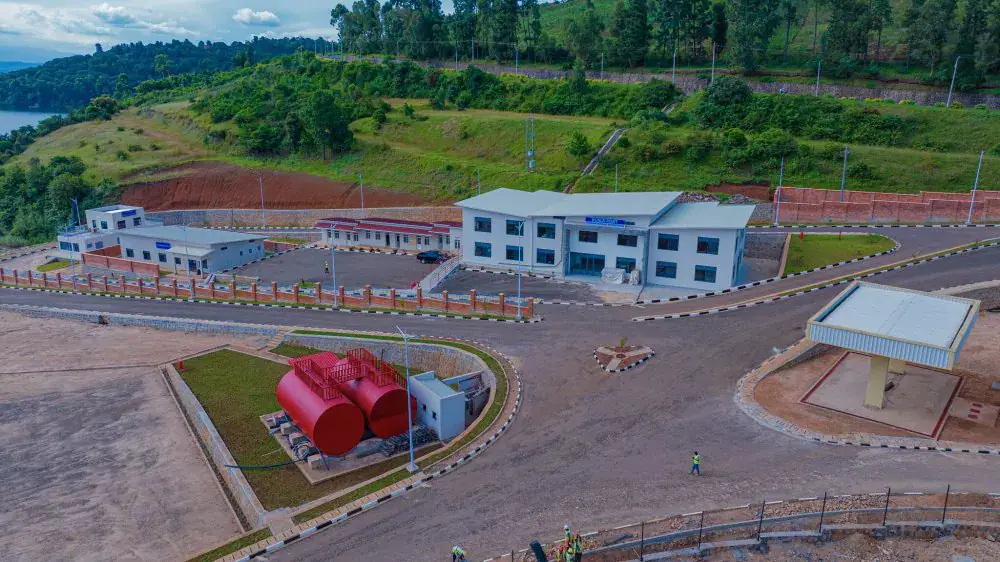
Rwanda is close to completing a modern port in Rusizi District, a strategic border area linking the country to Bukavu and South Kivu in eastern Democratic Republic of Congo (DRC). The port's construction is 97% complete, with the remaining work involving road paving and equipment installation for loading and unloading cargo from boats. The project aims to develop Lake Kivu into a more efficient transport corridor, potentially lowering the cost of moving goods and strengthening cross-border trade.
For generations, Lake Kivu has connected communities along Rwanda's western border with eastern DRC, but it has remained largely underused as a commercial transport route. The lake has been used for local boat travel, but water transport has operated on a limited scale without modern facilities and regular services. A government assessment noted that boat services on the lake have historically been limited, with some journeys arranged on demand rather than through regular schedules.
The lack of adequate ports, cargo-handling facilities, and supporting infrastructure has constrained the development of a wider transport network. The government views this as an economic opportunity, as moving substantial quantities of heavy goods by water can be cheaper than transporting them by road. Developing ports is an attempt to turn an existing natural resource into an economic asset. The initiative gained momentum in 2019, when Rwanda signed a financing arrangement with the Netherlands to support the construction of four ports along Lake Kivu.
TradeMark East Africa also became a key financing partner, with the Rwandan government contributing to the project. Construction of Rusizi Port began on January 18, 2023, following earlier planning and delays associated with redesigning the facility. The project is part of a broader programme that includes ports in Rubavu, Rusizi, Karongi, and Rutsiro, intended to support passenger travel and cargo movement along the lake.
Rusizi Port occupies an important position in Rwanda's commercial relations with eastern DRC, serving as a gateway to Bukavu and the wider South Kivu region. A modern port could make it easier to move goods and passengers across Lake Kivu, provided that regular boat services, efficient border procedures, and competitive transport prices are established. The facility has been designed to accommodate four large vessels simultaneously, allowing two to load cargo while two others unload.
The port will also have cargo storage facilities, a passenger terminal, a vehicle repair garage, and a fuel station serving boats and other vehicles. Immigration facilities will enable the port to function as an official entry and exit point, while firefighting infrastructure and a police presence are intended to improve safety and security. These facilities matter because a port is more than a place where boats dock; efficient cargo movement requires equipment to transfer goods between vessels and trucks, space to store shipments, access roads, and procedures for processing passengers and merchandise across borders.
The completion of Rusizi Port will be an important milestone, but its economic impact will depend on what happens after construction ends. For businesses to shift cargo from roads to water, operators must provide reliable services at competitive prices. The port could create further opportunities in cargo handling, boat operations, transport, storage, vehicle maintenance, and other services supporting trade. Its location could also help stimulate commercial activity around Rusizi, particularly if businesses take advantage of improved connections with markets across the border.
Key points
- The Rusizi Port project aims to reduce Rwanda's transport costs and boost trade with the Democratic Republic of Congo via Lake Kivu.
- The port's construction is 97% complete and is expected to become operational before the end of 2026.
- The project is part of a broader government effort to develop Lake Kivu into a more efficient transport corridor.