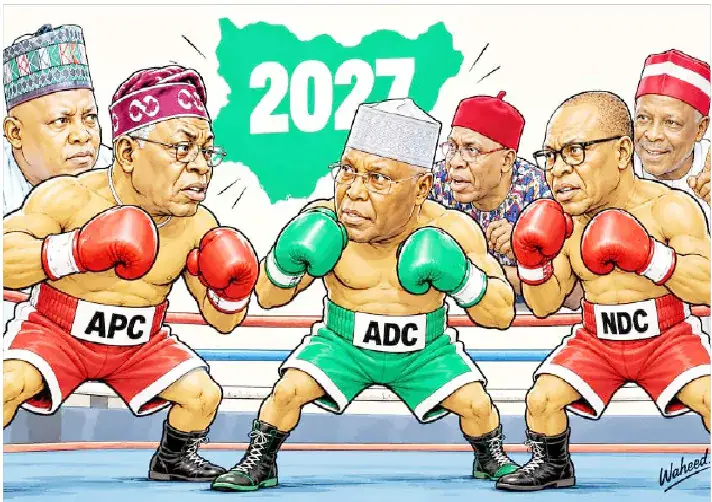
As Nigeria prepares for the 2027 elections, the country's major political parties are embroiled in internal conflicts. The All Progressives Congress (APC) and other parties are experiencing leadership disputes, factional rivalries, and candidate selection disputes. These internal struggles are expected to intensify as the parties prepare for the upcoming polls. According to a recent article, the APC is facing tensions between northern and southern factions, as well as between party leaders and governors.
The APC's internal squabbles are not limited to leadership disputes. The party is also grappling with the aftermath of the defection of opposition governors and regional leaders to the party. This has led to tensions over appointments, campaign office allocations, and rewards. Some founding members of the party have reportedly expressed dissatisfaction with the influence of new members. The party's national leadership is working to manage these conflicts and ensure a united front ahead of the elections.
One notable example of the fluidity of Nigeria's political landscape is the case of former Deputy Senate President Ovie Omo-Agege. Omo-Agege has moved between several parties, including the Peoples' Democratic Party (PDP), Labour Party, APC, and now the New Democratic Congress (NDC). His case illustrates the willingness of politicians to switch parties in pursuit of their interests. This phenomenon is not unique to Omo-Agege, as many politicians have made similar moves in recent years.
In the APC, tensions have arisen between the party's northern and southern factions. Some key party figures have warned against internal contradictions, where state-level stakeholders undermine governors or presidential interests. The party's leadership is working to address these tensions and ensure a united front ahead of the elections. The APC has also been blessed with an unprecedented influx of new members, which has led to conflicts over rewards, appointments, and campaign office allocations.
Some disgruntled elements within the APC have reportedly criticised the parallel organisations campaigning for President Tinubu on behalf of his family members, Seyi and Remi. These critics argue that the resources being deployed by these family members ought to have been given to the party to do the job. However, it appears that these critics are primarily motivated by a desire to gain a piece of the action. The party's leadership is working to address these concerns and ensure that the party's resources are used effectively.
One of the most notable developments in the APC is the self-styled Rainbow Coalition put together by FCT Minister Nyesom Wike to campaign for President Tinubu in Rivers State and the Federal Capital Territory. The tension between the APC leadership and Wike's coalition is palpable. Wike's coalition is a cross-party political alliance aimed at mobilising support for President Tinubu. The APC leadership is reportedly wary of Wike's influence and the potential for the coalition to undermine the party's official campaign.
As the 2027 elections approach, Nigeria's major political parties face significant challenges in managing their internal conflicts. The APC and other parties must navigate leadership disputes, factional rivalries, and candidate selection disputes to present a united front ahead of the polls. The outcome of these internal struggles will likely have a significant impact on the country's political landscape. The parties' ability to manage their internal conflicts will be crucial in determining their chances of success in the upcoming elections.
Key points
- The APC is experiencing internal conflicts over leadership disputes, factional rivalries, and candidate selection disputes ahead of the 2027 elections.
- The party's internal squabbles are also driven by the defection of opposition governors and regional leaders to the party.
- The self-styled Rainbow Coalition put together by FCT Minister Nyesom Wike has created tension between the APC leadership and Wike's coalition.