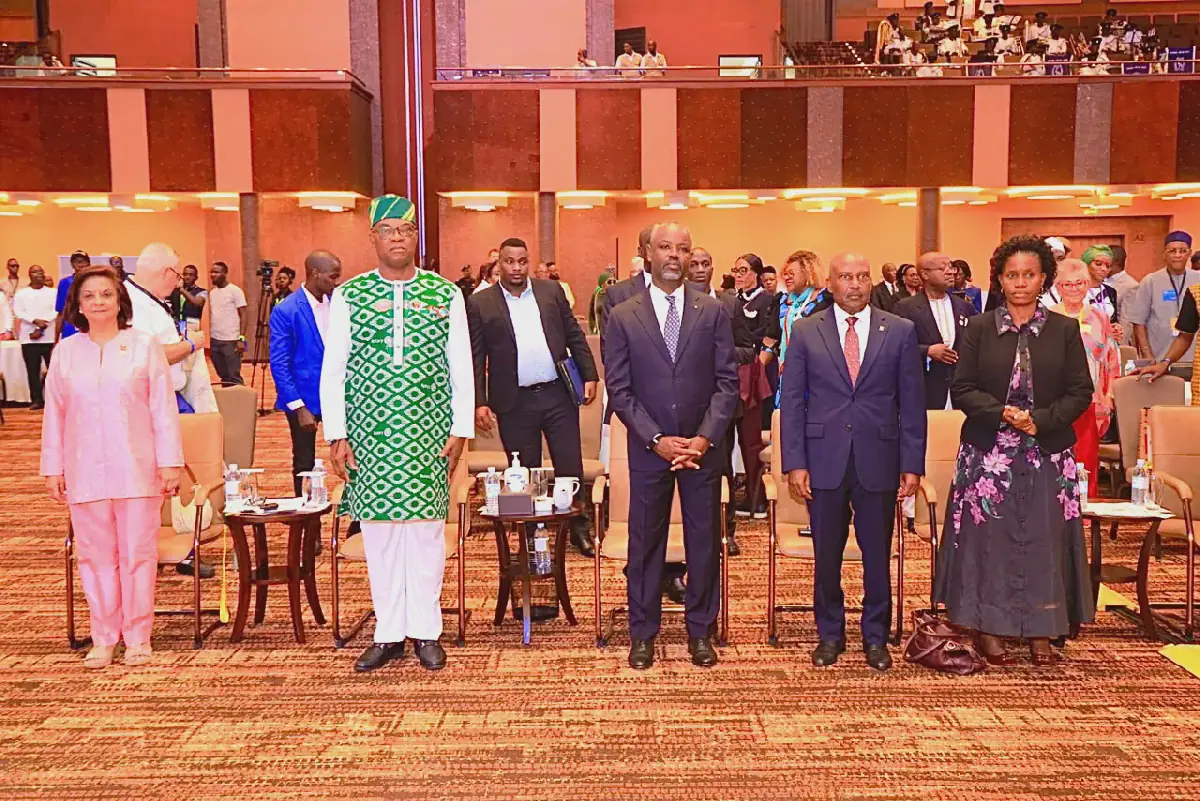
Rotary International President Olayinka Hakeem Babalola has called on Rotary members across Africa to focus on strengthening membership, embracing diversity, and providing young people with greater leadership opportunities. He made the remarks during the 7th All Africa Zone Institute at Speke Resort Munyonyo, where he emphasized that the organization's lasting impact depends on its ability to grow and transform lives. Babalola's address was centered on the theme of creating a lasting impact.
Babalola urged delegates to interact beyond their familiar circles, build friendships across countries, and learn from different cultures and experiences. He encouraged them to allow themselves to be changed by what they see and to sit at tables they would not normally choose. This, he believes, will help foster a more inclusive and diverse Rotary family. The President also paid tribute to the late Rotary leader Sam Awori, reflecting on his passing and the responsibility of current leaders to sustain the organization's legacy.
The Rotary International President highlighted the importance of growing membership beyond just increasing numbers. He emphasized the need to build committed members who understand the organization's values and are willing to serve. Babalola pointed to the Makerere University Rotary Peace Centre as an example of Rotary's contribution to Africa, noting its work in peacebuilding and equipping leaders to address conflict and promote peace in communities and institutions.
The Makerere University Rotary Peace Centre was established through an agreement signed in January 2020 and is Africa's first Rotary Peace Centre. It provides specialized training to peace fellows from different parts of the world. Babalola also mentioned that Rotary's global membership stands at approximately 1.2 million, with a target of reaching 1.25 million members by 2027. However, he cautioned clubs against focusing solely on recruitment figures, emphasizing the importance of retaining members and ensuring they remain actively involved in service.
Babalola challenged established Rotary members to actively recruit young people, particularly Rotaractors, and give them meaningful responsibilities. He encouraged club leaders to share personal experiences of how Rotary had transformed their lives, saying genuine stories of service and friendship could inspire others to join. The President also called on members to open their doors and hearts to young people, strengthen fellowship, and work together to build a more inclusive and impactful Rotary.
The 7th All Africa Zone Institute, held under the theme "Africa Rising: Grow to Serve," brought together Rotary leaders, governors, delegates, and members from across Africa and beyond. The institute provided a platform for discussions on leadership, membership growth, peacebuilding, and the future of Rotary across the continent. Babalola's visit to Uganda for the institute was an opportunity for him to engage with members and encourage them to work towards a more impactful and inclusive organization.
Key to Rotary's growth and impact is its ability to empower young leaders and create a more diverse and inclusive membership. Babalola's address emphasized the need for members to take ownership of the organization's growth and transformation. As Rotary continues to evolve, its focus on peacebuilding, leadership, and community development will remain crucial to its mission of transforming lives and creating a lasting impact.
Key points
- Rotary International President Olayinka Hakeem Babalola has challenged members to grow membership and empower young leaders.
- The organization aims to reach 1.25 million members by 2027.
- The Makerere University Rotary Peace Centre is a key example of Rotary's contribution to Africa.