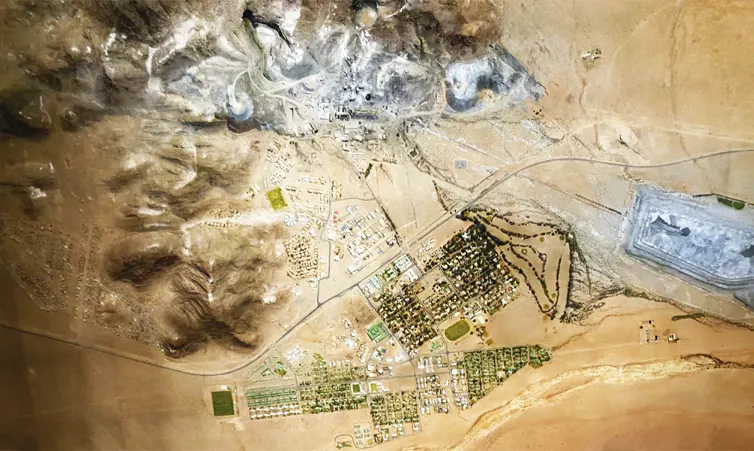
Years of living and working near the Rosh Pinah Zinc mine in Namibia have left families grappling with lead exposure and serious health concerns. A father, who worked at the mine for 18 years and spoke on condition of anonymity, shared his experience with The Namibian. He became concerned when his toddler stopped growing and decided to pay for a lead test himself, as he was not eligible for assistance due to being a private worker without medical aid.
The test results revealed that the toddler's blood lead level was 17.8 micrograms per 100ml of blood. According to the father, doctors informed him that anything more than five micrograms per 100ml is considered dangerous. The mine, however, claims that 20 micrograms per 100ml is acceptable. The father spent approximately N$3,000 on supplements for his child and later underwent his own test, which showed a blood lead level of 18 micrograms per 100ml.
The father now complains of memory problems, which he believes are linked to lead exposure. He also developed scars on his neck, which a doctor associated with lead poisoning. The father's condition has affected his daily life, causing him to forget conversations shortly after they occur. He expressed his desire for help for his child, stating that he cannot afford further tests to determine if his child's lead levels have decreased.
Other residents in Rosh Pinah share similar concerns about lead exposure and its potential health impacts. A 46-year-old woman living near the mine reported that two of her children have developed serious health problems. Her eldest son experienced an unusually fast heartbeat and collapsed twice this year, while her second-born son developed kidney problems and underwent two procedures in Windhoek.
The woman's son was diagnosed with kidney stones, and tests revealed that he was losing protein and muscle rapidly, shedding about 3.5kg in two weeks. Additionally, tests on the woman's own blood showed problems with her bone marrow. Despite her concerns, she does not want the mine closed due to the jobs it provides, but instead suggests relocating families living closest to the operation.
The concerns of Rosh Pinah residents are not new, as there have been documented cases of lead exposure in the area. In 2023, then mines and energy minister Tom Alweendo confirmed that lead was detected in the blood of 18 children living near the zinc mine. The Ministry of Health and Social Services also confirmed 10 cases of chronic lead exposure among children aged between one and 12 that year.
The Namibian's visit to Rosh Pinah revealed a community struggling with the health impacts of lead exposure. While some residents are calling for action, others acknowledge the importance of the mine as a source of employment. The situation highlights the need for a balance between economic development and environmental protection to ensure the well-being of local communities.
Key points
- A father's concern for his child's health after discovering high lead levels in their blood.
- Residents near Rosh Pinah Zinc mine report various health problems potentially linked to lead exposure.
- The Namibian government has previously documented cases of lead exposure in Rosh Pinah, highlighting an ongoing issue.