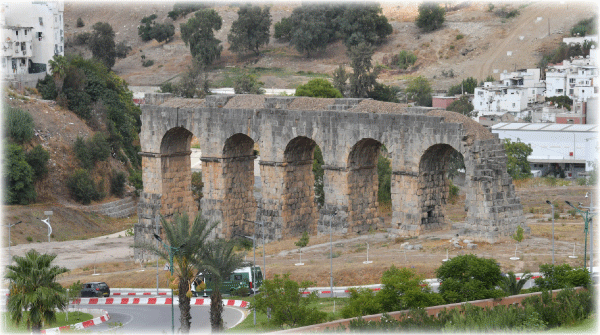
The Roman arches in Constantine, Algeria, remain a remarkable example of ancient engineering ingenuity. Located in the Jnan El-Zitoun area, these five stone arches have withstood the test of time, showcasing the advanced technical skills of the ancient Romans. Constructed from massive, carefully carved stones, the arches have endured for centuries, defying the forces of nature. Their strategic location offers a visually striking presence, captivating the attention of passersby and tourists alike.
These arches were part of a sophisticated hydraulic system that supplied the ancient city of Cirta with potable water. The system, which stretched approximately 60 kilometers, utilized gravity to channel water from a natural source in Bumurzouk to the city's outskirts. This impressive feat of engineering was achieved without the aid of pumps or modern technology, relying solely on the natural incline of the land and precise calculations to ensure a consistent flow of water.
According to Dr. Hussein Tatat, an archaeologist and director of the National Center for Research in Prehistory, Humanity, and History, the Constantine arches are a testament to the advanced hydraulic engineering skills of the Romans in North Africa. The arches formed part of an aqueduct system that supplied water to the ancient city, demonstrating the significant importance of Constantine during the Roman era.
The exact date of the arches' construction remains a topic of debate among researchers, with some attributing it to the second century AD. Dr. Tatat emphasized that the arches' sheer scale and technical sophistication suggest they were part of a large-scale urban planning project, likely initiated by the Roman Empire to develop the city's infrastructure.
The arches' design and construction reflect a deep understanding of engineering principles, with a series of stone arches built on multiple levels to traverse the challenging terrain. The use of local materials and innovative construction techniques enabled the creation of a durable and long-lasting structure that has withstood the test of time.
Despite their historical significance, the arches face significant challenges, including deterioration, vandalism, and inadequate conservation efforts. Dr. Tatat stressed the need for a comprehensive plan to protect and preserve these ancient structures, ensuring their continued existence for future generations.
The Roman arches in Constantine have garnered significant attention from visitors, researchers, and content creators, who have produced digital content highlighting the ingenuity of ancient Roman engineering. These efforts have contributed to a renewed interest in this historical landmark, shedding light on the advanced technical skills of the ancient Romans.
Key points
- The Roman arches in Constantine demonstrate advanced hydraulic engineering skills, utilizing gravity to channel water from a natural source to the ancient city.
- The arches' construction is attributed to the Roman era, with some researchers dating it to the second century AD.
- The landmark faces significant challenges, including deterioration, vandalism, and inadequate conservation efforts, emphasizing the need for a comprehensive preservation plan.