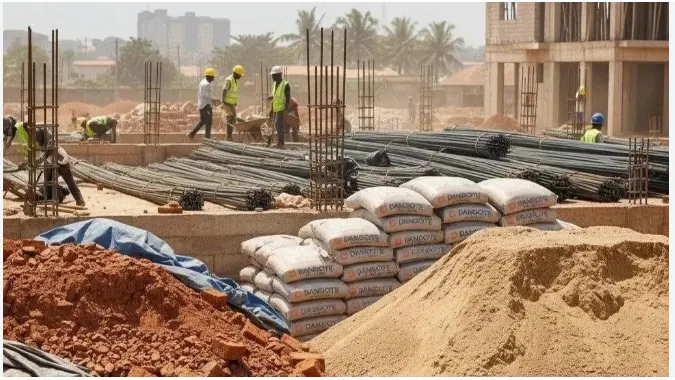
Rising building material costs are putting pressure on the viability of real estate projects in Nigeria, forcing developers to reassess project budgets, pricing, and construction strategies. The cost of delivering new housing continues to rise, affecting the ability of developers to deliver homes at affordable prices. Building materials account for a substantial share of total construction expenditure, and significant movements in prices can quickly alter project economics.
The pressure on developers interacts with expensive finance, land acquisition costs, labour, energy, logistics, and other development expenses, making project feasibility increasingly difficult to maintain. When costs rise after a development has been planned or launched, developers face difficult choices, including absorbing additional expenditure, revising specifications, delaying construction, or increasing selling prices. Each option carries consequences for the project's profitability and marketability.
For projects targeted at middle- and lower-income buyers, the room to increase prices is limited due to affordability constraints on effective housing demand. Increasing property prices may allow developers to protect margins, but it can also reduce the number of potential buyers. This creates a difficult balance between recovering construction expenditure and maintaining sufficient demand to sell completed units.
Where developers cannot pass the full increase in construction costs to buyers, profit margins can narrow significantly. Projects that were financially viable when initially designed may require new cost assumptions before construction can proceed. The consequences can extend beyond individual developments, potentially leading to a decline in the volume of new housing entering the market.
Nigeria already faces a significant gap between the cost of formal housing and the purchasing power of many households. Higher construction expenses make it more difficult for developers to produce units within affordable price ranges. Developers may concentrate on higher-value properties where buyers have greater purchasing power and where increased construction costs can be more easily reflected in selling prices.
Nigeria's dependence on imported materials and components exposes developers to exchange-rate movements and international supply conditions. Currency volatility can increase the naira cost of imported products and equipment, while higher transportation and energy expenses can raise the domestic cost of locally produced materials. Accurate cost forecasting and contingency planning have become increasingly important for developers to determine project viability.
Higher construction costs become even more challenging when developers rely on borrowed funds. The rising costs and challenging financing environment may lead to postponed, redesigned, or abandoned projects, exacerbating Nigeria's housing affordability problem. Developers must navigate these challenges to deliver affordable housing units, particularly for lower- and middle-income households.
Key points
- Rising building material costs are forcing Nigerian developers to reassess project budgets and pricing strategies.
- The increasing costs are affecting the viability of real estate projects and the affordability of housing in Nigeria.
- Developers face difficult choices, including absorbing additional expenditure, revising specifications, delaying construction, or increasing selling prices.