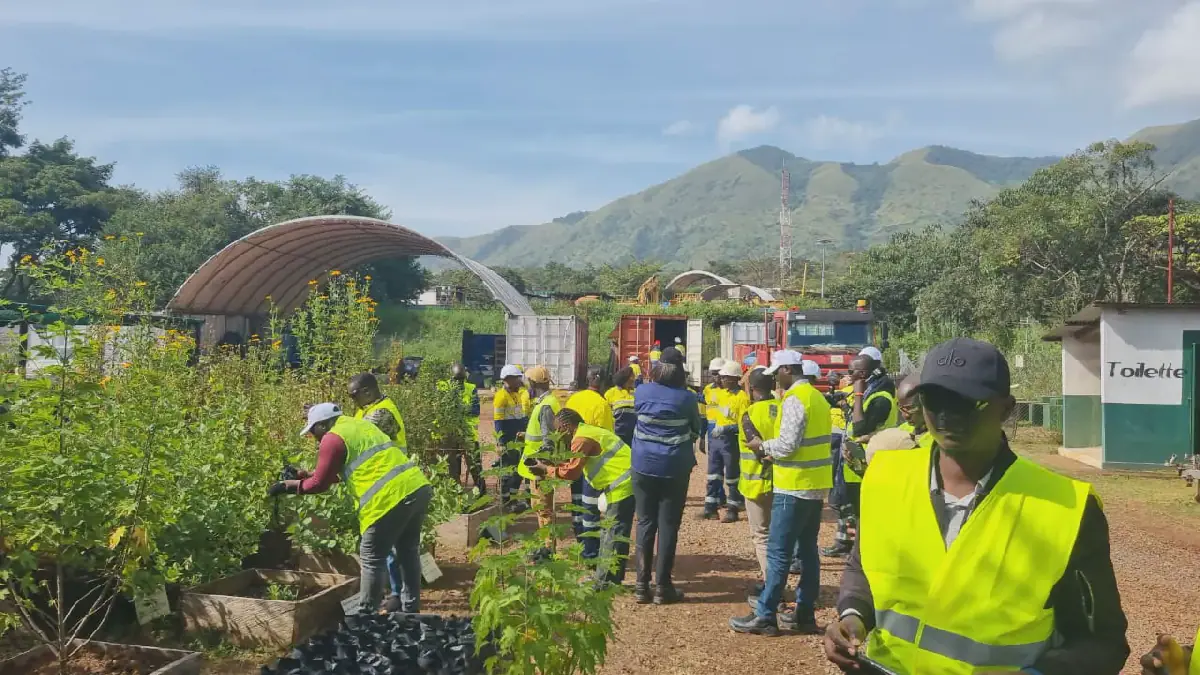
Rio Tinto Simfer, the company responsible for exploiting blocks 3 and 4 of the Simandou project in Guinea, has announced the production of over 8,000 plants from 27 local species as part of its biodiversity restoration program. The initiative was presented to a group of journalists during an immersion organized at the company's installations. The program aims to preserve local plant species and restore vegetation cover in areas affected by the mining project.
The immersion took the journalists to Canga, where a nursery dedicated to multiplying and conserving local plant species is located. Dr. Denise Molmou explained the various activities carried out to preserve native plants, including selecting species, controlling germination, and monitoring their development before transplantation. The nursery only receives native species, with no exotic species introduced.
According to Dr. Molmou, the goal is to master all stages of plant development before transplanting them to other locations. Some plants are used in traditional medicine, food, or construction, while others play a crucial role in environmental balance. The conservation of rare or endemic species requires special monitoring. Rio Tinto Simfer's program aims to contribute to preserving local plant species and restoring vegetation cover in areas affected by the project.
The produced plants include species such as Hallea stipulosa, Eriosema, Aloe buettneri, Phyllanthus magnificens, Gardenia kola, Terminalia superba, and Picralima nitida. Several transplantation operations have already been carried out, with more plants growing in the nursery awaiting the next stages of the program. The initiative is part of Rio Tinto Simfer's efforts to mitigate the environmental impact of the Simandou project.
The Simandou project, beyond iron ore exploitation and infrastructure construction, includes a significant environmental component. Rio Tinto Simfer's biodiversity restoration program is a crucial aspect of the project's environmental management. The company's efforts aim to minimize the project's footprint and ensure sustainable development.
The immersion was the first in a series of visits to Rio Tinto Simfer's activities on the ground. The program demonstrates the company's commitment to environmental stewardship and responsible mining practices. By producing and transplanting native plant species, Rio Tinto Simfer contributes to preserving Guinea's biodiversity and ecosystem.
Rio Tinto Simfer's biodiversity restoration program is a vital component of the Simandou project's environmental management plan. The program's success will be monitored and evaluated to ensure its effectiveness in restoring vegetation cover and preserving local plant species. The initiative sets a positive precedent for sustainable mining practices in Guinea and beyond.
Key points
- Rio Tinto Simfer produces over 8,000 plants from 27 local species to restore biodiversity in Guinea's Simandou iron ore project.