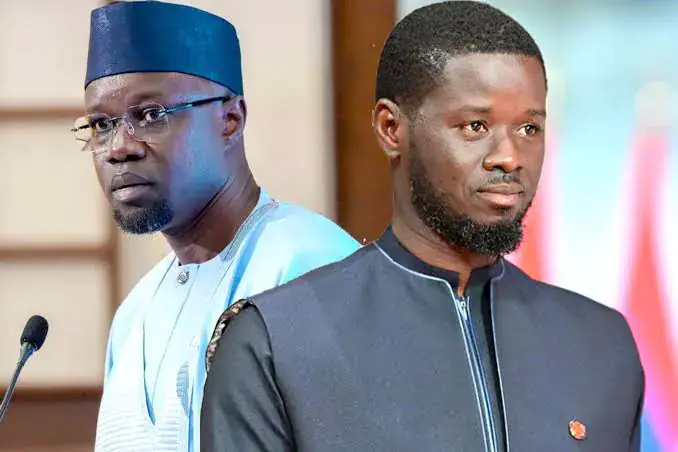
A rift between Bassirou Diomaye Faye and Ousmane Sonko, once considered the two faces of Senegal's political revolution, has escalated into a full-blown leadership crisis. Historian and consultant Mamadou Saliou Sy Savané attributes the feud to fundamental differences in their personalities and approaches to governance. Diomaye Faye is described as reserved and strategic, while Sonko is seen as populist and tactical.
The roots of the conflict date back to the early days of Diomaye Faye's presidency, with Sonko reportedly expecting to become president before the end of his term. However, Diomaye Faye refused to cede power, leading to a breakdown in their relationship. Sonko's actions, including the appointment of loyalists to key positions, further strained the relationship.
The crisis has significant implications for Senegal's development, with the country's stability and economy at risk. The rivalry has resulted in a lack of progress on key issues, with investors hesitant to invest due to the uncertainty. The situation has also led to a sense of disillusionment among some Senegalese, particularly in urban areas.
The battle for control has spilled into the legislative arena, with the two sides clashing over the 2026 supplementary finance law and the 2027 budget. Diomaye Faye has taken steps to bypass the opposition-dominated parliament, using a constitutional provision to pass the finance law by decree.
The outcome of any potential elections remains uncertain, with Sonko's supporters fiercely loyal and Diomaye Faye's camp bolstered by the support of key state institutions. The opposition's weakness has also hindered its ability to present a united front against the ruling party.
The Senegalese people are increasingly concerned about the impact of the crisis on their country's future. While some have expressed disillusionment with Sonko's populist approach, others see Diomaye Faye as lacking experience. The divide is particularly pronounced among young people, who are often enthusiastic about Sonko's message but may not fully grasp the implications of the crisis.
The ongoing power struggle has significant implications for Senegal's development and stability. With the country's economy and investor confidence at risk, there is a pressing need for a resolution to the crisis. However, with both sides dug in and no clear path forward, the situation remains uncertain.
Key points
- The rift between Sonko and Diomaye Faye has significant implications for Senegal's stability and development.
- The crisis has resulted in a lack of progress on key issues, with investors hesitant to invest due to the uncertainty.
- The outcome of any potential elections remains uncertain, with both sides having significant support.