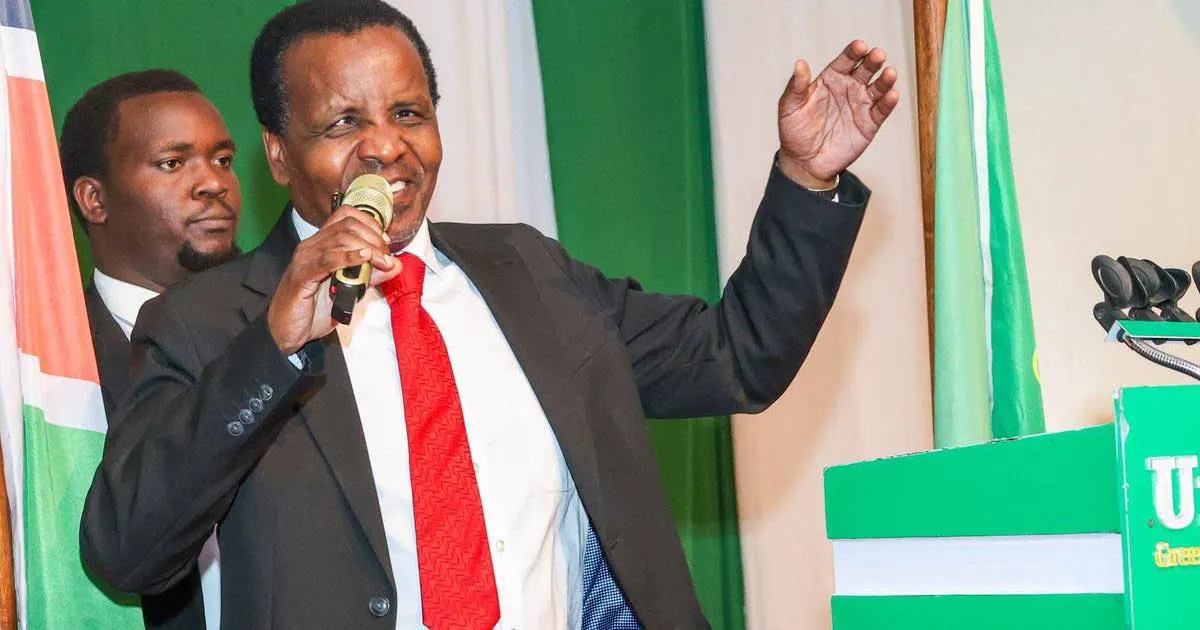
Kenyan gospel musician and politician Dr. Reuben Kigame has expressed frustration over the low royalty payouts to artists in the country. The Performing Artists and Visual Rights Society of Kenya (PAVRISK) recently announced that it had distributed Sh43.6 million in royalties to 5,911 creatives during the 2025-2026 financial year. This represents an increase of Sh19.6 million from the previous year. However, Kigame argues that the figures are misleading when broken down per artist.
Kigame took to social media to express his concerns, stating that collecting bodies collect a lot of money but pay artists very little. He shared his own earnings from the collecting body for the past year, daring other artists to do the same. According to Kigame, his music is one of the most played in the country, and he believes that thousands of musicians and creative artists in Kenya are being exploited.
The musician's outburst comes as the copyright sector continues to grapple with prolonged court battles, regulatory disputes, and concerns over how royalties are tracked and managed. PAVRISK chairman Edward Waigwa acknowledged that lengthy court processes have affected how quickly artists receive their earnings. Waigwa noted that disputes involving collective management organizations have dragged on in court, causing delays in payments to artists.
Kenya Copyright Board (KECOBO) chairman Joshua Kutuny attributed the improvement in royalty collections and distributions to stronger internal regulations and closer engagement between the regulator and collecting management organizations. When Kutuny joined KECOBO, the country's three collecting management organizations combined were distributing less than Sh30 million, while total collections sat below Sh20 million. He credited the improvement to tighter procedures and stricter oversight.
Despite the improvements, Kigame's public challenge highlights concerns over whether the money collected in the name of artists is being fairly shared with them. By publishing his own earnings, Kigame called on collecting management organization directors and KECOBO officials to do the same. He argued that this would promote transparency and accountability in the sector.
The sector has faced criticism over the years, with many creatives quietly grumbling about the fairness of royalty distributions. Kigame's bold challenge has brought the issue to the forefront, sparking a renewed debate over the management of royalties in Kenya. The issue is likely to continue dominating discussions in the sector, with many stakeholders calling for greater transparency and accountability.
The Kenyan music industry is eagerly awaiting a resolution to the issues affecting royalty payouts. With many artists relying on these payouts as a source of income, the sector must address concerns over fairness and transparency. The Kenyan government and regulatory bodies must work with collecting management organizations to ensure that artists receive their fair share of royalties.
Key points
- Reuben Kigame criticizes low royalty payouts to Kenyan musicians
- PAVRISK distributed Sh43.6 million in royalties to 5,911 creatives in 2025-2026
- Kenyan music industry stakeholders call for greater transparency and accountability in royalty management