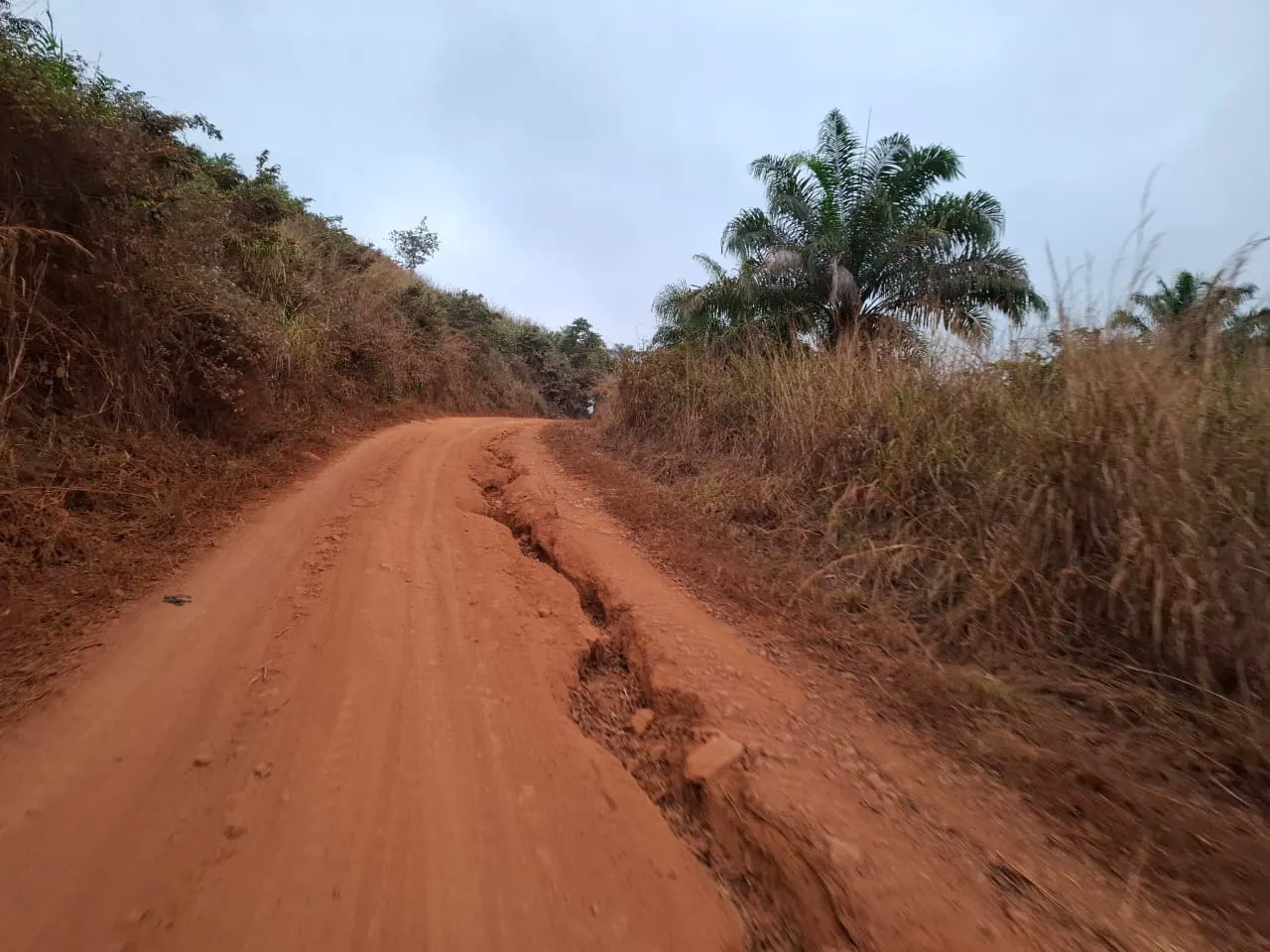
For over a week, residents of Ntemo-Ndimbanienge, in the Mbanza-Ngungu territory of the Democratic Republic of the Congo's Kongo-Central province, have been mobilizing to improve the condition of several agricultural roads. With limited resources, volunteers have been working manually since Wednesday, September 23, particularly on the section connecting fields to markets, schools, and health centers.
The volunteers, led by Jules Kaluveko, also known as "Le duc," the village chief, are performing manual labor to maintain passable roads. The INERA section is among the routes being worked on due to its importance for the circulation of people and the evacuation of agricultural products. However, on the ground, volunteers say they lack tools and logistical means, having even had to buy some of the shovels used for the work themselves.
According to Jules Kaluveko, without these efforts, some vehicles would no longer be able to use this road. The mobilization of residents has been praised by local civil society, which, however, believes that the maintenance of agricultural roads cannot rely solely on communities. Victor Nzuzi Mbembe calls on authorities to re-establish the manual cantonment system to ensure regular maintenance of these routes.
Nzuzi Mbembe emphasizes that when roads are in poor condition, farmers cannot sell their products. Residents of neighboring villages, some of whom come from Sadi, located over 15 kilometers away, are also participating in the work, according to civil society. The sector chief indicates that rehabilitation work should soon be launched on this road as part of the AVENIR project.
Meanwhile, residents continue manual work to maintain the axis passable, particularly to facilitate the evacuation of agricultural products. The efforts are crucial for the local community, as they enable the smooth transportation of goods and people. The involvement of residents in road maintenance is also seen as a sign of community solidarity.
The situation highlights the challenges faced by rural communities in maintaining infrastructure. Local authorities and development partners are expected to play a more significant role in supporting these efforts. The ongoing work demonstrates the community's commitment to improving their living conditions and facilitating economic activities.
Key points
- The residents' initiative to rehabilitate agricultural roads aims to improve the circulation of people and the evacuation of agricultural products.
- Local civil society calls on authorities to re-establish the manual cantonment system to ensure regular maintenance of agricultural roads.
- The rehabilitation work is expected to be supported by the AVENIR project, which will launch its own initiatives soon.