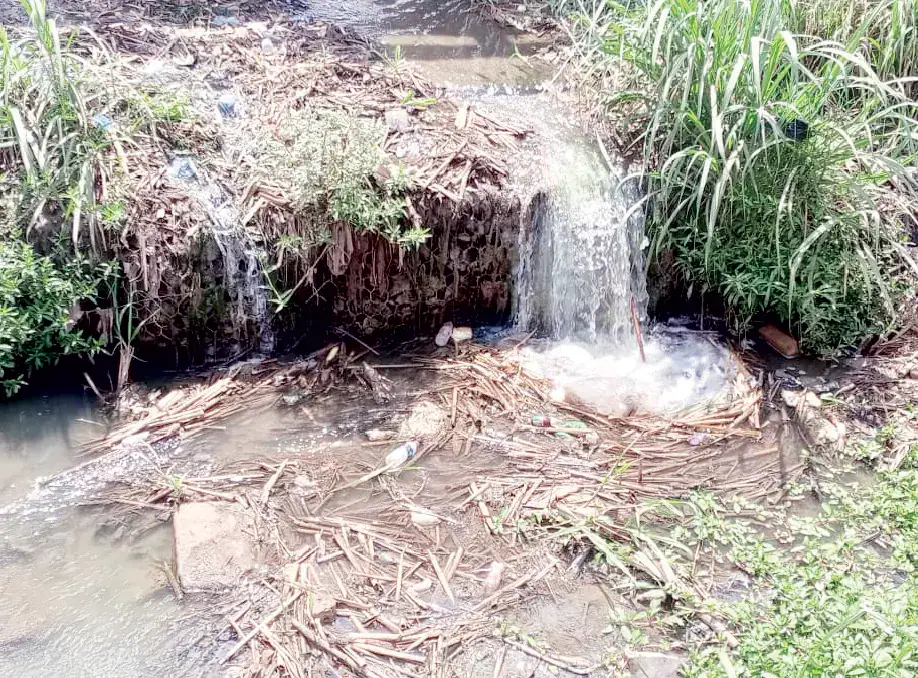
In the densely populated residential area of Senti, near Lilongwe City, residents are struggling to access clean water. Christina Pearson, a 26-year-old resident, waited in vain for hours at a communal commercial kiosk, only to turn to the nearby Nankhaka River, which is choked with floating rubbish, plastic waste, and foul-smelling sewage. The river's polluted water poses serious health risks to those who use it.
The situation in Senti is not unique, as many residents in Lilongwe and other cities in Malawi face similar challenges. Tereza Moffat, another Senti resident, knows that the water in the river is not safe, but she has no alternative. "We don't have boreholes. If the kiosks have no water, we don't have anywhere to fetch water beside the river," she said. The lack of access to clean water has become a daily struggle for many residents.
The improper disposal of waste is not only affecting people who fetch water from the river but also those conducting business at Senti Bridge, which connects Senti and Area 18. Janet Grant, who sells zigege near the river, said that some customers stop buying from her because of the poor sanitation levels on the bridge. The situation poses a challenge to both the community's access to clean water and the livelihoods of local business owners.
The tendency of dumping waste anyhow is rampant in various parts of Lilongwe and other cities in Malawi. In Chigoneka, Phwetekere, Kaliyeka, and Chipasula, residents dump waste in water streams on the roadside. This has led to the outbreak of waterborne diseases such as cholera, with 3,200 cases recorded between December 11, 2025, and August 30, 2026. The Malawi government has attributed the problem to inadequate waste collection vehicles, insufficient staff, and financial constraints.
The Lilongwe City Council has acknowledged the problem and is taking steps to address it. Council spokesperson Tamara Chafunya said that the council is intensifying waste collection and hotspot clearing, strengthening enforcement and patrolling, and conducting public awareness campaigns. The council also plans to formalize informal waste pickers, promote community-based waste collection models, and expand recycling and composting initiatives.
However, despite these efforts, the problem persists, and experts warn that if not addressed, it will put many Malawians at risk of suffering from waterborne diseases. Safari Mbewe, Executive Director of the Water and Environmental Sanitation Network, said that proper structures for waste management should be provided in all areas, and communities should be given civic education on proper waste management practices.
The issue of polluted rivers and lack of access to clean water is a pressing concern in Malawi. The government, local authorities, and stakeholders must work together to provide sustainable solutions to this problem. Key to addressing this issue is improving waste management infrastructure, increasing public awareness, and promoting community-based initiatives to ensure that residents have access to clean water and a healthy environment.
Key points
- Malawi has recorded 3,200 cases of cholera between December 11, 2025, and August 30, 2026.
- The Lilongwe City Council collects only about 30 percent of the estimated 600 tonnes of waste generated daily.
- The improper disposal of waste is a major challenge in Malawi, with many residents dumping waste in water streams and undesignated areas.