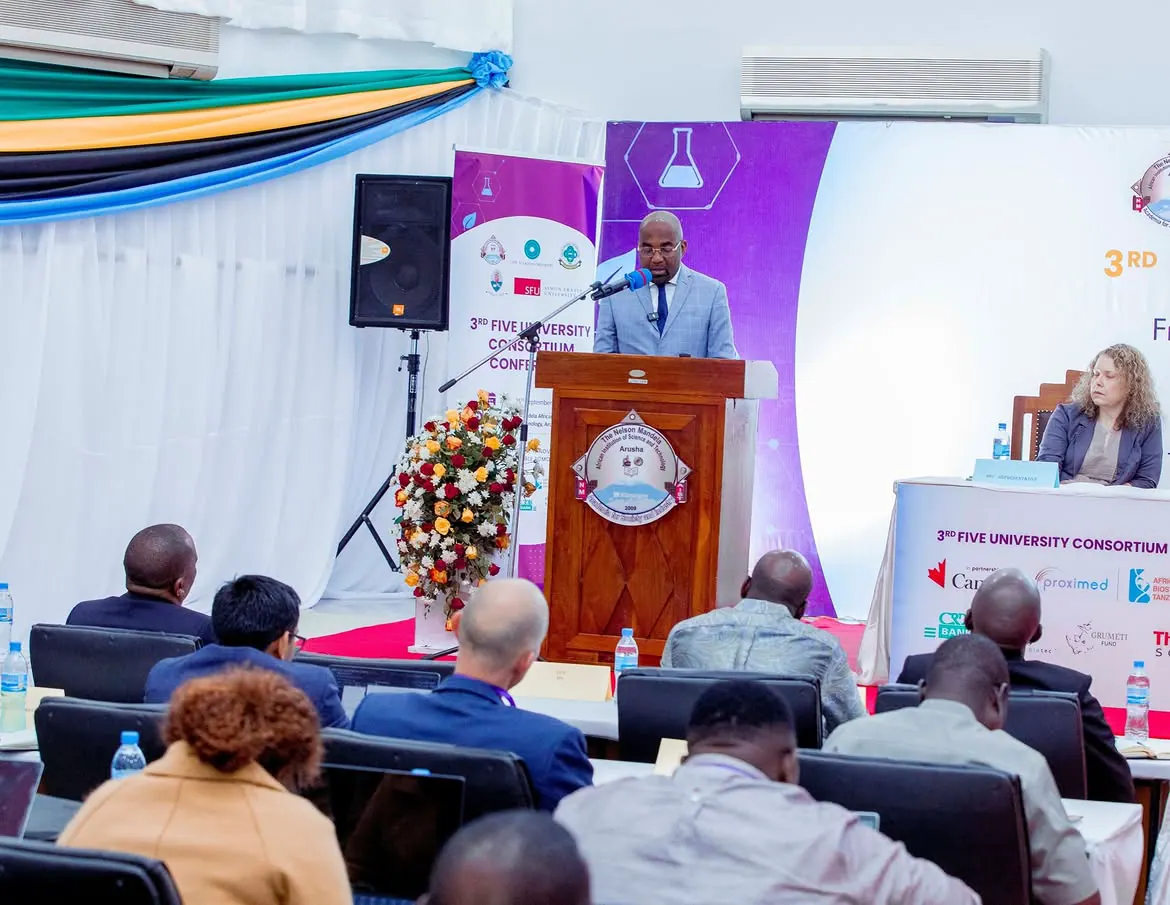
Tanzania's Minister of State in the Vice-President's Office, Engineer Hamad Yussuf Masauni, has emphasized the need for research and innovation to transcend institutional and national boundaries to address pressing global challenges. Speaking at the closing ceremony of the Five Universities Consortium Conference at the Nelson Mandela African Institution of Science and Technology in Arusha, he stressed that no single entity can solve complex problems in isolation. This call for collaboration comes as Africa faces numerous interconnected challenges, including climate change, food and water shortages, and environmental degradation.
Engineer Masauni highlighted the importance of collaboration among universities, researchers, and stakeholders to develop practical solutions to global challenges. He identified key areas for research and innovation, including changing energy systems, biodiversity loss, food and water shortages, emerging health threats, environmental degradation, and widening socio-economic inequalities. By working together, Masauni believes that Africa can drive innovation, leadership, and sustainable development. This approach is crucial in addressing the far-reaching impacts of climate change, which affects agriculture, water resources, ecosystems, health, infrastructure, energy, and people's livelihoods.
The Minister encouraged African countries to view climate change not only as a challenge but also as an opportunity for growth. He emphasized that Africa should not solely see itself as a victim of climate change but also as a leader in innovation and sustainable development. By integrating climate resilience into development planning, scientific research, technological innovation, investment, and public policy, African countries can develop solutions that benefit communities both locally and globally. This approach can lead to the development of climate-resilient agriculture, renewable energy technologies, stronger infrastructure, and improved water management systems.
Nelson Mandela African Institution of Science and Technology Vice-Chancellor, Professor Maulilio Kipanyula, echoed the Minister's sentiments, emphasizing that research should not be confined to academic journals. Instead, it must reach decision-makers, communities, and the private sector to create meaningful change. The consortium agreed to strengthen efforts to translate research findings into practical knowledge products, including policy briefs and accessible materials that support evidence-based decision-making. This approach will enable governments, communities, and businesses to use scientific evidence more effectively when planning and implementing development initiatives.
Professor Kipanyula highlighted the importance of making research easier to understand and apply. By doing so, stakeholders can use scientific evidence to inform their decisions, leading to more effective development initiatives. The Vice-Chancellor also expressed gratitude to the government for its continued support for research, science, technology, and innovation. This partnership has ensured that research findings deliver practical benefits to society, and it is crucial in addressing the complex challenges facing Africa.
The Five Universities Consortium Conference brought together researchers and stakeholders to discuss pressing global challenges and potential solutions. The conference provided a platform for experts to share knowledge and experiences, fostering collaboration and innovation. Engineer Masauni's call for cross-border research collaboration resonated with the attendees, who recognized the need for collective action to address the far-reaching impacts of climate change. By working together, Africa can develop practical solutions to these challenges and drive sustainable development.
The collaboration between researchers, universities, and stakeholders has the potential to benefit communities beyond Africa. Knowledge generated in Tanzania and across the continent can be shared globally, informing development initiatives and driving innovation. As the effects of climate change continue to be felt, it is essential that Africa takes a proactive approach to addressing these challenges. By working together and leveraging research and innovation, the continent can develop practical solutions to complex problems and drive sustainable development.
Key points
- Cross-border research collaboration is crucial in addressing global challenges such as climate change.
- African countries should view climate change as an opportunity for innovation and sustainable development.
- Research findings must be translated into practical knowledge products to create meaningful change.