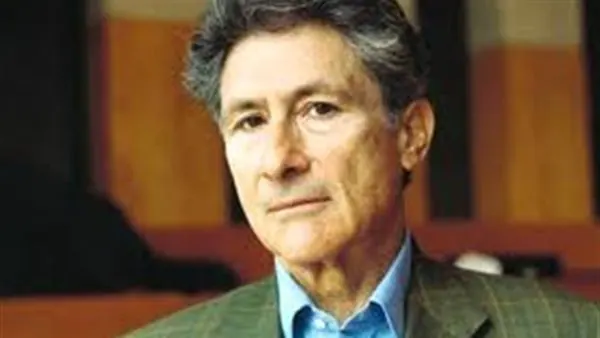
Edward Said, a prominent Palestinian-American scholar, was born in Jerusalem in 1935. He pursued his higher education in the United States, earning a bachelor's degree from Princeton University in 1957 and a master's and Ph.D. from Harvard University in 1964. Said went on to become a professor of English and comparative literature at Columbia University in New York, a position he held until his passing.
Throughout his career, Said was a vocal advocate for the Palestinian cause, using his platform to raise awareness about the struggles of the Palestinian people. He was described by Robert Fisk as the most effective voice in defending the Palestinian issue. Said's work extended beyond academia, as he actively engaged in promoting human rights and social justice.
One of Said's most influential works is his book "Orientalism," published in 1978, which critiques the Western world's perception of the Middle East and its people. He argued that Orientalism, a field of study that focuses on the Eastern world, was built on flawed assumptions and biases, often serving as a tool for Western powers to exert control over the region.
Said's writing often explored the complexities of identity, culture, and politics. In his memoir "Out of Place," published in 1999, he reflected on his childhood experiences in Jerusalem, Cairo, and Lebanon, offering a unique perspective on the Palestinian diaspora. His work continues to be widely read and studied today.
In addition to his academic pursuits, Said was a talented pianist and music enthusiast. He often incorporated his love of music into his writing, using it as a way to express the complexities of human experience. Said's passion for music was matched only by his commitment to social justice and human rights.
Towards the end of his life, Said was diagnosed with leukemia, a disease he battled for five years. Despite his illness, he continued to write and teach, leaving behind a legacy of influential works that continue to shape the fields of literature, politics, and cultural studies.
Edward Said passed away on September 25, 2003, at the age of 67, in a New York hospital. In accordance with his wishes, he was buried in Lebanon. His legacy as a scholar, writer, and advocate for human rights continues to inspire new generations of thinkers and activists around the world.
Key points
- Edward Said was a prominent Palestinian-American scholar and advocate for human rights.
- His influential book "Orientalism" critiques the Western world's perception of the Middle East and its people.
- Said's work continues to be widely read and studied today, shaping the fields of literature, politics, and cultural studies.