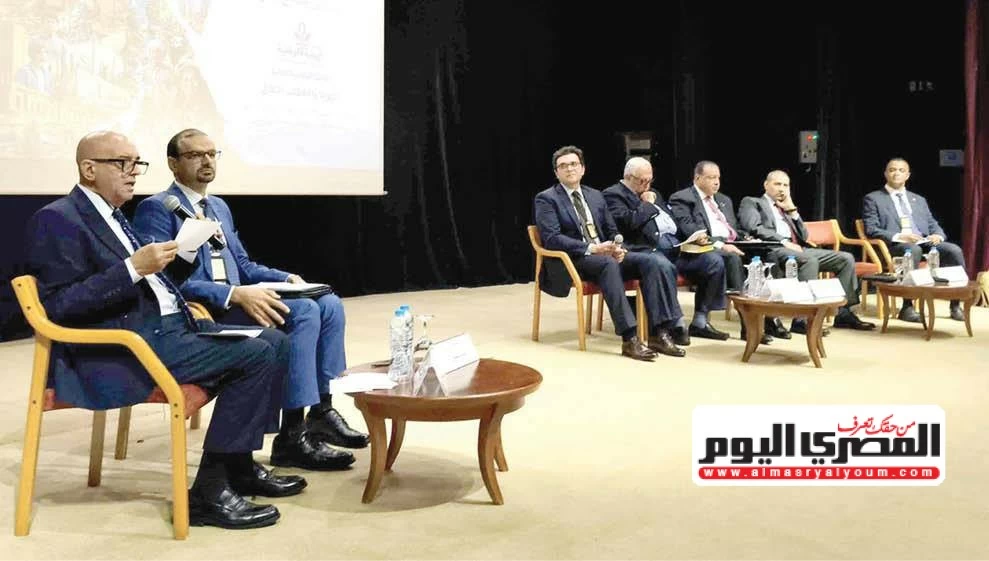
A recent conference titled "National Identity: Rooted and Renewed" was held at the Bibliotheca Alexandrina, featuring a discussion session on "Identity and Cultural Discourse." The session included prominent Egyptian writer Muhammad Salmawy, who emphasized that national identity is a living entity that evolves over time. Salmawy, also the chairman of Al-Masry Al-Youm, highlighted that Arabic language is the fundamental vessel for the region's collective memory.
During his speech, Salmawy stressed that national identity cannot be reduced to mere symbols or anthems. He called for the development of Arabic language usage in education, media, and technology to empower new generations. Salmawy also pointed out that national identity is not manufactured but rather discovered, and it is a continuous process that builds upon historical accumulations. He emphasized that the identity is not fragmented but rather a product of the assimilation and fusion of various historical stages.
Salmawy further explained that Egyptian identity has a rich and extensive cultural heritage spanning thousands of years, which is an integral part of its personality. He noted that a lack of awareness about national identity does not imply its absence, as it may be weakened by various factors such as changes, inadequate educational curricula, or weak cultural discourse. However, Salmawy asserted that national identity remains present and manifests itself clearly in critical moments and the actions of its people.
The conference also featured other notable speakers, including Dr. Khaled Hassan, who warned about the dangers of societal and cultural divisions. Hassan highlighted the existence of a significant knowledge gap between parents and children, which requires the development of tools and content creators who can communicate cultural concepts to young people in a contemporary language. He also cautioned against long-term movements that seek to distort history, such as the "Afrocentric" movement.
Dr. Samir Marqus, an Egyptian thinker and former assistant to the President for democratic transition affairs, shared his insights on Egyptian identity. Marqus stated that Egypt's history is complex and extensive, spanning thousands of years, and cannot be reduced to a superficial or one-dimensional perspective. He emphasized that Egyptian identity is multifaceted, comprising various historical and cultural stages that intersect and overlap.
Marqus also stressed that renewing cultural or religious discourse requires a review and development of the intellectual and cognitive systems that produce this discourse. He argued that understanding national identity as a dynamic entity helps to accept differences, promote coexistence, and preserve the nation. The conference aimed to explore and discuss the complexities of national identity, its relationship with cultural discourse, and the role of various stakeholders in promoting and preserving it.
The event was part of a larger initiative to explore and promote Egyptian national identity, featuring various sessions and discussions with prominent intellectuals and experts. The conference underscored the significance of national identity and its relationship with cultural heritage, education, and societal development. Key points from the conference include the importance of the Arabic language in preserving regional identity, the need for a dynamic and inclusive cultural discourse, and the role of education and media in promoting national identity.
Key points
- Muhammad Salmawy emphasizes the significance of the Arabic language in preserving regional identity and cultural heritage.
- The conference highlights the complexities of national identity and its relationship with cultural discourse, education, and societal development.
- Speakers stress the need for a dynamic and inclusive cultural discourse that promotes coexistence and preserves national identity.