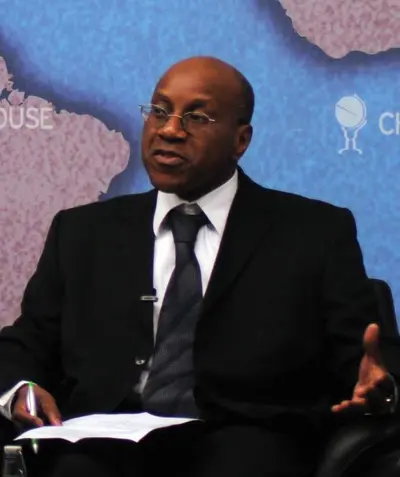
Knox Chitiyo, a leading African scholar, security expert, and influential campaigner, has passed away at the age of 65 due to bowel cancer. Chitiyo was a Zimbabwean-born academic who played significant roles in Zimbabwe, the United Kingdom, and globally across various sectors. He was a polyglot who achieved excellence in many areas and was highly respected by his peers. Chitiyo served as the United Nations Special Representative and Global Ambassador for the Removal of Landmines and Remnants of War.
Chitiyo had a long and distinguished career with various organizations. He was a board member of the global NGO Mines Advisory Group (MAG), which finds, removes, and destroys landmines, cluster munitions, and unexploded bombs from conflict-affected areas. He also served on the Business Council for Africa in London, championing African businesses and promoting sustainable investment opportunities in Africa. Additionally, Chitiyo was a board member of the African Diaspora Group, an advisory group on African affairs to UK government policy-makers.
Chitiyo's diplomatic skills were recognized when he won the 2010 BEN/Sky TV Diplomat Award for "Contribution to Diplomacy". He was also active in sports organizations, serving on the Zimbabwe Olympics Committee as its UK representative. Chitiyo excelled in academia, serving as the Africa Fellow with the Royal Institute for International Affairs at Chatham House. Prior to joining Chatham House in 2012, he was the Africa Fellow and Head of the Africa Programme at the Royal United Services Institute (RUSI) in London.
Before emigrating to the UK, Chitiyo was Senior Lecturer in War Studies and History at the University of Zimbabwe from 1992-2003. He also co-founded the Centre for Defence Studies (CDS) at the University of Zimbabwe and was its Deputy Director. Chitiyo taught on Zimbabwe's Joint Command and Staff Course (JCSC) at the country's Military Academy. He wrote many critical academic papers, including "The Domestic and External Implications of Zimbabwe's Economic Reform and Re-engagement Agenda" and "Forging Inclusive Economic Growth in Zimbabwe: Insights from the Zimbabwe Futures 2030 Roundtable Series".
Chitiyo's research on Zimbabwe, including his 2009 RUSI report "Making the Case for Security Sector Reform in Zimbabwe", analyzed the deep influence of the Zanu-PF-dominated military and police on the country's political transition. He argued that any positive long-term recovery in the country's economy and political stability would need state security to "shift from protecting the state towards protecting its people". Trevor Grundy, a veteran British journalist on African Affairs, noted that Chitiyo's "inside knowledge about business and political developments inside his mother country" made a vital contribution to the way British authorities handled issues between the two countries.
Chitiyo was also a creative writer and loved traditional African music. He dabble in music-making on occasion himself, and his 2021 poem "Scrublands" received an award nomination from The Voice newspaper in Zimbabwe. Farai Ian Muvuti, Chief Executive of The Southern African Times, wrote that Chitiyo was "more than the sum of his fellowships", highlighting his duality as a strategist and an artist.
Chitiyo was the son of the late Dr McLeod Chitiyo, Zimbabwe's first black pathologist. Condolences have been extended to his wife Nhamburiko, his sister Cathrine, and his family.
Key points
- Knox Chitiyo, a leading African scholar and diplomat, has passed away at 65.
- Chitiyo played significant roles in Zimbabwe, the UK, and globally across various sectors.
- He was a renowned academic, security expert, and influential campaigner who championed African businesses and promoted sustainable investment opportunities in Africa.