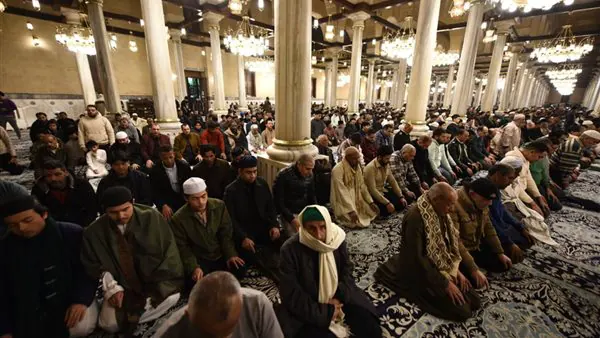
Al-Imam Al-Hussein Mosque in Cairo, Egypt, is a historic mosque built in 549 AH (1154 AD) during the Fatimid era under the supervision of the Minister of Finance, Al-Salih Talai. The mosque features three marble-clad gates overlooking Khan Al-Khalili market and another gate adjacent to its dome known as the Green Gate. Over the centuries, the mosque has undergone several renovations and expansions.
One of the significant renovations was carried out by Al-Aziz in 1279 AH, who ordered the mosque's restoration and expansion. The renovation process took ten years to complete, finishing in 1290 AH. The mosque's minaret, located in the southwestern part, was completed in 1295 AH. Throughout its history, the mosque has been led by several prominent imams, including Sheikh Ahmad Farhat, who was known for his sweet voice, especially during Fajr prayers.
Sheikh Ahmad Farhat was appointed as the imam of Al-Imam Al-Hussein Mosque in 1971 and remained in the position until his death in 2015. Despite being blind, he was a highly respected figure and had a strong connection to the mosque's community. He was also known for his love of Sufism and his efforts to maintain the mosque's heritage. Farhat received a presidential decree from former President Hosni Mubarak, allowing him to remain the imam for life.
Recently, the Egyptian Ministry of Endowments appointed Sheikh Sayyed Muhammad Abdel Kader as the new imam and khateeb of Al-Imam Al-Hussein Mosque. Sheikh Abdel Kader has a strong background in Islamic studies, having graduated from Al-Azhar University and obtained a master's degree from the Higher Institute of Islamic Studies. He has previously served as an imam and khateeb in several mosques in Egypt.
The mosque has been home to many renowned Quran reciters throughout the 20th century. Some notable reciters include Sheikh Ali Mahmoud, Sheikh Muhammad Al-Sayfi, Sheikh Mahmoud Khalil Al-Husari, Sheikh Mahmoud Ali Al-Banna, Sheikh Abdul Basit Abdul Samad, and Dr. Ahmad Nainaa. These reciters have played a significant role in establishing the mosque as a center for Quranic recitation and Islamic learning.
During the holy month of Ramadan, Al-Imam Al-Hussein Mosque becomes a hub for Muslims to perform Tarawih prayers. The Egyptian Ministry of Endowments has traditionally appointed a different imam each day to lead the prayers, featuring some of Egypt's most prominent Quran reciters. This tradition continues to attract large crowds of worshippers who come to experience the spiritual atmosphere of the mosque.
The legacy of Al-Imam Al-Hussein Mosque extends beyond its historical significance, as it continues to serve as a center for Islamic learning and worship. The mosque's imams and reciters have made significant contributions to the preservation and dissemination of Islamic knowledge, making it a revered institution in Egypt and beyond. The mosque's ongoing renovations and restorations ensure its continued relevance and beauty for future generations.
Key points
- The mosque was built in 549 AH (1154 AD) during the Fatimid era.
- Sheikh Ahmad Farhat was appointed as the imam of Al-Imam Al-Hussein Mosque in 1971 and remained in the position until his death in 2015.
- The mosque features three marble-clad gates overlooking Khan Al-Khalili market and another gate adjacent to its dome known as the Green Gate.