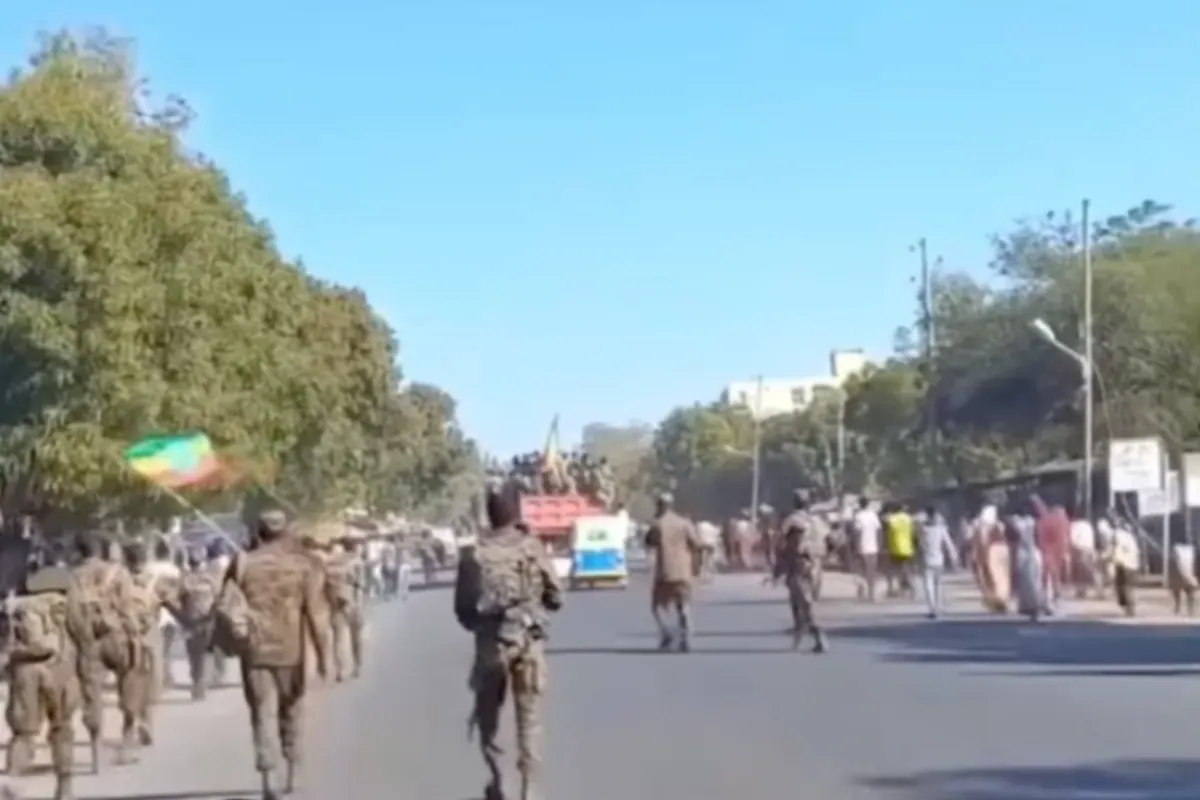
Fighting has erupted in northern Ethiopia between federal troops and a rebel alliance led by Tigrayan forces, reviving tensions that had been building for months. The clashes have raised concerns of a wider regional conflict, given the complex web of alliances and rivalries that have developed in the Horn of Africa. Ethiopia's conflict has been complicated by its relationships with neighboring countries, including Eritrea, which has severed diplomatic ties with Ethiopia.
The renewed fighting in Ethiopia has its roots in the 2020-2022 civil war that pitted the Tigray People's Liberation Front (TPLF) against the federal government, resulting in hundreds of thousands of deaths. However, the current situation is more unstable, with the Horn of Africa region facing multiple interconnected conflicts, rivalries, and alliances. The opposing sides in the fighting have ties to countries embroiled in other conflicts, including Chad, Sudan, and Somalia.
The conflict in Ethiopia has drawn in other countries in the region, including Eritrea, which has been accused by Ethiopia of backing the rebel alliance. Eritrea has denied the accusations, but diplomats and analysts say Eritrean President Isaias Afwerki is providing rebels with access to the coast and the rest of the world through his country. The two countries have a history of conflict, having fought each other between 1998 and 2000.
The head of Ethiopia's military has accused Sudan and Egypt of supporting Eritrean operations in Ethiopia, which both countries have denied. The three countries are also at odds over Ethiopia's development of a giant hydroelectric dam that Egypt and Sudan say could threaten their access to water. The conflict has also been linked to the war in Sudan, where a three-year power struggle between the military and the paramilitary Rapid Support Forces (RSF) has created a humanitarian crisis.
Sudan's conflict has drawn in external backers, including the United Arab Emirates (UAE), which has supported the RSF, according to United Nations experts. The UAE has also forged relationships in the Horn of Africa through multi-billion-dollar investments and discreet military support. Ethiopia has also been accused of backing the RSF, which Addis Ababa denies.
The rivalry between the UAE and Saudi Arabia has also contributed to the tensions in the region. Saudi officials say Emirati activities in Yemen and the Horn threaten their national security, and Riyadh has been building its own alliance south of the Red Sea. The UAE has struck deals with Somalia's breakaway region of Somaliland and semi-autonomous Puntland, which could help give its landlocked ally Ethiopia access to the Red Sea.
The complex web of alliances and rivalries in the Horn of Africa has raised concerns that the conflict in Ethiopia could spread far beyond its frontiers. Experts fear that the war could draw in other countries in the region, including Somalia, where security crises are deepening, and Sudan, where the power struggle between the military and the RSF continues.
Key points
- The conflict in Ethiopia has been complicated by its relationships with neighboring countries.
- The renewed fighting in Ethiopia has raised concerns of a wider regional conflict.
- The rivalry between the UAE and Saudi Arabia has contributed to the tensions in the region.