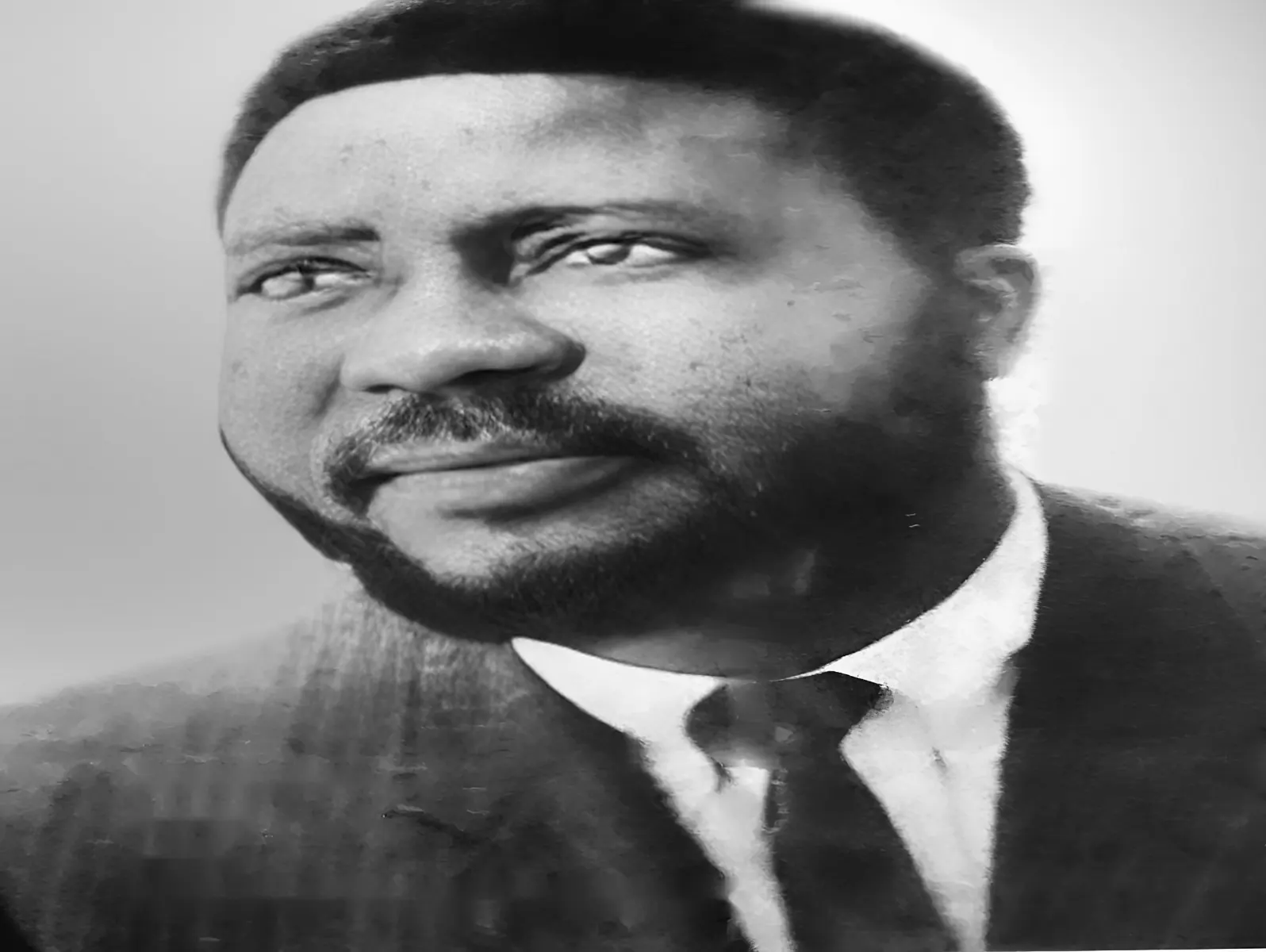
Professor Mugnii Alabi Danmole, a renowned economist, statistician, academic, public servant, consultant, and political thinker, left an indelible mark on Lagos, Nigeria. Born on November 1, 1925, into the prominent Danmole family of Lagos, he passed away on September 22, 1996. Danmole lived through significant chapters in Nigeria's history, including the final years of colonial rule, the struggle for independence, and the creation and development of Lagos State. His life reflected a deep belief in education and service, making him a respected Lagos indigene.
Danmole's intellectual journey began at Methodist Boys High School, Lagos. He secured a federal scholarship to pursue advanced studies in the United States, where he studied Economics at DePaul University, Chicago, between 1950 and 1954. He later obtained an MA in Economics from the University of Chicago and a PhD in Economics from the Wharton School of Finance and Commerce at the University of Pennsylvania. He also lectured at the University of Pennsylvania and served as an external professor at the Bulgarian High Institute of Economics.
Danmole's academic achievements were remarkable, but what made his education truly significant was that he returned to Nigeria and put his knowledge to work. He lectured at the University of Nigeria, Nsukka, and the University of Lagos, helping to strengthen Nigeria's emerging university system. He also served as Special Assistant to the Managing Director of ESSO West Africa, working as an economist and statistician. His experience straddled academia, business, and public administration.
Danmole's influence extended far beyond the university. Between 1970 and 1975, he served as a member of the Industrial Arbitration Tribunal established by the Gowon administration to help resolve industrial disputes. In 1975, the Murtala Muhammed administration appointed him Federal Commissioner for Public Service, a position he held until 1978. He also served on several important government committees, including the Lagos delegation to the Ad Hoc Committee on the review of the Nigerian Constitution.
Perhaps the most important chapter of Danmole's public life was his contribution to the development and political evolution of Lagos. He belonged to a generation of Lagos intellectuals and political actors who campaigned for the recognition of Lagos as a distinct political entity and participated in the processes that eventually culminated in the creation of Lagos State in 1967. Danmole became part of the generation that insisted that the history and interests of Lagos's indigenous communities should remain an important part of the state's political development.
Danmole's contribution to Lagos was not limited to political advocacy. He was involved in practical aspects of building the new state, serving on the Lagos State Armorial Bearing Committee and the Lagos State Revenue Collection Panel. He also served on the Lagos State Committee on Local Government Reform, covering three essential dimensions of state-building: identity, revenue, and grassroots administration. He was remembered as a "silent adviser" to the Lagos State military government, making an impact through knowledge, counsel, and participation in institutions.
Danmole's place in Lagos history is also connected with the politics of indigeneity. He belonged to a group of Lagos leaders who believed that meritorious Lagos indigenes should retain a meaningful role in determining the political direction of their state. The issue was particularly important at a time when Lagos was experiencing rapid migration and demographic change. Danmole's generation understood that development should not necessarily mean erasing a city's history and ancestral communities.
Key points
- Professor Mugnii Alabi Danmole was a renowned scholar and public servant who contributed significantly to the development and political evolution of Lagos.
- Danmole's life reflected a deep belief in education and service, making him a respected Lagos indigene.
- He played a crucial role in shaping Lagos State's identity, revenue, and grassroots administration.