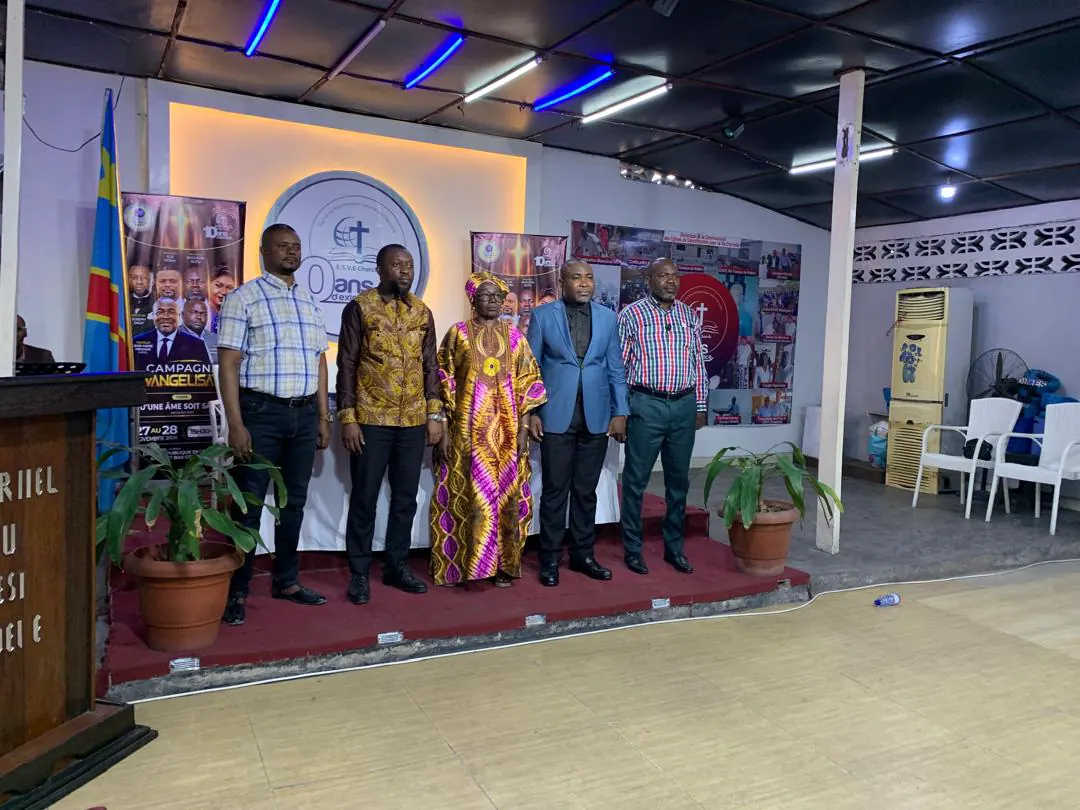
In the Democratic Republic of Congo (DRC), religious leaders have been urged to prioritize the national interest as the country prepares for a national dialogue. The call was made by Jean-Marie Mbongie, a pastor responsible for the Churches of Sanctification for Eternal Life (E.S.V.E.), during the celebration of the church's tenth anniversary in Kinshasa. Mbongie emphasized that the church should not be a spectator in the national reconciliation process, but rather a conscience that promotes a lasting peace.
The national dialogue, initiated by President Félix Tshisekedi, aims to refound the nation, restore stability, and promote sustainable development. Mbongie stressed that the dialogue should not be perceived as a sharing of power, but rather as an opportunity to consolidate peace, national unity, and social cohesion. He expressed concern that the church's involvement is crucial in ensuring that the dialogue serves the greater good and not just the interests of a few individuals.
The Churches of Sanctification for Eternal Life (E.S.V.E.) was established in 2016 and has been actively involved in evangelization and community development in Kinshasa. The church's tenth anniversary celebration was marked by a call to action, urging religious leaders to play a more active role in promoting peace and unity in the country. Mbongie emphasized that the church has a responsibility to promote the values of truth, justice, and reconciliation.
Other speakers at the event, including Pastor Dady Joseph, emphasized the need for a change in mentality and a return to traditional values. Joseph highlighted the importance of promoting a message of salvation and unity, particularly in a country torn apart by conflict and social unrest. The speakers also urged the authorities to remain impartial and to ensure that the national dialogue is conducted in a neutral and transparent manner.
The national dialogue is seen as a critical opportunity for the DRC to address its many challenges, including insecurity in the east of the country. The dialogue is expected to bring together various stakeholders, including politicians, civil society organizations, and religious leaders, to discuss the country's future and find solutions to its many problems. Religious leaders are expected to play a key role in promoting peace and unity during this process.
The event also featured a testimony from Prophet Augustin Butu, who spoke about the importance of consolation and healing for those affected by conflict. Butu emphasized that the church has a critical role to play in promoting peace and unity, particularly in communities affected by violence. The church's efforts are seen as essential in promoting social cohesion and supporting the national dialogue process.
The call to prioritize the national interest ahead of the dialogue has been echoed by various stakeholders, including civil society organizations. The DRC has faced numerous challenges in recent years, including conflict, corruption, and economic instability. The national dialogue is seen as a critical opportunity for the country to address these challenges and find a path towards sustainable development and peace.
Key points
- Religious leaders in the DRC are being urged to prioritize the national interest ahead of an upcoming national dialogue.
- The national dialogue aims to promote peace, unity, and sustainable development in the country.
- The church is expected to play a critical role in promoting peace and unity during the dialogue process.