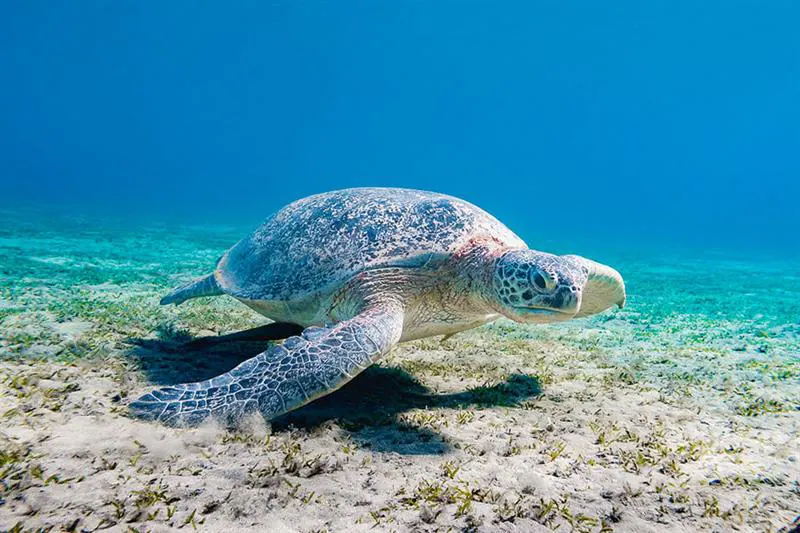
In a remarkable tale of survival, a 40-year-old loggerhead sea turtle named Drea was rescued off the Egyptian coast and nursed back to health at the country's first Sea Turtle Rescue Centre. The turtle had travelled thousands of miles from Greece, arriving in critical condition with severe injuries, including fractures to her shell and a fishing hook lodged in her oesophagus. Drea's story highlights the pioneering efforts of the Sea Turtle Rescue Centre, established in June 2024 under the auspices of the Ministry of Environment.
The Sea Turtle Rescue Centre, located at the Ashtoum Al-Gamil Reserve in Port Said, is the first of its kind on Egypt's Mediterranean coast. Director Hussein Rashad heads the centre alongside a medical and research team. The centre provides medical care, nutrition, and complex surgical interventions to turtles affected by collisions with boats, fishermen, or trafficking. Rashad explained that the centre's proposal was submitted to the SPA/RAC, which agreed to fund the project, and it was supported by the ministry of the environment and local development.
Drea's identification tag helped reconnect her with her past, and Egyptian officials contacted the Greek organisation Archelon, which had treated her before. The Greek centre was able to follow her health journey with the Egyptian authorities. Drea underwent surgery to remove the fishhook and stabilise her shell fractures, and spent 111 days receiving medical care, nutrition, and rehabilitation. Her case was the first sea-turtle surgery performed at the centre, and it was crucial to save her as she is still of reproductive age.
On 23 May last year, Drea was released into her natural environment off the shore of the Ashtoum Al-Gamil Reserve. Before her release, the centre attached an Egyptian identification tag alongside her Greek one, marking a first step in cross-border Mediterranean cooperation to protect marine animals that migrate between countries. The dual identification system will allow Drea's movements and health to be monitored if she encounters further threats in another Mediterranean country or returns to her nesting grounds.
Sea turtles play a vital role in protecting food security by feeding on seagrass meadows, helping maintain these important habitats, and supporting fish stocks and the wider marine food chain. However, Mediterranean turtles face significant risks, including being caught in fishing nets, collisions with commercial and tourist vessels, and growing economic activity across the Mediterranean. The International Union for the Conservation of Nature (IUCN) notes that the Mediterranean Sea is inhabited by three species of turtles: the loggerhead turtle, the green turtle, and the leatherback turtle.
The illicit trade in sea turtles is a well-established practice in Egypt, with customers buying turtle meat directly from fishermen or others, who may keep turtles alive for between one and 30 days before slaughtering them. Turtle shells are also sold in antique shops in Egypt, in violation of the Convention on International Trade in Endangered Species of Wild Fauna and Flora (CITES). The centre is most concerned to combat the intentional killing and trafficking of turtles, and Rashad highlighted the range of threats faced by sea turtles, including plastics pollution, the destruction of nesting sites, climate change, and collisions with boats.
The Sea Turtle Rescue Centre's efforts to protect endangered marine turtles are crucial in the face of these threats. With the support of the Ministry of Environment and international organisations, the centre is working to provide a safe haven for turtles and promote cross-border cooperation to protect marine animals that migrate between countries. The centre's work is a vital step towards conserving sea turtle populations and maintaining the health of the Mediterranean ecosystem.
Key points
- Egypt's first Sea Turtle Rescue Centre provides medical care and rehabilitation to endangered marine turtles.
- The centre is working to combat the intentional killing and trafficking of turtles, and promote cross-border cooperation to protect marine animals.
- Sea turtles play a vital role in protecting food security and maintaining the health of the Mediterranean ecosystem.