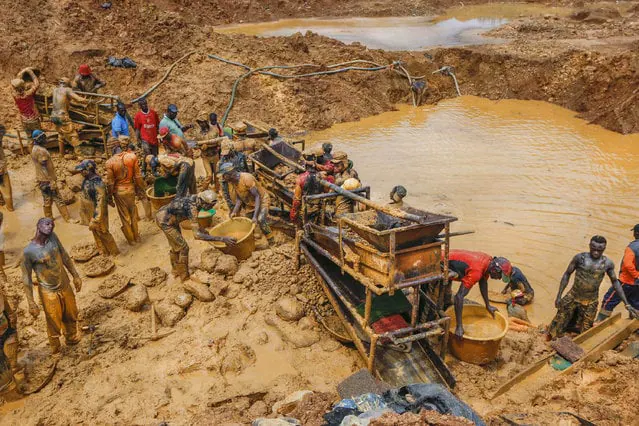
A recent rejoinder by Oko Tetteh has challenged the idea that a new intelligence architecture is needed to combat galamsey, a serious national problem in Ghana. The author argues that the state's failure to tackle the issue is not due to a lack of intelligence, but rather a lack of courage for decisive action. Nana Attobrah Quaicoe, a former Director-General of the Bureau of National Intelligence, had suggested that the state's intelligence architecture is not equipped to deal with the complex networks behind illegal mining.
The Minerals and Mining Act of Ghana establishes a clear legal framework for regulating mining, and subsequent amendments have strengthened sanctions for illegal mining and related offences. However, the author argues that the state's problem is not a lack of knowledge about galamsey, but rather a failure to enforce existing laws. The activities of illegal miners are often done in the open, making it clear that they are operating illegally.
Intelligence can be useful in identifying the financiers of illegal mining, equipment supply networks, and other organised criminal scopes. However, the author argues that its primary function is to aid enforcement, not to supersede or replace it. The author also questions how much more intelligence is required before the state takes action against an illegal mining operation that is already known and visible.
The author cites several examples of useful information gathered through intelligence, including the "incident diary" that details the actors involved in galamsey. The Professor Frempong Boateng Report prior to the 2020 General Elections and the recent trial of a former Ashanti Regional Chairman of the NPP for his involvement in galamsey are also cited as examples of how intelligence has been used to tackle the issue.
The author argues that making intelligence the explanation for every dereliction of the state is gravely dangerous. Instead, the problem lies in the state's lack of political will, institutional discipline, enforcement capacity, and accountability. The author questions who has the authority to halt illegal mining operations, why they have not been stopped, and who is protecting the illegal miners.
The author also draws a distinction between legitimate intelligence requirements and intelligence becoming an apology for delayed action. Intelligence can make enforcement more effective, but it should not be used as an excuse for inaction. The author argues that a predictable rule-of-law environment is an investment advantage, and selective enforcement is not.
The latest article has sparked debate about the division of intelligence responsibilities among various agencies in Ghana. While inter-agency coordination is not inherently wrong, the author questions whether it is the missing ingredient in the fight against galamsey. The state cannot delay action while a complex intelligence framework is established, and decisive action is needed today to protect the environment and enforce the law.
Key points
- The state's failure to tackle galamsey is not due to a lack of intelligence, but rather a lack of courage for decisive action.