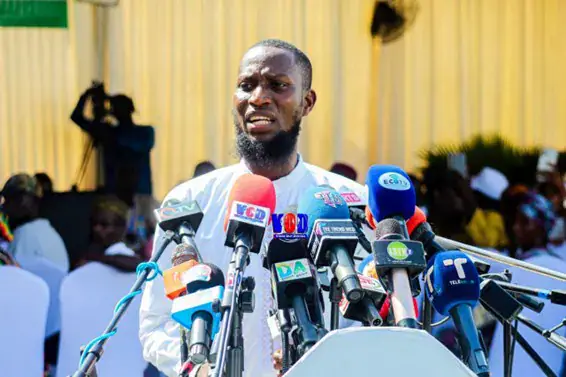
Rejected presidential aspirant Bakary K. Badjie is preparing to challenge the Independent Electoral Commission's decision to disqualify him from the December 5 presidential election. Badjie, 37, insists that his rejection was not supported by the law and has already lodged a formal complaint with the IEC. He plans to pursue the matter through national and regional courts, with international lawyers overseeing the case.
Badjie's disqualification has sparked controversy, with the aspirant questioning the IEC's assessment of his nomination documents. He claims to have submitted his national identification card, birth certificate, and passport to establish his eligibility. According to Badjie, his citizenship should not have been questioned, as he is above the constitutional minimum age of 30 required for presidential candidates.
The IEC's examination of Badjie's birth certificate has also raised concerns. Badjie argues that the document clearly identifies both parents as Gambians, meeting the constitutional requirements. Furthermore, he submitted 10,325 signatures, more than twice the minimum requirement of 5,000, and an additional 2,930 signatures.
Badjie is particularly concerned about the lack of transparency in the IEC's decision-making process. He claims that the commission has not provided him with a detailed explanation of why his nomination was rejected, particularly concerning the signature requirements. Badjie believes that the nomination process must be guided by the law and that all aspirants should be assessed against the same clearly established criteria.
The rejected aspirant has also brought the matter to the attention of European Union and ECOWAS election observers currently in the country, as well as several non-governmental organisations. He wants transparency in the electoral process and has given his letter to the European Union election observers and filed it with ECOWAS observers.
Badjie's legal challenge is intended to contest the commission's decision and promote transparency in the presidential nomination process. He emphasized that nobody is above the law and that the criteria set for nomination are clear and defined in the law. His legal team will pursue the matter through national and regional courts.
The case will be heard in both the High Court in Banjul and the ECOWAS Court of Justice. Badjie's case has raised concerns about the electoral process in Gambia, and stakeholders are watching closely to see how the matter unfolds. The IEC's decision has sparked controversy, and the outcome of the case may have implications for the December 5 presidential election.
Key points
- Badjie's rejection was not supported by the law, according to the aspirant.
- The IEC's decision-making process lacks transparency, Badjie claims.
- Badjie's case will be heard in both the High Court in Banjul and the ECOWAS Court of Justice.