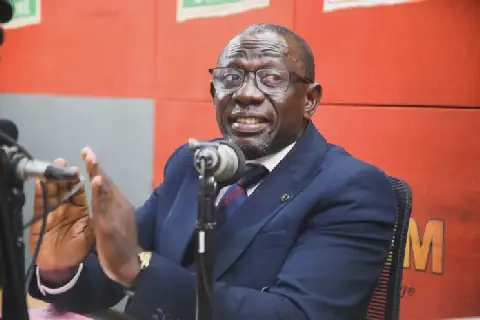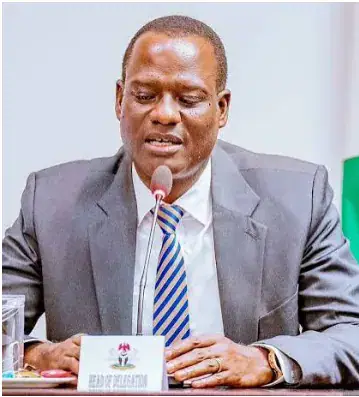
Nigeria's Minister of Finance, Taiwo Oyedele, has stressed that trust is the most valuable currency in the country's economic growth and stability. Speaking at the World Public Relations Forum in Abuja, Oyedele emphasized that public trust is crucial for economic reforms to succeed and for investors to have confidence in the government's policies. He noted that no amount of strategic communication can compensate for poor service delivery, broken promises, or policies that fail to produce tangible benefits for citizens.
Oyedele cited the country's October 2026 inflation rate of 14.06 percent, the lowest in six years, as an example of the disconnect between official economic indicators and the realities faced by households. Despite the decline in inflation, many Nigerians continue to struggle with high prices of essential commodities, making it difficult for them to appreciate the reported improvement. The minister explained that falling inflation does not mean falling prices, but rather that prices are rising more slowly than before.
The finance minister expressed concern that misinformation and misleading interpretations have weakened public acceptance of the Federal Government's tax reforms, particularly among small businesses and low-income earners. He noted that despite provisions aimed at exempting vulnerable groups and protecting small businesses, misleading narratives have turned some of the intended beneficiaries against the reforms. Oyedele emphasized that facts do not defend themselves and that responsible communication must acknowledge the difficulties citizens face while providing clear explanations of policy outcomes.
Oyedele also highlighted the growing influence of social media monetization in spreading misinformation, warning that online platforms increasingly reward sensationalism and negative content at the expense of factual reporting. He noted that artificial intelligence has further complicated the information environment, making it possible to manufacture convincing images, voices, and documents within seconds. The minister challenged public relations professionals to become involved in government and corporate decision-making processes before policies are implemented.
The minister urged communication experts to help institutions assess public concerns, test policy assumptions, and determine whether decisions can be explained clearly before implementation. He emphasized that public relations professionals should be involved in the design table, rather than being brought in only when controversies emerge. Oyedele also warned that persistent negative narratives about Nigeria could impose economic costs by discouraging investments and increasing perceptions of business risks.
Oyedele identified expressions such as "Nigeria is finished," "Nigeria is a scam," and "Nigeria happened to me" as examples of narratives that can become damaging when repeatedly presented without equal attention to developments and progress. He urged media organizations and communication professionals to give equal attention to verifiable achievements and shortcomings. The minister called on journalists, publishers, broadcasters, and public relations practitioners to place public interest above social media algorithms and commercial incentives.
The minister concluded by emphasizing that the credibility of institutions must be measured by more than media visibility. He declared that the most valuable currency for any economy, enterprise, or society is trust. Oyedele urged international delegates to look beyond negative media portrayals of Nigeria and to explore Abuja and interact with Nigerians to develop a more balanced understanding of the country.
Key points
- Trust is crucial for economic reforms to succeed and for investors to have confidence in the government's policies.
- Misinformation and misleading interpretations have weakened public acceptance of the Federal Government's tax reforms.
- The credibility of institutions must be measured by more than media visibility.
Reporting sources
- Trust Is Nigeria’s Most Valuable Currency, Finance Minister Declares · Independent Nigeria